
Shrinkage cavities are a common defect in steel casting parts, which can significantly reduce the mechanical properties and service life of the parts. As a professional steel casting parts supplier, we have rich experience in dealing with this issue. In this blog, I will share some effective methods to prevent shrinkage cavities in steel casting parts.
Understanding Shrinkage Cavities in Steel Casting
Before discussing prevention methods, it's essential to understand what shrinkage cavities are. Shrinkage cavities occur during the solidification process of molten steel. As the steel cools and solidifies, it undergoes a volumetric contraction. If the molten steel cannot adequately compensate for this contraction, voids or cavities are formed within the casting. These cavities can vary in size and location, and they are often difficult to detect without proper inspection methods.
There are two main types of shrinkage cavities: macro - shrinkage cavities and micro - shrinkage cavities. Macro - shrinkage cavities are relatively large and can be seen with the naked eye or detected by non - destructive testing methods such as X - ray or ultrasonic testing. Micro - shrinkage cavities are much smaller and may require microscopic examination to identify.
Factors Affecting Shrinkage Cavities
Several factors can contribute to the formation of shrinkage cavities in steel casting parts:
- Casting Design: The shape and size of the casting play a crucial role. Complex shapes with thick and thin sections can lead to uneven cooling rates, increasing the likelihood of shrinkage cavities. For example, a casting with a large, thick section adjacent to a thin section will cause the thick section to cool more slowly, and the molten steel in the thin section may solidify before it can feed the thick section, resulting in shrinkage.
- Gating and Riser Design: The gating system is responsible for delivering molten steel into the mold cavity, while the riser acts as a reservoir to supply additional molten steel during solidification. Improper gating and riser design can lead to insufficient feeding of the casting, causing shrinkage cavities. If the riser is too small or not located in the right position, it may not be able to provide enough molten steel to compensate for the contraction.
- Steel Composition: Different steel compositions have different solidification characteristics. Some alloying elements can affect the freezing range of the steel, which in turn influences the formation of shrinkage cavities. For example, steels with a wide freezing range are more prone to shrinkage problems compared to those with a narrow freezing range.
- Pouring Temperature: The pouring temperature of the molten steel is also an important factor. If the pouring temperature is too high, the solidification time will be longer, and the risk of shrinkage cavities may increase. On the other hand, if the pouring temperature is too low, the molten steel may not flow properly, leading to incomplete filling of the mold and other defects.
Prevention Methods
Casting Design Optimization
- Uniform Wall Thickness: Try to design the casting with as uniform a wall thickness as possible. If it is necessary to have different wall thicknesses, use gradual transitions between thick and thin sections. This helps to ensure a more uniform cooling rate throughout the casting, reducing the risk of shrinkage cavities.
- Avoid Sharp Corners and Edges: Sharp corners and edges can cause stress concentrations and uneven cooling, which can lead to shrinkage cavities. Instead, use rounded corners and fillets to improve the flow of molten steel and promote more uniform solidification.
Gating and Riser Design Improvement
- Proper Riser Sizing and Placement: Calculate the size and number of risers based on the volume and shape of the casting. The riser should be large enough to supply sufficient molten steel to compensate for the shrinkage during solidification. Place the risers at the thickest sections of the casting, where shrinkage is most likely to occur. For example, in a casting with a large central boss, a riser can be placed directly above the boss to ensure proper feeding.
- Optimized Gating System: Design the gating system to ensure a smooth and uniform flow of molten steel into the mold cavity. Use runners and gates of appropriate size and shape to minimize turbulence and prevent the formation of air pockets. A well - designed gating system can also help to distribute the molten steel evenly, reducing the risk of shrinkage cavities.
Steel Composition Control
- Select the Right Steel Grade: Choose a steel grade with a narrow freezing range and good fluidity. Some low - alloy steels are specifically designed to have better casting properties, which can reduce the likelihood of shrinkage cavities. Consult with a metallurgist or a steel supplier to select the most suitable steel grade for your casting application.
- Alloying Element Addition: In some cases, adding small amounts of alloying elements can improve the solidification characteristics of the steel. For example, adding a small amount of titanium or zirconium can refine the grain structure of the steel, which can reduce the formation of shrinkage cavities.
Pouring Temperature Management
- Optimal Pouring Temperature: Determine the optimal pouring temperature based on the steel grade and the casting design. The pouring temperature should be high enough to ensure good fluidity of the molten steel but not too high to cause excessive shrinkage. Conduct experiments or refer to industry standards to find the appropriate pouring temperature range for your specific casting.
Case Studies
Let's take a look at some real - world examples of how these prevention methods have been applied to our products.
We once received an order for Lost Wax Casting Cross Bit & Lost Bit. The initial design of the cross bit had some thick sections that were prone to shrinkage cavities. By optimizing the casting design, we adjusted the wall thickness to be more uniform and added rounded corners. We also redesigned the gating and riser system to ensure proper feeding of the thick sections. As a result, the number of shrinkage cavities in the final castings was significantly reduced, and the quality of the cross bits met the customer's requirements.
Another example is our Cast Flail Cutter. The original pouring temperature was too high, which led to excessive shrinkage in some parts of the cutter. After conducting a series of tests, we determined the optimal pouring temperature and adjusted our production process accordingly. This simple change effectively reduced the shrinkage cavities and improved the overall performance of the cast flail cutters.
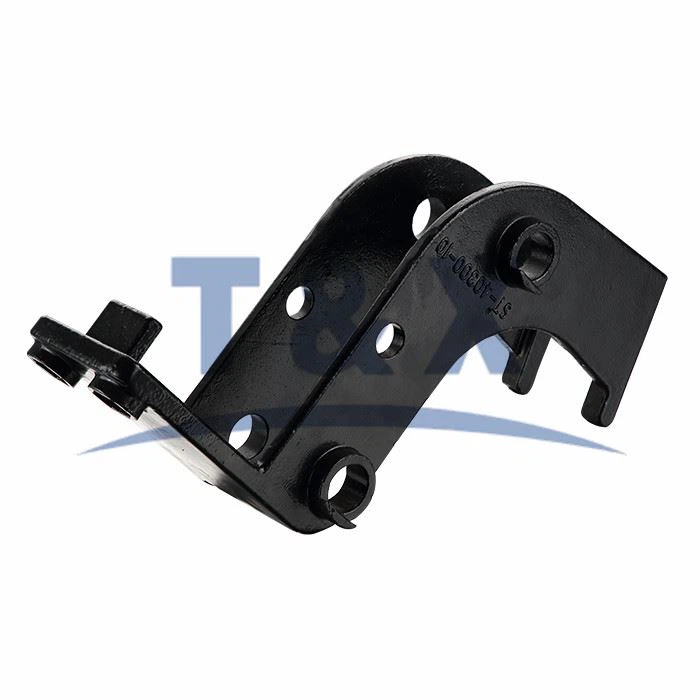

For our 42CrMo Alloy Steel Harden Fishtail Bit, we carefully selected the steel grade and controlled the alloying elements to optimize the solidification characteristics. By adding a small amount of vanadium, we were able to refine the grain structure of the steel and reduce the formation of shrinkage cavities. The final fishtail bits had excellent mechanical properties and a low defect rate.
Conclusion
Preventing shrinkage cavities in steel casting parts requires a comprehensive approach that considers casting design, gating and riser design, steel composition, and pouring temperature. By implementing the methods discussed in this blog, we can significantly reduce the occurrence of shrinkage cavities and improve the quality of our steel casting parts.
As a reliable steel casting parts supplier, we are committed to providing high - quality products to our customers. If you are interested in our products or have any questions about preventing shrinkage cavities in steel casting, please feel free to contact us for procurement and further discussions. We look forward to working with you to meet your specific casting needs.
References
- Campbell, J. (2003). Castings. Butterworth - Heinemann.
- Flemings, M. C. (1974). Solidification Processing. McGraw - Hill.
- Piwonka, T. S., & Flemings, M. C. (1966). Shrinkage and pore formation in castings. Transactions of the Metallurgical Society of AIME, 236, 1375 - 1385.