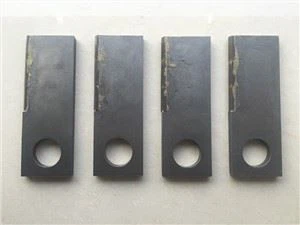

Hey there! As a supplier of Ductile Iron Parts, I often get asked if these parts can be used in marine environments. It's a valid question, considering the harsh conditions that come with the sea. So, let's dive right in and explore this topic.
First off, what exactly is ductile iron? Well, ductile iron, also known as nodular cast iron, is a type of cast iron that has been treated while molten with an element like magnesium or cerium to induce the formation of free graphite as nodules or spherulites. This gives ductile iron higher ductility and toughness compared to traditional gray iron. It's strong, durable, and can be cast into complex shapes, which makes it a popular choice for a wide range of applications.

Now, let's talk about marine environments. The sea is a tough place. It's full of saltwater, which is highly corrosive. There are also constant waves, strong currents, and extreme temperature variations. All these factors can take a toll on any material, and ductile iron is no exception.
But here's the good news: ductile iron parts can indeed be used in marine environments, but with some considerations. One of the main challenges is corrosion. Saltwater is a major culprit when it comes to corroding metals. Over time, the salt in the water can react with the iron in ductile iron, causing it to rust. However, there are ways to mitigate this issue.
One option is to apply a protective coating to the ductile iron parts. There are various types of coatings available, such as epoxy coatings, zinc coatings, and paint. These coatings act as a barrier between the iron and the saltwater, preventing direct contact and reducing the risk of corrosion. For example, epoxy coatings are known for their excellent adhesion and chemical resistance, making them a popular choice for marine applications.
Another way to enhance the corrosion resistance of ductile iron parts is through alloying. By adding certain elements to the iron, such as nickel, chromium, or molybdenum, you can improve its resistance to corrosion. These alloying elements form a passive oxide layer on the surface of the iron, which helps to protect it from the corrosive effects of saltwater.
In addition to corrosion, another factor to consider in marine environments is the mechanical stress. Waves, currents, and the movement of ships can subject ductile iron parts to significant mechanical forces. Ductile iron's high strength and ductility make it well-suited to withstand these forces. It can absorb energy and deform without breaking, which is crucial in a dynamic and unpredictable environment like the sea.
For instance, in shipbuilding, ductile iron parts are commonly used in various components, such as engine mounts, propeller shafts, and pump housings. These parts need to be able to withstand the vibrations, shocks, and loads associated with the operation of a ship. Ductile iron's mechanical properties make it a reliable choice for such applications.
Now, let's take a look at some specific examples of ductile iron parts that are used in marine environments. One such example is the Grey Iron Or Ductile Iron Disc Harrow Spool. These spools are used in agricultural equipment, but they can also find applications in marine settings. They need to be strong and durable to withstand the forces exerted during operation, and ductile iron provides the necessary mechanical properties.
Another example is ductile iron pipes. These pipes are used for various purposes in marine infrastructure, such as water intake and discharge systems. They need to be able to resist corrosion and the pressure of the water. Ductile iron pipes are often coated with a protective layer to enhance their corrosion resistance and ensure a long service life.
Of course, it's important to note that the suitability of ductile iron parts for marine environments depends on the specific application and the conditions they will be exposed to. Before using ductile iron parts in a marine setting, it's advisable to consult with a materials expert or an engineer. They can help you determine the best type of ductile iron, the appropriate coatings or alloying elements, and the design considerations to ensure the parts perform effectively and safely.
As a supplier of Ductile Iron Parts, I'm always here to help. If you're considering using ductile iron parts in your marine project, I'd be more than happy to discuss your requirements and provide you with the right solutions. Whether you need custom-made parts or off-the-shelf products, I can offer you high-quality ductile iron parts that meet your specifications.
In conclusion, ductile iron parts can be used in marine environments, but proper precautions need to be taken to ensure their long-term performance. With the right coatings, alloying, and design, ductile iron can withstand the harsh conditions of the sea and provide reliable service. So, if you're in the market for Ductile Iron Parts for your marine application, don't hesitate to get in touch. Let's work together to find the best solutions for your needs.
References:
- "Ductile Iron: Properties, Applications, and Production" - ASM International
- "Marine Corrosion: Causes, Prevention, and Control" - NACE International