
Can steel wear parts be repaired? That's a question I get asked a lot as a supplier of steel wear parts. And the answer is, it depends. There are a few factors to consider when deciding whether to repair or replace steel wear parts, and in this blog post, I'll break them down for you.
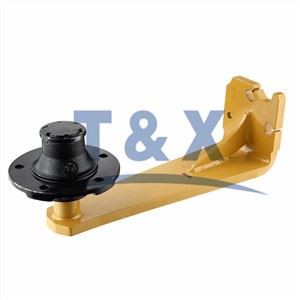
First off, let's talk about what steel wear parts are. These are components made of steel that are designed to withstand wear and tear in various industrial applications. They're used in everything from mining and construction equipment to agricultural machinery and automotive engines. Examples of steel wear parts include OEM Casting Cross Bit & Lost Bit, Cast Flail Cutter, and Trailer Connector Parts.


Now, back to the question at hand: can these parts be repaired? Well, the short answer is yes, many steel wear parts can be repaired. But it's not always the best option. Here are some things to think about:
1. Extent of Damage
The first thing you need to assess is how badly the part is damaged. Minor scratches, dents, or surface wear can often be fixed through processes like grinding, polishing, or welding. For example, if a steel wear part has a small crack on its surface, a skilled welder can often repair it by filling the crack with molten steel and then grinding and finishing the area to restore its original shape and smoothness.
On the other hand, if the part is severely damaged - say, it's broken into multiple pieces or has extensive internal damage - repair might not be feasible. In some cases, attempting to repair a severely damaged part could actually compromise its structural integrity, making it unsafe to use.
2. Cost
Cost is another major factor. Repairing a steel wear part can sometimes be more cost - effective than replacing it, especially if the part is expensive or hard to source. However, you need to consider the cost of the repair itself, which includes labor, materials, and any specialized equipment that might be required.
For instance, if a simple welding repair costs a few hundred dollars, but a new part would cost several thousand, it makes sense to go for the repair. But if the repair costs are close to or even exceed the cost of a new part, replacement is probably the better choice.
3. Time
Time is of the essence in many industrial operations. If a piece of equipment is down because of a worn - out steel part, you want to get it up and running as soon as possible. Repairing a part can take time, especially if it requires complex processes or if specialized technicians need to be brought in.
If you can get a new part quickly and easily, it might be worth the investment to avoid extended downtime. However, if the lead time for a new part is long, and you can get the part repaired in a shorter period, then repair becomes a more attractive option.
4. Future Use
Think about how the part will be used in the future. If the part will be subjected to the same harsh conditions that caused the wear in the first place, a repaired part might not last as long as a new one. In such cases, it might be better to replace the part to avoid frequent breakdowns and additional repair costs down the line.
On the other hand, if the part will be used in less demanding applications, a repaired part could serve you well for a long time.
Repair Methods for Steel Wear Parts
If you've decided that repair is the way to go, there are several methods that can be used to fix steel wear parts:
Welding
Welding is one of the most common methods for repairing steel wear parts. It involves melting a filler material and using it to join or repair the damaged area of the steel part. Different types of welding processes, such as arc welding, MIG welding, and TIG welding, can be used depending on the specific requirements of the repair.
Machining
Machining processes like grinding, turning, and milling can be used to remove damaged material from the surface of the part and restore its dimensions. This is often used for parts with surface wear or minor dimensional inaccuracies.
Heat Treatment
Heat treatment can be used to improve the hardness, strength, and other mechanical properties of a repaired steel part. After welding or machining, heat treatment can help to relieve internal stresses and ensure that the part performs well under load.
As a supplier of steel wear parts, I've seen firsthand the benefits and drawbacks of both repair and replacement. I always recommend that my customers carefully evaluate the situation before making a decision. If you're not sure whether a part can be repaired or if you need advice on the best course of action, don't hesitate to reach out.
Whether you're looking for a new steel wear part or need help with a repair, I'm here to assist you. Our team of experts can provide you with detailed information about our products and services, and we can work with you to find the most cost - effective and efficient solution for your needs.
If you're interested in learning more about our OEM Casting Cross Bit & Lost Bit, Cast Flail Cutter, or Trailer Connector Parts, or if you have any questions about steel wear part repair, feel free to contact us for a purchase consultation. We're eager to help you make the right choice for your business.
References
- ASM Handbook Committee. (2004). ASM Handbook Volume 6: Welding, Brazing, and Soldering. ASM International.
- Kalpakjian, S., & Schmid, S. R. (2013). Manufacturing Engineering and Technology. Pearson.
- Totten, G. E., & MacKenzie, D. L. (2003). Handbook of Aluminum Alloy and Steel Heat Treating. CRC Press.