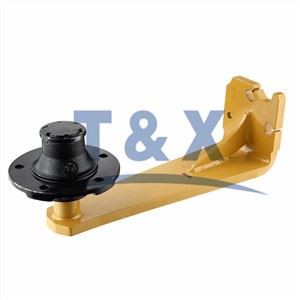

As a supplier of flange parts, I've spent years deeply involved in the manufacturing and distribution of these essential components. While flange parts are widely used and have numerous advantages in various industries, it's crucial to also understand their disadvantages. This knowledge not only helps our customers make informed decisions but also allows us to provide better solutions and support.
1. High Initial Cost
One of the most significant disadvantages of flange parts is their relatively high initial cost. The manufacturing process of flanges often involves complex machining operations, such as forging, cutting, and drilling. These processes require specialized equipment and skilled labor, which drive up the production cost. Additionally, the materials used for flange parts, such as high - quality steel or alloy, can be expensive. For example, stainless steel flanges are more corrosion - resistant but come at a premium price compared to carbon steel ones.
This high cost can be a deterrent for small - scale projects or businesses with tight budgets. Customers may have to allocate a significant portion of their project funds to purchase flange parts, leaving less money for other aspects of the project. As a supplier, we understand this concern and are constantly looking for ways to optimize our production processes to reduce costs without sacrificing quality.
2. Installation Complexity
Flange parts require careful installation to ensure proper functionality. The installation process involves aligning the flanges accurately, tightening the bolts to the correct torque, and using appropriate gaskets to prevent leakage. Misalignment during installation can lead to uneven stress distribution, which may cause premature failure of the flange connection. Moreover, the number of bolts and the required torque values can vary depending on the size and type of the flange, adding to the complexity.
For example, in large - diameter pipeline systems, aligning the flanges can be a challenging task, often requiring the use of specialized tools and equipment. Incorrect installation can also result in fluid or gas leakage, which not only wastes resources but can also pose safety hazards, especially in industries dealing with hazardous substances. To address this issue, we provide detailed installation instructions and, if needed, offer on - site installation support to our customers.
3. Maintenance Requirements
Flange connections need regular maintenance to ensure their long - term performance. Over time, the bolts may loosen due to vibration, thermal expansion and contraction, or other factors. Loose bolts can lead to leakage and compromise the integrity of the connection. Additionally, the gaskets used in flange joints may deteriorate over time, especially in harsh environments, such as high - temperature or corrosive conditions.
Regular inspection of the flange connections is necessary to detect any signs of damage or wear. This includes checking the tightness of the bolts, the condition of the gaskets, and the overall integrity of the flanges. Maintenance tasks can be time - consuming and costly, especially for large - scale industrial facilities with numerous flange connections. As a supplier, we offer maintenance services and can supply replacement parts, such as gaskets and bolts, to help our customers keep their flange connections in good working condition.


4. Limited Flexibility
Flange parts are designed for specific applications and have limited flexibility. Once a flange connection is installed, it can be difficult to modify or reconfigure the system without significant effort. For example, if a change in the pipeline layout is required, the existing flange connections may need to be disassembled and reinstalled, which can be time - consuming and costly.
In some cases, the size and shape of the flanges may also limit the design options for a project. This lack of flexibility can be a drawback, especially in industries where rapid changes and adaptations are required. However, we are working on developing more versatile flange designs that can offer greater flexibility in different applications.
5. Weight and Space Requirements
Flange parts can be heavy, especially large - sized ones. The additional weight can be a concern in applications where weight is a critical factor, such as in aerospace or automotive industries. The weight of the flanges can also increase the overall load on the supporting structures, which may require stronger and more expensive support systems.
In addition to weight, flange connections also require a certain amount of space for installation and maintenance. In compact or crowded environments, finding enough space to install and access the flanges can be a challenge. This can limit the use of flange parts in some applications.
Comparison with Other Products
When compared to other types of pipe connections, such as welded joints or compression fittings, flange parts have their own set of disadvantages. Welded joints, for example, can provide a more permanent and leak - proof connection. They are also generally lighter and take up less space compared to flange connections. Compression fittings, on the other hand, are easier to install and can be disassembled and reassembled more quickly.
However, it's important to note that flange parts also have their advantages, such as the ability to be easily disassembled for maintenance and inspection. Each type of connection has its own suitability depending on the specific application requirements. For other related products, we also offer Graphite Self - lubricating Copper Sleeve, Hub Axles, and Trailer Wheel Hubs Spindle, which may be more suitable for certain applications.
Conclusion
In conclusion, while flange parts are widely used in various industries, they do have several disadvantages, including high initial cost, installation complexity, maintenance requirements, limited flexibility, and weight and space requirements. As a supplier of flange parts, we are committed to helping our customers understand these drawbacks and providing solutions to mitigate their impact.
If you are considering using flange parts or any of our other products, such as Graphite Self - lubricating Copper Sleeve, Hub Axles, or Trailer Wheel Hubs Spindle, please feel free to contact us for more information and to discuss your specific requirements. We are here to assist you in making the best decision for your project.
References
- "Piping and Pipeline Engineering: Design, Construction, Maintenance, and Integrity Management" by George A. Antaki
- "Flange Design Handbook" by W. A. Nash