
As a trusted supplier of steel casting parts, I've witnessed firsthand the pivotal role that surface treatment plays in enhancing the performance, durability, and aesthetics of these components. In this blog post, I'll delve into the various surface treatment methods for steel casting parts, shedding light on their benefits, applications, and considerations.
1. Shot Blasting
Shot blasting is a widely used surface treatment method that involves propelling small metallic or non - metallic particles (shots) at high speeds onto the surface of the steel casting part. This process serves multiple purposes.
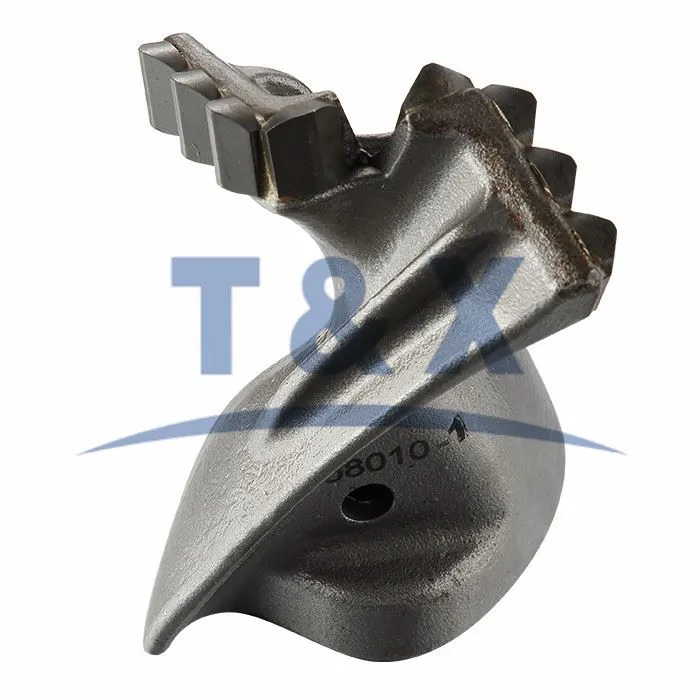
Firstly, it effectively removes impurities such as rust, scale, and old paint from the surface. By doing so, it prepares the casting for subsequent treatments like painting or coating. For example, in the production of 42CrMo Alloy Steel Harden Fishtail Bit, shot blasting can clean the surface and expose the fresh metal, ensuring better adhesion of any protective coatings.
Secondly, shot blasting can improve the surface finish of the casting. It can create a uniform, matte - like appearance, which is often desirable for both aesthetic and functional reasons. The impact of the shots also induces compressive stresses on the surface, enhancing the fatigue resistance of the part. This is crucial for components that are subjected to cyclic loading, such as parts in machinery or automotive applications.
2. Painting
Painting is a cost - effective and versatile surface treatment option for steel casting parts. It provides a protective barrier against corrosion, oxidation, and environmental elements. There are different types of paints available, each with its own set of properties and applications.
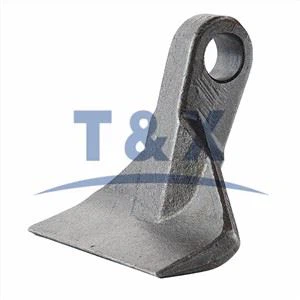
Epoxy paints are known for their excellent adhesion, chemical resistance, and durability. They are often used in industrial settings where the casting parts are exposed to harsh chemicals or abrasive environments. For instance, Cast Flail Cutter used in agricultural machinery can be coated with epoxy paint to resist the wear and tear from soil, debris, and various chemicals in the field.

Acrylic paints, on the other hand, offer good weatherability and color retention. They are commonly used for outdoor applications where the part needs to maintain its appearance over time. Painting can also be used to add a layer of identification or branding to the casting parts, making them easily distinguishable.
3. Galvanizing
Galvanizing is a process of applying a zinc coating to the steel casting parts. There are two main methods of galvanizing: hot - dip galvanizing and electro - galvanizing.
Hot - dip galvanizing involves immersing the steel casting in a bath of molten zinc. This creates a thick, metallurgically bonded zinc layer on the surface. The zinc coating acts as a sacrificial anode, protecting the underlying steel from corrosion. It is highly effective in outdoor and marine environments, where the parts are exposed to moisture, salt, and other corrosive agents. For example, steel castings used in bridges, fences, and offshore structures are often hot - dip galvanized.
Electro - galvanizing, on the other hand, deposits a thinner zinc layer through an electrochemical process. It is more suitable for applications where a thinner coating is required, such as in some electronic or automotive components. Electro - galvanizing can provide a smooth and uniform finish, and it is also more environmentally friendly compared to some other surface treatment methods.
4. Phosphating
Phosphating is a chemical treatment process that forms a phosphate coating on the surface of the steel casting parts. This coating can improve the adhesion of subsequent coatings, such as paint or powder coating. It also provides some degree of corrosion protection.
There are different types of phosphating processes, including zinc phosphating, iron phosphating, and manganese phosphating. Zinc phosphating is commonly used in the automotive industry, as it offers good corrosion resistance and paint adhesion. Iron phosphating is often used for less - critical applications or as a pre - treatment for powder coating. Manganese phosphating is known for its high wear resistance and is used in applications where the parts are subjected to friction and abrasion.
5. Powder Coating
Powder coating is a dry finishing process that involves applying a fine powder of resin and pigment to the surface of the steel casting part. The powder is electrostatically charged and then sprayed onto the part, where it adheres due to the electrostatic attraction. The part is then heated in an oven, causing the powder to melt, flow, and form a smooth, durable coating.
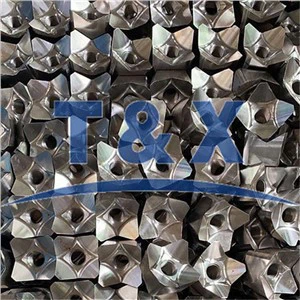
Powder coating offers several advantages. It provides a thick, uniform coating that is highly resistant to chipping, scratching, and fading. It also has a lower environmental impact compared to liquid paints, as it produces less volatile organic compounds (VOCs). Powder - coated steel casting parts can be found in a wide range of applications, from furniture and appliances to industrial equipment. For example, Lost Wax Casting Cross Bit & Lost Bit can be powder - coated to enhance their appearance and protection.
6. Anodizing (for Steel Alloys with Aluminum Content)
Although anodizing is more commonly associated with aluminum, some steel alloys that contain a certain amount of aluminum can also be anodized. Anodizing creates an oxide layer on the surface of the metal, which can improve corrosion resistance, wear resistance, and surface hardness.
The anodizing process involves immersing the steel casting in an electrolyte solution and passing an electric current through it. This causes the aluminum in the alloy to react with oxygen in the solution, forming a hard, porous oxide layer. The porous nature of the oxide layer allows for further coloring or sealing, depending on the application requirements.
Considerations in Choosing Surface Treatment Methods
When selecting a surface treatment method for steel casting parts, several factors need to be considered.
- Application Environment: The environment in which the part will be used is a crucial factor. For example, if the part is going to be exposed to high humidity, saltwater, or chemicals, a more corrosion - resistant treatment like galvanizing or powder coating may be required.
- Cost: Different surface treatment methods have different costs associated with them. Shot blasting is relatively inexpensive, while processes like anodizing or some high - performance coatings can be more costly. The budget available for the project needs to be taken into account.
- Aesthetic Requirements: If the appearance of the part is important, methods like painting or powder coating can offer a wide range of colors and finishes. Some applications may require a smooth, shiny finish, while others may prefer a matte or textured look.
- Part Geometry and Size: The shape and size of the casting part can also influence the choice of surface treatment. Complex geometries may pose challenges for some treatment methods, such as uniform coating application. Larger parts may require more resources and different equipment for treatment.
In conclusion, surface treatment is an essential step in the production of steel casting parts. It can significantly enhance the performance, durability, and appearance of the components. As a supplier of steel casting parts, I'm committed to providing high - quality products with the most suitable surface treatments for our customers' specific needs. Whether you're in the automotive, industrial, agricultural, or any other industry, we can offer tailored solutions to meet your requirements. If you're interested in our steel casting parts and would like to discuss your procurement needs, please don't hesitate to contact us. We look forward to the opportunity to work with you and provide you with the best surface - treated steel casting parts on the market.
References
- Metals Handbook: Properties and Selection: Irons, Steels, and High - Performance Alloys, ASM International.
- Surface Engineering for Corrosion and Wear Resistance, Elsevier.
- Paint and Coating Technology: A Guide for the Non - Specialist, Federation of Societies for Coatings Technology.