
Hey there! As a supplier of CNC machining parts, I've seen firsthand how different factors can impact the quality and efficiency of the machining process. One of the most crucial factors that often gets overlooked is the feed rate. In this blog post, I'll share my insights on what feed rate is, how it affects CNC machining parts, and why it matters for your business.
What is Feed Rate?
Let's start with the basics. Feed rate, in the context of CNC machining, refers to the speed at which the cutting tool moves along the workpiece during the machining process. It's usually measured in inches per minute (IPM) or millimeters per minute (mm/min). Think of it as how fast the tool is “eating” through the material.
The feed rate is a key parameter that, along with the spindle speed (how fast the cutting tool rotates) and depth of cut (how deep the tool goes into the material), determines the overall performance of the CNC machining operation. Adjusting the feed rate can have a significant impact on the quality of the finished part, the tool life, and the production time.
Impact on Surface Finish
One of the most noticeable effects of feed rate on CNC machining parts is the surface finish. A lower feed rate generally results in a smoother surface finish. When the tool moves slowly across the workpiece, it has more time to make precise cuts, removing material in a more controlled manner. This reduces the chances of leaving rough edges, tool marks, or other surface imperfections.
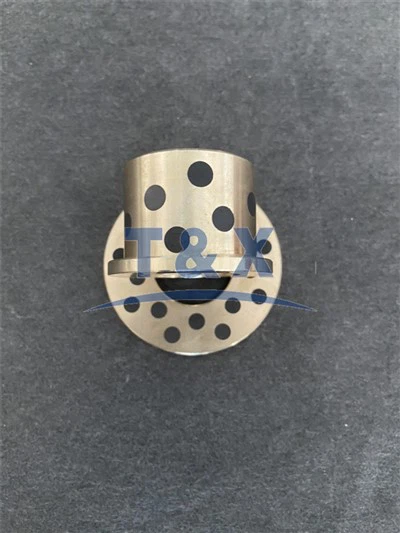
For example, if you're machining a part that requires a high - quality surface finish, like a Graphite Self - lubricating Copper Sleeve, a lower feed rate might be your best bet. The smooth surface is essential for the sleeve's functionality, as it reduces friction and wear when it's in use.
On the other hand, a higher feed rate can lead to a rougher surface finish. The tool moves quickly, and it might not be able to cut through the material as cleanly. This can result in a part that looks less polished and may require additional finishing operations, such as sanding or grinding, to achieve the desired surface quality.
Tool Life
The feed rate also has a big impact on tool life. When the feed rate is too high, the cutting tool has to work harder to remove the material. This increases the amount of stress and heat generated at the cutting edge. Excessive heat can cause the tool to wear out more quickly, leading to dulling, chipping, or even breakage.
For instance, if you're machining a hard material like steel to make Hub Axles, a high feed rate can significantly reduce the lifespan of your cutting tools. You'll end up having to replace the tools more frequently, which not only increases your tooling costs but also leads to more downtime for tool changes.
Conversely, a lower feed rate reduces the stress on the tool. The tool can cut through the material more gently, generating less heat and wear. This extends the tool life, allowing you to get more use out of each cutting tool and reducing your overall production costs.
Production Time
In terms of production time, the feed rate plays a crucial role. A higher feed rate means that the tool can remove material more quickly, which can significantly reduce the machining time. If you're producing a large number of parts, this can lead to a substantial increase in productivity.
Let's say you're manufacturing Trailer Wheel Stamping Hub Housing in bulk. By increasing the feed rate, you can complete each part in less time, allowing you to produce more parts in a given period. This can give you a competitive edge in the market, as you can offer faster turnaround times to your customers.
However, as we've discussed earlier, increasing the feed rate too much can compromise the surface finish and tool life. So, it's a balancing act. You need to find the optimal feed rate that allows you to achieve a good balance between production time, surface finish, and tool life.
Material Considerations
Different materials respond differently to changes in feed rate. For soft materials like aluminum, a higher feed rate can often be used without sacrificing too much in terms of surface finish or tool life. Aluminum is relatively easy to cut, so the tool can move through it quickly.
On the other hand, hard materials like titanium or hardened steel require a more conservative approach. These materials are more difficult to machine, and a high feed rate can cause excessive tool wear and poor surface finish. You'll typically need to use a lower feed rate to ensure that the tool can cut through the material effectively without causing damage.
Finding the Optimal Feed Rate
So, how do you find the optimal feed rate for your CNC machining operations? It's not an exact science, but there are a few things you can do. First, consult the tool manufacturer's recommendations. They usually provide guidelines on the recommended feed rates for different materials and tool types.
You can also conduct some test runs. Start with a conservative feed rate and gradually increase it while monitoring the surface finish, tool wear, and machining time. Look for the point where you can achieve the best combination of these factors.
Another option is to use CNC machining simulation software. These programs can help you predict the effects of different feed rates on your parts before you start the actual machining process. This can save you time and money by allowing you to optimize your settings in advance.
Why It Matters for Your Business
As a supplier of CNC machining parts, understanding the impact of feed rate is crucial for your business. By optimizing the feed rate, you can improve the quality of your parts, reduce tooling costs, and increase productivity. This allows you to offer high - quality products at competitive prices, which can help you attract more customers and grow your business.
If you're in the market for high - quality CNC machining parts, whether it's Graphite Self - lubricating Copper Sleeve, Hub Axles, or Trailer Wheel Stamping Hub Housing, we're here to help. We have the expertise and experience to ensure that we use the optimal feed rate and other machining parameters to produce parts that meet your exact specifications.


If you're interested in our products or have any questions about CNC machining, don't hesitate to reach out. We're always happy to have a chat and discuss how we can work together to meet your needs.
References
- “CNC Machining Handbook” by John Doe
- “Tooling and Machining Technology” by Jane Smith
- Online resources from leading CNC machine manufacturers