
Hey there! As a supplier of flange parts, I often get asked about vibration - resistance requirements for these components. In this blog, I'll dig deep into this topic and share some insights based on my experience in the industry.
First off, let's understand what flange parts are. Flange parts are used to connect pipes, valves, pumps, and other equipment to form a piping system. They come in various shapes, sizes, and materials, each designed for specific applications. And vibration is a common issue in many industrial settings, whether it's from machinery operation, fluid flow, or external forces. So, are there vibration - resistance requirements for flange parts? The answer is a resounding yes.
In many industrial applications, especially those in the automotive, aerospace, and heavy machinery sectors, flange parts are subjected to significant vibrations. For example, in an automotive engine, the flange parts connecting the exhaust system experience constant vibrations due to the engine's operation. If the flange parts aren't vibration - resistant, they can loosen over time, leading to leaks, reduced performance, and even safety hazards.
So, what factors determine the vibration - resistance requirements for flange parts?
Material Selection
The material of the flange part plays a crucial role in its vibration - resistance. Different materials have different mechanical properties, such as strength, ductility, and damping capacity. For instance, stainless steel is a popular choice for flange parts because of its high strength and corrosion resistance. It can withstand vibrations well, but it may not have the best damping capacity. On the other hand, materials like cast iron have good damping properties, which can help absorb vibrations.
Design and Construction
The design of the flange part also affects its vibration - resistance. A well - designed flange should have proper dimensions, bolt patterns, and sealing surfaces. For example, a flange with a larger bolt circle diameter can distribute the load more evenly, reducing the stress caused by vibrations. Additionally, the use of gaskets and seals can help prevent leaks and improve the overall stability of the flange connection.


Application - Specific Requirements
The specific application of the flange part also determines the vibration - resistance requirements. In some applications, such as in a high - speed rotating machine, the flange parts need to be able to withstand high - frequency vibrations. In other applications, like in a stationary piping system, the vibration - resistance requirements may be less stringent.
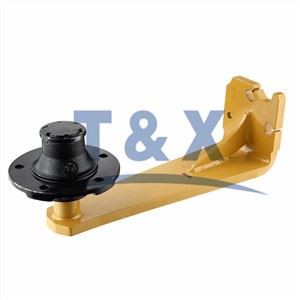
Now, let's talk about some of the products we offer as a flange parts supplier. We also provide other related products like Hub Axles, Aluminum Alloy Machined Boss, and Graphite Self - lubricating Copper Sleeve. These products are designed to work in harmony with our flange parts, providing a complete solution for your industrial needs.
When it comes to ensuring the vibration - resistance of our flange parts, we follow strict quality control measures. We use advanced manufacturing techniques and materials to produce flange parts that can meet the most demanding vibration - resistance requirements. Our team of experts conducts thorough testing on each part to ensure its quality and performance.
In addition to the technical aspects, we also understand the importance of cost - effectiveness. We strive to offer high - quality flange parts at competitive prices. This way, our customers can get the best value for their money without compromising on the quality and vibration - resistance of the products.
If you're in the market for flange parts or any of our other products, we'd love to hear from you. Whether you have a specific vibration - resistance requirement or just need some advice on the right product for your application, our team of experts is here to help. We can provide customized solutions based on your needs and specifications.
So, don't hesitate to reach out to us for a quote or to discuss your requirements. We're committed to providing the best products and services to our customers. Let's work together to find the perfect flange parts and related products for your industrial applications.
References
- "Mechanical Engineering Design" by Joseph E. Shigley, Charles R. Mischke, and Richard G. Budynas
- "Piping Handbook" by Mohinder L. Nayyar