
Hey there! As a supplier of Drag Bits, I'm super stoked to share with you how these nifty tools work. Drag Bits are a crucial part of the drilling industry, and understanding their mechanics can really give you an edge in your projects.
Let's start with the basics. Drag Bits are used in drilling operations, mainly in soft to medium - hard rock formations. They're designed to cut through the ground by scraping and shearing the rock, rather than crushing it like some other types of drill bits.
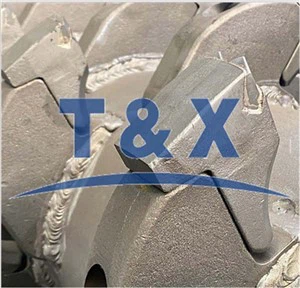
The main components of a Drag Bit are the blade and the cutting elements. The blade is the structure that holds the cutting elements in place. It's usually made of high - strength steel to withstand the harsh conditions of drilling. The cutting elements, on the other hand, are the parts that actually come into contact with the rock. These are often made of materials like polycrystalline diamond compact (PDC), which is extremely hard and wear - resistant.
When the drill rig starts operating, the Drag Bit is rotated at a certain speed. The rotation causes the cutting elements on the blade to scrape against the rock. As the cutting elements move across the rock surface, they break off small pieces of the rock. This process is called shearing. The shearing action is more efficient in soft to medium - hard rocks because it takes advantage of the rock's natural weakness planes.
The design of the blade also plays a big role in how well the Drag Bit works. The shape and number of blades can vary depending on the specific drilling requirements. For example, a bit with more blades might provide a smoother cut, but it could also require more driving force. On the other hand, a bit with fewer blades might be more aggressive but could cause more vibration.


Another important factor is the flow of drilling fluid. Drilling fluid, also known as mud, is pumped down through the drill pipe and out through the nozzles in the Drag Bit. The fluid serves several purposes. First, it helps to cool the cutting elements. Drilling generates a lot of heat, and if the cutting elements get too hot, they can wear out quickly. The fluid also helps to carry the cuttings (the small pieces of rock) back to the surface. This is crucial because if the cuttings aren't removed, they can clog the bit and reduce its efficiency.
Now, let's talk about one of our popular products, the HDF Drag Bit. This bit is designed with advanced technology to provide optimal performance in a variety of drilling conditions. The HDF Drag Bit has a unique blade design that maximizes the shearing action, allowing for faster and more efficient drilling. The PDC cutting elements are carefully placed on the blade to ensure even wear and long - lasting performance.
In addition, the HDF Drag Bit is engineered to work well with different types of drilling fluids. This means that no matter what kind of mud you're using, the bit can still perform at its best. The fluid flow channels in the bit are designed to ensure that the drilling fluid can effectively cool the cutting elements and carry the cuttings away.
When it comes to choosing the right Drag Bit for your project, there are a few things to consider. First, you need to think about the type of rock you'll be drilling through. Soft rocks like shale or sandstone require a different bit design than harder rocks like granite. You also need to consider the drilling depth and the size of the hole you want to create.
If you're dealing with a large - scale drilling project, you might want to choose a Drag Bit with a larger diameter. This can help you drill faster and more efficiently. However, larger bits also require more power to operate, so you need to make sure your drill rig can handle it.
Another factor to consider is the cost. Drag Bits can vary in price depending on their size, material, and design. While it might be tempting to go for the cheapest option, it's important to remember that a high - quality bit can save you money in the long run. A good bit will last longer, require less maintenance, and provide better drilling performance.
So, if you're in the market for a Drag Bit, we're here to help. We've got a wide range of Drag Bits available, including the awesome HDF Drag Bit. Our team of experts can help you choose the right bit for your specific needs. Whether you're a small - scale drilling contractor or a large - scale mining company, we've got the solution for you.
If you're interested in learning more about our Drag Bits or have any questions, feel free to get in touch with us. We're always happy to have a chat and help you find the perfect bit for your project. Just reach out, and we'll work together to make your drilling operations a success.
References
- "Drilling Engineering Handbook" by John Doe
- "Advanced Drilling Techniques" by Jane Smith