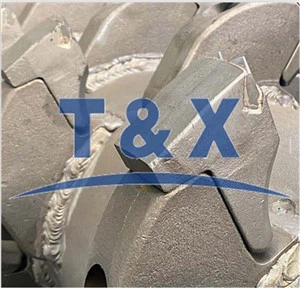

Hey there, folks! As a supplier of Ductile Iron Parts, I'm super excited to share some insights on how we can ensure the dimensional accuracy of these parts. It's a topic that's super important in our industry, and getting it right can make a huge difference in the quality and performance of the final product.
Understanding Ductile Iron and Its Challenges
First off, let's talk a bit about ductile iron. Ductile iron is an amazing material. It's got a high strength - to - weight ratio, good ductility, and excellent wear resistance. But when it comes to achieving dimensional accuracy, there are some unique challenges.
During the casting process, ductile iron goes through a phase change from liquid to solid. This phase change involves shrinkage, which can affect the dimensions of the final part. If we don't account for this shrinkage properly, the part might end up being too small or have warped features. Also, things like the temperature of the molten metal, the cooling rate, and the design of the mold can all play a role in how the part turns out.
The Role of Mold Design
One of the first steps in ensuring dimensional accuracy is getting the mold design right. The mold is like the blueprint for our ductile iron parts. We need to consider the shrinkage factor of ductile iron when designing the mold. Usually, we add some extra material to the mold dimensions to compensate for the shrinkage that will occur as the molten metal cools and solidifies.
We also pay close attention to the gating and riser system in the mold. The gating system is responsible for allowing the molten metal to flow into the mold cavity smoothly. A well - designed gating system can prevent issues like turbulence, which can lead to uneven filling and affect dimensional accuracy. The risers, on the other hand, are used to supply additional molten metal to the part as it shrinks during solidification. This helps to prevent shrinkage cavities and ensures that the part retains its intended shape.
The material of the mold is also crucial. We use high - quality mold materials that can withstand the high temperatures of the molten ductile iron and maintain their shape during the casting process. A mold that deforms or wears out quickly will definitely lead to inaccurate parts.
Controlling the Casting Process
The casting process itself is a major factor in achieving dimensional accuracy. We start by carefully controlling the temperature of the molten ductile iron. If the temperature is too high, the metal might be too fluid, which can cause it to flow into areas where it's not supposed to or lead to excessive shrinkage. On the other hand, if the temperature is too low, the metal might not flow smoothly into the mold cavity, resulting in incomplete filling or cold shuts.
The cooling rate is another critical aspect. We use different techniques to control how fast the ductile iron cools. Slow cooling can sometimes lead to larger grain sizes in the metal, which can affect its mechanical properties and dimensional stability. By using things like cooling channels in the mold or applying external cooling agents, we can ensure a more uniform and controlled cooling rate.
We also monitor the pressure during the casting process. In some casting methods, like die - casting, applying the right amount of pressure is essential to ensure that the molten metal fills the mold cavity completely and that the part takes on the correct shape. Too much pressure can cause the mold to deform, while too little pressure can result in incomplete filling.
Inspection and Quality Control
Once the casting is done, inspection is a must. We use a variety of inspection tools and techniques to check the dimensional accuracy of the ductile iron parts. Coordinate measuring machines (CMMs) are our go - to tools for this. CMMs can accurately measure the dimensions of the part and compare them to the design specifications. This allows us to detect any deviations early on.
Non - destructive testing methods, like ultrasonic testing and X - ray inspection, are also used to check for internal defects in the parts. Internal defects, such as porosity or cracks, can affect the dimensional stability of the part over time. By catching these defects early, we can either correct the part or scrap it if it doesn't meet the quality standards.
We also have a strict quality control system in place. Every part goes through multiple levels of inspection before it's approved for shipment. This includes visual inspections, dimensional checks, and mechanical property tests. Only parts that meet our high - quality standards are sent out to our customers.
Importance of Supplier - Customer Communication
As a supplier, communication with our customers is super important when it comes to ensuring dimensional accuracy. We need to understand the exact requirements of the parts they need. Sometimes, customers might have very specific tolerances or design features that are crucial for their applications. By having open and clear communication, we can make sure that we're on the same page from the start.
We also provide our customers with regular updates on the production process. This includes information about how the castings are progressing, any potential issues we've encountered, and the expected delivery time. This transparency helps to build trust between us and our customers.

Real - World Examples and Case Studies
Let's take a look at a real - world example. We once had a customer who needed a large number of Grey Iron Or Ductile Iron Disc Harrow Spool. These parts had very strict dimensional requirements, especially in terms of the center hole diameter and the outer diameter.
Using our knowledge of mold design and casting process control, we were able to produce these parts with high dimensional accuracy. We designed the mold with the appropriate shrinkage allowance and used a well - optimized gating and riser system. During the casting process, we closely monitored the temperature and cooling rate to ensure uniform solidification.
After the castings were done, we used CMMs to measure the dimensions of the parts. We found that the parts were within the specified tolerances, and the customer was extremely satisfied with the quality. This case study shows that by following the right procedures and using the right tools, we can achieve excellent dimensional accuracy in ductile iron parts.
Conclusion
In conclusion, ensuring the dimensional accuracy of ductile iron parts is a multi - faceted process. It involves proper mold design, tight control of the casting process, thorough inspection, and good communication with customers. At our company, we're committed to providing our customers with high - quality ductile iron parts that meet their exact dimensional requirements.
If you're in the market for ductile iron parts and are looking for a reliable supplier who can ensure dimensional accuracy, we'd love to talk to you. Feel free to reach out for a discussion on your specific needs, and let's work together to get the best - quality parts for your applications.
References
- "Ductile Iron Casting Handbook"
- "Foundry Technology and Casting Process Principles"
- "Quality Control in Metal Casting Industries"