
Is the Ploughing Point affected by tides?
As a supplier of ploughing points, I've often received inquiries from farmers and agricultural enthusiasts about various factors influencing the performance of these essential farming tools. One rather unique question that has come up is whether ploughing points are affected by tides. At first glance, this might seem like an unusual query, but it opens up an interesting discussion about the interaction between natural phenomena and agricultural equipment.
Understanding the Basics of Tides
Tides are the rise and fall of sea levels caused by the combined effects of the gravitational forces exerted by the Moon and the Sun, and the rotation of the Earth. The gravitational pull of the Moon is the primary cause of tides, as it creates two tidal bulges on opposite sides of the Earth. When these bulges align with a particular location on the Earth's surface, high tide occurs, and when they are perpendicular to a location, low tide occurs.
The Sun also has an influence on tides, but its effect is less significant compared to the Moon. During a new moon or a full moon, when the Sun, Moon, and Earth are in alignment, the gravitational forces of the Sun and Moon combine, resulting in higher high tides and lower low tides known as spring tides. During the first and third quarters of the moon, when the Sun and Moon are at right angles to each other, the gravitational forces partially cancel each other out, leading to smaller tidal ranges called neap tides.
Ploughing Points: Their Function and Environment
Ploughing points are crucial components of agricultural machinery, specifically designed to break up and turn over soil during the ploughing process. They are typically made of high - strength materials such as boron steel, which can withstand the harsh conditions of digging into the ground. The effectiveness of a ploughing point depends on its shape, material quality, and the characteristics of the soil it is working in, such as soil type, moisture content, and compaction level.
Most ploughing operations take place on land, far from the direct influence of ocean tides. However, in some coastal areas or regions near large bodies of water, the water table can be affected by tidal fluctuations. This can indirectly impact the soil conditions and, in turn, the performance of ploughing points.


Indirect Impact of Tides on Ploughing Points
-
Soil Moisture Content: Tidal changes can affect the water table in coastal and near - water areas. During high tide, the water table rises, which can lead to an increase in soil moisture content in the surrounding areas. Wetter soil is generally softer and easier to plough, but it can also be more sticky. This means that ploughing points may encounter less resistance when cutting through the soil, but they may also accumulate more soil on their surfaces, reducing their efficiency over time. On the other hand, during low tide, the water table drops, and the soil becomes drier and more compact. Ploughing points will need to exert more force to break through the soil, which can cause greater wear and tear on the points.
-
Soil Erosion and Sedimentation: Tidal movements can cause coastal soil erosion and sedimentation. Eroded soil may contain different types of particles, including sand, silt, and clay, which can have varying effects on ploughing points. For example, sandy soil is abrasive and can cause rapid wear on the ploughing points, especially if the points do not have a proper wear - resistant coating. Sedimentation can also change the topography and soil composition of an area, making the ploughing process more challenging.
-
Saltwater Intrusion: In coastal regions, high tides can sometimes lead to saltwater intrusion into the soil. Salt - contaminated soil can have a negative impact on both the soil structure and the crops. From the perspective of ploughing points, salt can accelerate corrosion, especially if the points are not made of corrosion - resistant materials. This can significantly reduce the lifespan of the ploughing points and increase the maintenance costs for farmers.
Our Product Offerings
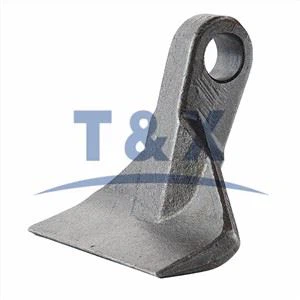
As a leading supplier of ploughing points and other agricultural machinery parts, we offer a wide range of products designed to withstand various working conditions. Our Boron Steel Forged Ploughing Point With Hard Facing Coating is made of high - quality boron steel and features a hard - facing coating that enhances its wear resistance. This makes it suitable for use in different soil types, including those affected by tidal - related changes in soil conditions.
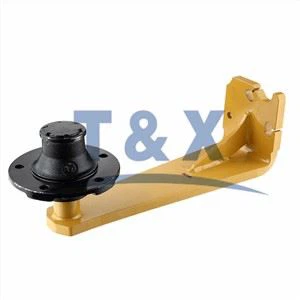
In addition to ploughing points, we also provide a variety of other agricultural parts. Our Hard Faced Sweep Points are designed for specific cultivator applications and offer excellent durability. The Forged Wear Resistant Earth Preparation Cutter is ideal for preparing the soil before planting. We also have a comprehensive range of Cultivator Attachments and Cultivator Sweeps to meet the diverse needs of farmers.
Conclusion
While ploughing points are not directly affected by tides, in coastal and near - water areas, tides can have an indirect impact on their performance through changes in soil moisture, erosion, sedimentation, and saltwater intrusion. As a supplier, we understand the importance of providing high - quality products that can withstand these challenging conditions.
If you are involved in agriculture and are looking for reliable ploughing points and other agricultural machinery parts, we invite you to contact us for a detailed product inquiry. Our team of experts is always ready to assist you in finding the most suitable products for your farming needs. Whether you are facing the unique challenges of coastal farming or more traditional inland ploughing, we have the solutions to meet your requirements.
References
- Carter, R. W. G. (1988). Coastal Environments: An Introduction to the Physical, Ecological and Cultural Systems of Coastlines. Academic Press.
- Dyer, K. R. (1997). Tides, Surges and Mean Sea - Level. Wiley - Interscience.
- Hillel, D. (2004). Introduction to Environmental Soil Physics. Academic Press.