
If you’ve ever watched a CNC milling or turning machine hum along at a job shop, you might’ve thought, “How does that sharp tool not wear out grinding through metal all day?” As someone who’s been supplying custom machined parts for over a decade—making everything from small aluminum bosses for automotive electronics to heavy-duty trailer wheel hubs—I’ve learned the cutting tool material is make-or-break for both part quality and production speed. I’ve messed around with more tool materials than I can count, and today I’m breaking down the most common ones, plus how each works with the parts we make every single week.
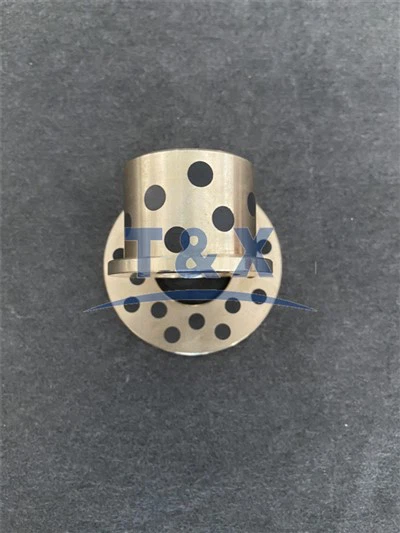
First, let’s start with the OG of cutting tools: High-Speed Steel (HSS). If you’ve ever turned a DIY wooden chair leg or drilled through a thin aluminum sheet, you’ve used HSS. It’s tough, relatively cheap, and easy to sharpen, which makes it perfect for low-stakes, small-batch jobs. The “high-speed” part comes from its ability to stay hard at higher temperatures, so you can run it faster than plain carbon steel without it melting into your workpiece. But here’s the catch: HSS softens if the tip gets too hot, so it’s not great for cutting super hard materials like hardened steel or titanium. For our shop, we use HSS mostly for custom prototype parts—like when a customer needs a one-off graphite self-lubricating copper sleeve (link: /oem-metal-parts/cnc-machining-parts/graphite-self-lubricating-copper-sleeve.html) to test in a new industrial pump. We don’t run those jobs at full production speed, so HSS holds up just fine. It’s also a go-to for tapping threads in soft brass or aluminum, since the small tap tips don’t take a beating like a full-end mill would.


Next up is a step above HSS: Cemented Carbide, or just carbide for short. This is the workhorse of modern machining, and it’s what we use for 70% of our production runs, including the aluminum alloy machined boss (link: /oem-metal-parts/cnc-machining-parts/aluminum-alloy-machined-boss.html) we make for compact car engine mounts. Carbide is a composite made of tiny tungsten carbide particles bonded together with cobalt, so it’s way harder than HSS—like, 2-3 times harder— and it retains that hardness at crazy high temperatures (up to 1,500°C, which is way hotter than a kitchen oven). That means we can run our CNC machines at full tilt, cutting through thick aluminum blocks in minutes instead of hours, without the tool wearing down after 10 parts. The only downside? It’s way more brittle than HSS, so you can’t use it for things like tapping thin materials or performing delicate, shock-prone cuts—you’d chip the tip instantly. We also use coated carbide inserts for harder materials, like when we’re machining steel trailer wheel hubs. The coating (usually titanium nitride or diamond-like carbon) reduces friction, so the tool lasts longer and gives a smoother finish, which is huge for parts that need to fit tight, like those trailer wheel hubs.
Wait, speaking of trailers, let’s talk about cermets and ceramic tools, which are absolute beasts for cutting hardened steel and other super tough metals. Cermets are a mix of ceramic and metal, so they’re harder than carbide and have better heat resistance, but still a bit more flexible than pure ceramic. We use cermets for semi-finishing and finishing cuts on parts like the trailer wheel hubs spindle (link: /oem-metal-parts/cnc-machining-parts/trailer-wheel-hubs-spindle.html), which needs a mirror-smooth surface to spin without friction. Pure ceramic tools are even harder—they’re made of aluminum oxide or silicon nitride—and they can cut through hardened steel that’s already been heat-treated to 50+ HRC, which would dull a carbide tool in minutes. The catch? Both cermets and ceramic are way more brittle than carbide, so you can only use them for light, steady cuts. If you bump the tool into the workpiece or run it at a wrong angle, it shatters like a coffee mug dropped on concrete. We save these for high-precision jobs where finish matters more than speed, like parts for medical devices or aerospace components, not the heavy-duty trailer hubs that take a beating on the road.
Then there’s the fancy stuff for super hard materials: Cubic Boron Nitride (CBN) and Polycrystalline Diamond (PCD). CBN is the second hardest material on Earth (after diamond), and it’s made of compressed boron nitride particles. We only pull out CBN tools for the toughest jobs, like machining hardened tool steel for heavy-duty trailer wheel stamping hub housing (link: /oem-metal-parts/cnc-machining-parts/trailer-wheel-hubs-stamping-hub.html) that’s going to carry 10,000+ pounds. CBN can cut through steel at full speed without softening, so it’s way more efficient than grinding those parts. PCD is diamond, basically—polycrystalline diamond bonded to a carbide substrate. It’s perfect for cutting non-ferrous metals like aluminum, copper, and even graphite, because diamond doesn’t stick to those materials (iron, on the other hand, dissolves diamond, so you’d never use PCD on steel). We use PCD tools when machining the aluminum parts that go into electric vehicles, since they need extremely tight tolerances—like within 0.001 inches—to work properly. The downside? Both CBN and PCD are crazy expensive, so we only use them when nothing else will get the job done, and we make sure to optimize every cut to avoid wasting them.
Now, I can’t talk about cutting tools without mentioning a huge game-changer these days: coated tools. Wait, I touched on coatings earlier with carbide, but there are so many types now, and they make a massive difference. For example, we use diamond coatings on carbide tools when machining aluminum parts, because aluminum has a tendency to “stick” to uncoated tools and leave gunk all over the workpiece, which ruins the finish. The diamond coating acts like a non-stick pan, so the part comes out clean and smooth. We also use titanium carbonitride coatings for stainless steel parts, which resist heat and reduce friction, so we can run the machines faster without tool wear. Some new coatings even have self-lubricating properties, which is a big deal for parts like that graphite self-lubricating copper sleeve I mentioned earlier—they need a consistent lubricating surface, and a coated tool helps maintain that during machining.
A common mistake I see new machinists (and even some small part shops) make is picking the wrong tool material for the job. Like, using a cheap HSS tool for a thick steel trailer hub—you’ll get one lousy part, and the tool will break after 5 minutes. Or using a super expensive PCD tool on a soft aluminum prototype—you’re wasting thousands of dollars on a tool that’s overkill. For us, the key is matching the tool material to the part material, the production volume, and the required finish. For example, when we’re making the trailer wheel hubs kit (link: /oem-metal-parts/cnc-machining-parts/trailer-wheel-hubs-kit.html) in high volume, we use coated carbide inserts because they’re cheap enough to replace regularly, but hard enough to hold up to 100+ parts per insert. For low-volume, high-precision custom parts, we might splurge on cermet tools to get that perfect finish without extra polishing.
At the end of the day, cutting tool materials aren’t just some abstract engineering term—they directly impact the parts we make, how fast we can get them to customers, and how much they cost. After 10 years in this business, I’ve learned that skimping on tool materials almost always comes back to bite you: bad part quality, late deliveries, and unhappy customers. Whether you need a simple aluminum boss for a car, a heavy-duty trailer hub for your work, or a custom graphite sleeve for a industrial machine, picking the right cutting tool is how we make parts that work as hard as our customers do.
If you’re looking for custom machined parts, whether it’s the components I mentioned here or something totally different, my team and I have the expertise to pick the right tools and materials to get your parts right, on time, and within budget. Reach out to us to discuss your project—we’re always happy to help.
References
ASM International. (2016). Cutting Tool Materials. ASM Handbook, Volume 16: Machining.
DeGarmo, E. P., Black, J. T., & Kohser, R. A. (2020). Materials and Processes in Manufacturing (13th ed.). Wiley.
Machinery’s Handbook (31st ed.). (2020). Industrial Press.