
Hey there! I'm a supplier of machining parts, and today I wanna chat about the difficulties in machining parts with high - aspect - ratio features. High - aspect - ratio features refer to parts where the ratio of one dimension (usually the length) to another (usually the width or diameter) is quite large. For example, a long, thin rod or a deep, narrow slot. These parts are super common in various industries, but boy, are they a pain to machine!
Tool Wear and Breakage
One of the biggest headaches when machining high - aspect - ratio parts is tool wear and breakage. When you're dealing with long, thin tools or trying to cut deep into the material, the tools are under a lot of stress. The cutting forces are concentrated on a small area of the tool, which can cause rapid wear.
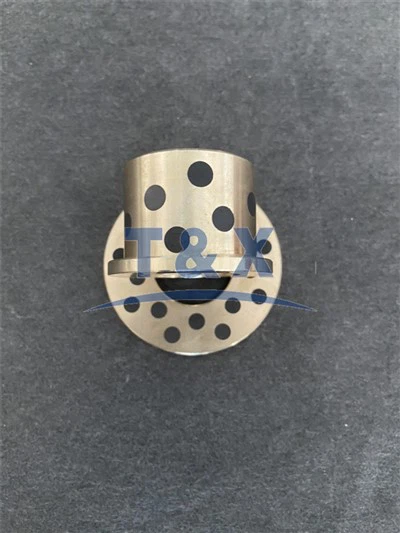
Let's say you're machining a Graphite Self - lubricating Copper Sleeve. If you have to drill a long, narrow hole in it, the drill bit is likely to wear out quickly. The heat generated during the cutting process can also soften the tool material, reducing its hardness and making it more prone to wear.
And then there's the risk of breakage. Since the tools are often long and thin, they're more likely to bend or break under the cutting forces. A small misalignment or a sudden increase in the cutting load can snap the tool right off. This not only means wasted time and money on replacing the tool but can also damage the part being machined.
Chip Evacuation
Chip evacuation is another major challenge. In high - aspect - ratio machining, the chips are often produced in long, thin shapes. These chips can get stuck in the narrow spaces of the part or around the cutting tool.
Imagine machining a Machined Pins Construction Machinery Parts. If the chips aren't removed properly, they can cause a lot of problems. They can interfere with the cutting process, making it difficult to achieve the desired surface finish. The chips can also cause tool wear by rubbing against the tool surface. And in some cases, the accumulated chips can even cause the tool to break due to the increased pressure.
To solve this problem, we often use special coolant systems to flush the chips out. But even with coolants, it can still be a struggle, especially when dealing with very deep or narrow features.
Dimensional Accuracy and Surface Finish
Maintaining dimensional accuracy and a good surface finish is crucial in machining, but it's even more challenging with high - aspect - ratio parts. The long and thin nature of these parts makes them more susceptible to deflection and vibration during the machining process.
For instance, when machining an Aluminum Alloy Machined Boss with a high - aspect - ratio feature, any small vibration can cause the cutting tool to deviate from its intended path. This can result in dimensional errors and a poor surface finish. The deflection of the part itself can also lead to uneven cutting and inconsistent dimensions.
To ensure dimensional accuracy, we have to use advanced machining techniques and precise control systems. We might need to adjust the cutting parameters, such as the cutting speed, feed rate, and depth of cut, to minimize the effects of deflection and vibration. But this requires a lot of experience and trial - and - error.
Material Properties and Toughness
The material properties of the workpiece can also pose difficulties in high - aspect - ratio machining. Some materials are very tough and difficult to cut, especially when you're trying to machine long, thin features.
For example, if we're machining a high - strength alloy, the cutting forces required are much higher. This means more stress on the tool and a greater risk of tool wear and breakage. The toughness of the material can also make it harder to break the chips into smaller, more manageable pieces, which further complicates chip evacuation.
On the other hand, some materials are very soft and can deform easily. When machining high - aspect - ratio features in soft materials, there's a risk of the part being distorted during the cutting process. The cutting forces can cause the part to bend or warp, leading to dimensional inaccuracies.
Workholding Issues
Proper workholding is essential in machining, but it becomes even more critical when dealing with high - aspect - ratio parts. These parts are often long and thin, which makes them difficult to hold securely.
If the part isn't held firmly in place, it can move or vibrate during the machining process, leading to poor surface finish and dimensional errors. And since the parts are often delicate, we have to be careful not to apply too much clamping force, which could damage the part.
We might use special fixtures or clamping devices to hold the high - aspect - ratio parts. But designing and manufacturing these fixtures can be expensive and time - consuming. And even with the best fixtures, it can still be a challenge to ensure that the part is held perfectly still.
Cost and Time Considerations
All these difficulties add up to higher costs and longer machining times. The frequent tool changes due to wear and breakage mean more money spent on tools. The need for special coolant systems, advanced machining techniques, and precise workholding fixtures also increases the cost.
And then there's the time factor. Machining high - aspect - ratio parts often takes longer because we have to be more careful and make multiple passes to achieve the desired results. The trial - and - error process of adjusting the cutting parameters to ensure dimensional accuracy and a good surface finish also adds to the machining time.


In conclusion, machining parts with high - aspect - ratio features is a complex and challenging task. But at our company, we've got the experience and expertise to handle these challenges. We're constantly working on improving our machining techniques and using the latest technologies to overcome these difficulties.
If you're in the market for high - quality machining parts, whether it's Graphite Self - lubricating Copper Sleeve, Machined Pins Construction Machinery Parts, Aluminum Alloy Machined Boss, or any other custom - made parts, don't hesitate to reach out. We're here to provide you with top - notch products and excellent service. Let's have a chat and see how we can meet your machining needs!
References
- "Manufacturing Engineering and Technology" by Serope Kalpakjian and Steven R. Schmid
- "Modern Machining Technology" by Robert L. Novak