
Residual stress is a critical factor that significantly impacts the performance and reliability of aluminum forging parts. As a leading supplier of Aluminum Forging Parts, we understand the importance of residual stress and its implications for the quality of our products. In this blog post, we will delve into the residual stress levels in aluminum forging parts, exploring their causes, effects, and measurement methods.
What are Residual Stresses?
Residual stresses are self - equilibrating stresses that remain within a material after the original cause of the stress, such as external loading or thermal processing, has been removed. In the context of aluminum forging parts, these stresses can be introduced during various manufacturing processes, including forging, heat treatment, machining, and welding.
Causes of Residual Stresses in Aluminum Forging Parts
Forging Process
During forging, the aluminum is subjected to high pressures and plastic deformation. The non - uniform deformation across the cross - section of the forging can lead to the development of residual stresses. For example, the outer layers of the forging may experience more deformation than the inner layers, resulting in a stress gradient. The rate of deformation, the temperature at which forging occurs, and the shape complexity of the part all influence the magnitude and distribution of residual stresses.
Heat Treatment
Heat treatment is a common process used to improve the mechanical properties of aluminum forging parts. However, rapid heating and cooling during heat treatment can cause significant thermal gradients within the material. When the material expands or contracts unevenly due to these temperature differences, residual stresses are generated. For instance, quenching, a rapid cooling process, can lead to high residual stresses as the outer surface cools and contracts faster than the inner core.
Machining
Machining operations such as turning, milling, and grinding can also introduce residual stresses. The cutting forces and the heat generated during machining can cause plastic deformation and thermal effects in the surface layer of the part. The magnitude of these stresses depends on factors such as the cutting speed, feed rate, depth of cut, and the sharpness of the cutting tool.
Effects of Residual Stresses on Aluminum Forging Parts
Dimensional Stability
Residual stresses can cause dimensional changes in aluminum forging parts over time. If the residual stresses are not properly relieved, the part may distort or warp, leading to a loss of dimensional accuracy. This is particularly critical in applications where tight tolerances are required, such as in aerospace and automotive components.

Fatigue Life
High residual stresses can significantly reduce the fatigue life of aluminum forging parts. The presence of residual tensile stresses can act in combination with applied cyclic loads, increasing the overall stress level and promoting crack initiation and propagation. On the other hand, compressive residual stresses can improve fatigue resistance by reducing the effective tensile stress at the surface of the part.
Corrosion Resistance
Residual stresses can also affect the corrosion resistance of aluminum forging parts. Tensile residual stresses can create regions of high stress concentration, which are more susceptible to corrosion. In addition, the stress - induced deformation can disrupt the protective oxide layer on the surface of the aluminum, exposing the underlying material to corrosive environments.
Measuring Residual Stress Levels in Aluminum Forging Parts
Destructive Methods
One of the most common destructive methods for measuring residual stresses is the hole - drilling method. In this method, a small hole is drilled into the surface of the part, and the relaxation of the residual stresses around the hole is measured using strain gauges. The measured strains are then used to calculate the original residual stress levels. Another destructive method is the sectioning method, where the part is cut into sections, and the resulting distortion is measured to determine the residual stresses.
Non - Destructive Methods
Non - destructive methods are preferred when it is necessary to measure residual stresses without damaging the part. Ultrasonic testing can be used to measure residual stresses based on the change in the ultrasonic wave velocity due to the presence of stresses. X - ray diffraction is another non - destructive technique that can provide information about the residual stress state by analyzing the diffraction pattern of X - rays scattered by the crystal lattice of the material.
Controlling and Reducing Residual Stresses in Aluminum Forging Parts
Stress Relief Heat Treatment
Stress relief heat treatment is a widely used method for reducing residual stresses in aluminum forging parts. The part is heated to a specific temperature below its recrystallization temperature and held for a certain period of time to allow the stresses to relax. The heating rate, holding time, and cooling rate are carefully controlled to ensure effective stress relief without significantly altering the mechanical properties of the material.
Design Optimization
Proper design of aluminum forging parts can also help to reduce residual stresses. Avoiding sharp corners and sudden changes in cross - section can minimize stress concentrations during forging and heat treatment. Using symmetrical designs can also help to balance the stresses and reduce the likelihood of distortion.
Process Optimization
Optimizing the forging, heat treatment, and machining processes can further reduce residual stresses. For example, using slower forging speeds and more uniform temperature distributions during forging can reduce the stress gradients. Similarly, adjusting the heat treatment parameters to minimize thermal gradients and using appropriate machining parameters can help to reduce the introduction of residual stresses during these processes.
Importance of Residual Stress Management for Our Aluminum Forging Parts
As a supplier of Aluminum Forging Parts, we recognize the crucial role of residual stress management in ensuring the quality and performance of our products. By carefully controlling and reducing residual stresses, we can provide our customers with parts that have excellent dimensional stability, long fatigue life, and high corrosion resistance. Our commitment to quality extends to every stage of the manufacturing process, from raw material selection to final inspection.
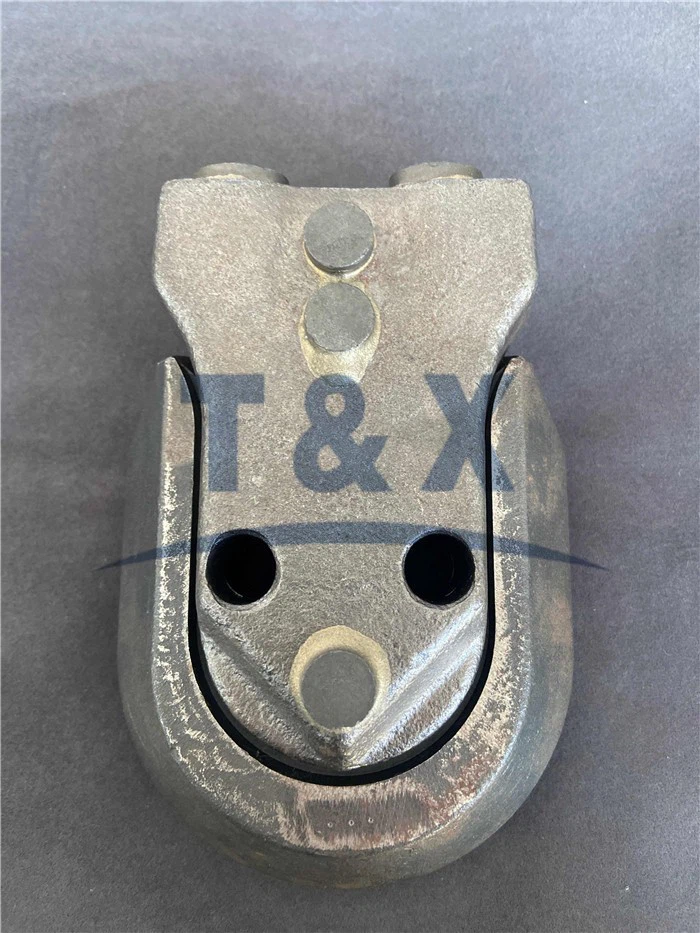
We also offer a wide range of other forging parts, including Alloy Steel Forging Parts and Carbon Steel Forging Parts. In addition, we have unique products like the Wearable Construction Tips WS39 Shoe Holder, which are designed to meet the diverse needs of our customers.
If you are in the market for high - quality aluminum forging parts or any of our other products, we invite you to contact us for procurement and negotiation. Our team of experts is ready to assist you in finding the best solutions for your specific requirements.
References
- Hertzberg, R. W., Vanstone, J. P., & Hertzberg, R. D. (2013). Deformation and Fracture Mechanics of Engineering Materials. Wiley.
- ASM Handbook Committee. (2008). ASM Handbook Volume 4: Heat Treating. ASM International.
- Kalpakjian, S., & Schmid, S. R. (2013). Manufacturing Engineering and Technology. Pearson.