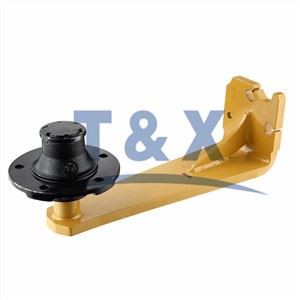

As a supplier of trencher parts, I often get asked about the quality control process we follow. It's a crucial aspect of our business because the quality of trencher parts directly impacts the performance and safety of trenching equipment. In this blog post, I'll break down the quality control process for trencher parts, from raw materials to the finished product.
Raw Material Inspection
The quality control process starts right at the beginning, with the inspection of raw materials. When we receive raw materials like steel, carbide, and other alloys, we conduct a thorough inspection. This involves checking the material's composition, hardness, and other physical properties.
We use advanced testing equipment, such as spectrometers, to determine the exact chemical composition of the metals. This ensures that the materials meet the required standards for strength and durability. For example, the steel used in Trencher Chain needs to have the right amount of carbon and other alloying elements to withstand the high stress and wear during trenching operations.
In addition to composition analysis, we also perform hardness tests. Hardness is a critical property as it affects the wear resistance of the parts. Using a hardness tester, we can measure the hardness of the raw materials at various points to ensure uniformity. If the hardness is not within the specified range, the raw material is rejected.
Manufacturing Process Monitoring
Once the raw materials pass the inspection, they move on to the manufacturing process. At every stage of manufacturing, we have strict quality control measures in place. Each manufacturing step, from cutting and shaping to heat treatment and finishing, is closely monitored.
During the cutting and shaping processes, we use precision machinery to ensure that the parts are made to the exact specifications. Computer Numerical Control (CNC) machines are programmed to cut the parts with high accuracy. We regularly check the dimensions of the parts using calipers, micrometers, and other measuring tools. Any deviation from the design specifications is immediately corrected.
Heat treatment is another crucial step in the manufacturing process. It can significantly affect the mechanical properties of the parts. We closely monitor the temperature, time, and atmosphere during heat treatment to achieve the desired hardness, toughness, and ductility. For example, the Trencher Hard Faced Teeth need to have a hard surface layer for wear resistance and a tough core for impact resistance. We use advanced heat treatment techniques, such as quenching and tempering, and carefully control the process parameters to meet these requirements.
After heat treatment, the parts go through finishing processes such as grinding and polishing. These processes not only improve the surface finish of the parts but also ensure that the final dimensions are within the tolerance limits. We use surface roughness testers to measure the surface finish and ensure that it meets the quality standards.
In - process Testing
In addition to monitoring the manufacturing steps, we conduct various in - process tests. These tests help us identify any potential quality issues early on, allowing us to take corrective actions before the parts are finished.
One of the in - process tests we perform is non - destructive testing (NDT). NDT methods, such as ultrasonic testing and magnetic particle testing, are used to detect internal and surface defects in the parts. Ultrasonic testing is particularly useful for detecting internal cracks or voids that may not be visible to the naked eye. Magnetic particle testing is used to detect surface and near - surface defects in ferromagnetic materials.
We also perform functional tests on some of the trencher parts. For example, we test the Trencher Carbide Teeth for their cutting performance. We use specialized testing rigs to simulate the actual trenching conditions and evaluate how well the teeth cut through different types of soil and rock.
Final Inspection
Once the parts are fully manufactured, they undergo a final inspection. This is a comprehensive check to ensure that the parts meet all the quality requirements. The final inspection includes a visual inspection to check for any external defects such as scratches, dents, or improper surface finish.
We also re - check the dimensions of the parts using precision measuring instruments. This ensures that the parts fit perfectly into the trenching equipment without any issues. In addition, we perform a final functional test to verify that the parts work as intended.
After the final inspection, the parts are cleaned, lubricated, and packaged properly for shipping. We take great care in packaging to prevent any damage during transit.
Quality Assurance Documentation
Throughout the quality control process, we maintain detailed documentation. This includes records of raw material inspections, manufacturing process data, in - process test results, and final inspection reports. These documents serve as evidence of the quality of our products and are available to our customers upon request.
The quality control documentation also helps us in continuous improvement. By analyzing the data in these documents, we can identify areas where we can optimize our manufacturing processes and quality control measures.
Why Quality Control Matters
Quality control is not just a technical requirement; it's essential for our business and our customers. High - quality trencher parts ensure the reliable operation of trenching equipment. They reduce the risk of breakdowns and downtime, which can be costly for our customers.
In addition, quality parts have a longer service life, which means that our customers don't have to replace the parts as frequently. This not only saves them money but also reduces the environmental impact associated with the production and disposal of parts.


Let's Talk
If you're in the market for high - quality trencher parts, we'd love to hear from you. Our strict quality control process ensures that you get the best products for your trenching needs. Whether you need Trencher Chain, Trencher Hard Faced Teeth, or Trencher Carbide Teeth, we've got you covered. Reach out to us to discuss your requirements and start a partnership for reliable and efficient trencher parts.
References
- ASTM International standards for metal materials
- Machinery's Handbook for manufacturing process guidelines
- Industry best practices for quality control in manufacturing