

Founded in 2004 and located in Ningbo city, east seaport of China
T & x Machinery has been committed to providing customers with various OEM products and offering services according to diversified processes like forging,casting and CNC machining.Meanwhile,T&X Machinery pays high attention to its own product research & development.
Why Choose Us?
High quality
Our products are manufactured or executed to very high standards, using the finest materials and manufacturing processes.
Competitive Price
We offering a higher-quality product or service at an equivalent price. As a result we have a growing and loyal customer base.
Rich experience
Our company has many years of production work experience. The concept of customer-oriented and win-win cooperation makes the company more mature and stronger.
Global shipping
Our products support global shipping and the logistics system is complete, so our customers are all over the world.
After-sale service
Professional and thoughtful after -sales team, let you worry about us after -sales Intimate service, strong after -sales team support.
Advanced equipment
A machine, tool or instrument designed with advanced technology and functionality to perform highly specific tasks with greater precision, efficiency and reliability.
-
![Precision Cast Trailer Connector]() Precision Cast Trailer ConnectorOur connector parts are made by lost wax casting process and CNC machining work.With over 20 years lost wax casting and CNC machining experiences, we can make OEM and ODM products as per customers'
Precision Cast Trailer ConnectorOur connector parts are made by lost wax casting process and CNC machining work.With over 20 years lost wax casting and CNC machining experiences, we can make OEM and ODM products as per customers' -
![Lost Wax Casting Cross Bit & Lost Bit]() Lost Wax Casting Cross Bit & Lost BitWe have over 20 years experiences on lost wax casting, we can make many types of drill bit including step drag bit, chevron drag bit, button bit, lost bit and cross bit. All bits can be made as per
Lost Wax Casting Cross Bit & Lost BitWe have over 20 years experiences on lost wax casting, we can make many types of drill bit including step drag bit, chevron drag bit, button bit, lost bit and cross bit. All bits can be made as per -
![Cast Flail Cutter]() Cast Flail CutterCertification: ISO9001. Dimensions: OEM Customized/Customer′s Drawing. Transport Package: Plastic bags + Wooden case
Cast Flail CutterCertification: ISO9001. Dimensions: OEM Customized/Customer′s Drawing. Transport Package: Plastic bags + Wooden case -
![42CrMo Alloy Steel Harden Fishtail Bit]() 42CrMo Alloy Steel Harden Fishtail BitCertification: ISO9001. Dimensions: OEM Customized/Customer′s Drawing. Transport Package: Plastic bags + Wooden case
42CrMo Alloy Steel Harden Fishtail BitCertification: ISO9001. Dimensions: OEM Customized/Customer′s Drawing. Transport Package: Plastic bags + Wooden case


Lost wax casting is used to produce parts that require tight tolerances with thinner walls and exceptional surface finishes that require very little after process finishing. The casting process for lost wax casting involves multiple steps that begin with the creation of the pattern, or master, which is made from wax.
Benefits of Lost Wax Casting Parts
1.Complex geometries, thin walls, and fine features are relatively easy to achieve reliably, providing remarkable design freedom.
2.The dimensional accuracy and repeatability of castings are very good, assuming the patterns are regular and identical.
3.Surface finishes are generally good and the process can be tuned to deliver exceptional surface quality and precisely defined textures.
4.Few limitations exist in material selection for casting—including: resins, ceramics, cement, most metals/alloys, and glass.
5.General properties in the cast part faithfully reproduce the properties of the raw material.
6.Material wastage is very low, as all feed/sprue parts can be re-used (except thermoset resins).
7.Complex assemblies of multiple components can be consolidated into a single lost wax casting parts, reducing assembly time and potential failure points.
8.Tooling costs are low (in comparison with die casting).
9.Less post-processing is required than with typical sand casting.
Application of Lost Wax Casting Parts
Oil and gas
The oil and gas industry needs to use hardware parts and components with complex shapes and dimensional accuracy for their refinery and other equipment. To produce these parts and components, lost wax casting is the best method to use.
Food industry
There are plenty of food-related products that use the lost wax casting process, such as tableware, cutlery, and kitchenware. Stainless steel is the most common material used by the food industry to create various food-related products using lost wax casting. The reason is that stainless steel won’t contaminate the foods, which won’t pose any risks for your health.
Automotive
Various parts and components for the automotive industry, such as engines, exhaust pipes, gears, and many others, use the lost wax casting method to produce them. With lost wax casting, you can use various materials for the parts production in the automotive industry, such as stainless steel, iron, copper, and many others.
Aerospace
The aerospace industry also needs to use lost wax casting to produce various parts and components for their aircraft. Manufacturers use the lost wax casting process to produce the engines and other essential construction parts of aircraft and spacecraft.
Medical
Lost wax casting is also useful in various medical applications, which include creating dental models in dentistry, creating medical tools for orthopedic patients, and creating various surgical tools, wheelchairs, stretchers, and other medical equipment.
Material of Lost Wax Casting Parts
Stainless steels and heat resistant lost wax castings
Stainless steel offers a versatile option for castings, and is used across many industries. The material is built from a mix of chromium, nickel and molybdenum. The grain and properties of the alloy created when using stainless steel will be determined by the levels of each of these metals. As chromium always accounts for 10% of the metal used, these alloys will be resistant to corrosion and oxidation.
Carbon steel lost wax castings
Often chosen due to its low cost, economical and ferromagnetic properties, carbon steel is available in several grades and can be versatile in its ductility with heat treatment. Carbon steel alloys are often used within the aerospace, agriculture, medical and firearm industries.
Nickel and cobalt alloys
Like stainless steel, nickel and cobalt alloys are resistant to oxidation, however both also offer a strong resistance to heat, wear and corrosion. Due to this you often find these alloys suit industries where extreme heat and corrosion is possible, such as marine, military, chemical and aerospace. These materials can be combined alongside iron and aluminium to create Alnico, a superalloy which offers a permanent magnet used within electric motors, magnetron tubes, turbine blades and jet aircraft engines.
Copper-based alloys
Copper based alloys offer exceptional thermal and electrical conductivity, low wear and tear rates and good ductility. They are often found within the marine, plumbing and electrical industries. Alloys featuring copper include bronze which is found in bearings and boat propellers, brass found in musical instruments, plumbing and explosives, and cooper-nickel which is commonly combined to make castings in the marine industry.
Aluminium lost wax castings
Aluminium lost wax castings are popular due to the metal’s machinability and corrosion resistance. Thanks to its fluid nature aluminium alloys can feature thin walls and when combined with other metals or when heat treated, the metal develops exceptional strength. The metal is one of the most abundant of all as it makes up 8% of the Earth’s crust. It is a lightweight metal often used in the aerospace, military, automotive, packaging, food preparation and electrical industries.
Process of Lost Wax Casting Parts
Creation of the die: In the first step, the die is created based on the 3D CAD rendering of the part.
Producing the wax pattern: Wax is poured into the die to form the pattern. This is repeated for the number of parts to be cast.
Wax pattern tree: The sprue, or the vertical passage through which liquid material runs, connects the wax patterns to form the tree.
Shell building: The pattern is dipped in a liquid ceramic binder to form a hard exterior shell, leaving one end of the tree exposed for wax removal.
Dewaxing: To remove the wax, the shell is placed into an oven, melting the wax so that it can run out of the shell.
Burnout: To remove residual wax and moisture, the shell is again placed into an oven at an extremely high temperature, removing the extraneous materials and solidifying the ceramic mold.
Casting: Molten metal is poured into the open side of the mold. From there, either gravity or a forced method distributes the metal, depending on the size of the mold and type of molten metal.
Removing the mold: The ceramic mold is removed either by hammering the ceramic, blasting it with high pressure water or applying a chemical that includes liquid nitrogen.
Cutting: Once the ceramic mold has been removed, the finished part is separated with a grinder. The waste material is collected for reuse.
Finishing: To remove scales and residual material, the finished part is shot or sand blasted.
Surface treatment: For components that need protection from rust, corrosion or weather damage, the component is dipped into an anti-rust solution or oil. Other surface treatments include painting or galvanizing.
Lost Wax Casting Parts Tips
Keep the shell mould dry: Check whether the tooling is dry before casting to avoid defects such as bubbles and shrinkage.
Preheat the shell mould: Preheat the mould before casting, so that its temperature rises gradually to avoid damage caused by sudden contact with high temperature metal.
Pay attention to the atmosphere control during the casting process: Avoid oxygen and moisture in the air from entering the metal melt and affecting the casting quality.
Clean up the mould in time after the casting is finished: When cleaning the mould, be careful not to scratch the surface of the mould to avoid affecting the effect of the next use.
Strictly follow the specifications: The casting should be operated in strict accordance with the relevant specifications, such as the control of casting temperature, pressure, speed and other parameters to ensure that the quality of the product meets the standard requirements.

Lost-wax casting is used worldwide with the oldest known object, an amulet, created in the Indus Valley over 6,000 years ago. Historians have found discoveries of scepters, furniture and sculptures in many other places, including Nicaragua, Vietnam, Israel and Nigeria, showing how far this casting process spread over the years. By the 18th century, the process of using lost-wax casting to create sculptures and other ornaments was supplemented with piece molding to keep up with the demands of growing industries. While it was never completely forgotten, lost-wax casting went through a decreased popularity cycle and was ‘rediscovered’ again.
Types Of Wax Used In The Lost Wax Casting Parts Process
Filled pattern wax
Filled pattern waxes contain additives such as ceramic or metal powders to enhance mechanical properties and dimensional control. One common additive is bisphenol-A (BPA). Filled pattern waxes are commonly used for large or complex patterns where strength and rigidity are crucial. The additives can also help by minimizing shrinkage during the cooling period. When pouring metals at various temperatures, a filled pattern wax is a great option for creating the mold as it allows greater dimensional tolerances.
Non-filled pattern wax
Non-filled pattern wax, also known as unfilled wax, is a simple wax formulation without additives. These waxes are widely used for run-of-the-mill investment casting applications where cost and ease of use are priorities. Non-filled pattern waxes are easier to work with, without having additives. They have good flow properties and dewaxes from the shell entirely – meaning easy to recycle and reuse.
On the flip side, non-filled pattern waxes tend to offer lower strength and dimensional stability compared to filled pattern waxes. They are susceptible to shrinkage and distortion during cooling, which may then require wax chills. When it comes to project scale, large or complex patterns requiring added strength are not great fits. Non-filled pattern waxes are suitable for small and medium projects or complex patterns and cavities.
Runner wax
Runner wax, also known as gating wax, has excellent flow properties. This type of wax is critical in ensuring the proper filling of molds. This helps with precise gating system formation. It has good adhesion to mold surfaces, ensuring leak-free gating channels. The use of runner wax helps optimize the flow of molten metal and minimize the formation of defects in the final parts. Runner wax has a lower melting point compared to other waxes, which aids in the wax completely melting out and not requiring higher temperatures, potentially hurting the shell.
Sticky wax
Sticky wax, as the name suggests, is a tacky wax used for assembling various wax patterns. The adhesive properties make it crucial for intricate parts or repairs. Sticky wax is easy to manipulate and shape, allowing for wide versatility in its application. It works well with numerous wax pattern types.
Sticky wax can only be used for pattern assembly or repair tasks, it is not a substitute for a pattern wax. Excess sticky wax residue can be tricky to remove, so extra cleaning can be required. Low temperatures can cause sticky wax to become brittle and increase the risk of breakage.
Water-soluble wax
Water-soluble wax offers a sustainable alternative to traditional pattern wax materials. Parts with intricate geometries and cavities are aided by using water-soluble waxes. The cores created from water-soluble wax can be placed within a pattern wax mold and then easily dissolved while leaving the rest of the mold intact. By dissolving in water, this soluble wax leaves behind clean and residue-free molds. As environmental concerns continue to arise, water-soluble waxes are a great solution.
What Are the Differences Between Lost Wax Casting and Die Casting?
The most significant difference between the die and lost wax casting process is the mold material. Die casting uses a metal mold, which is a nonexpendable mold. Lost wax casting uses a mold made out of plaster or ceramic shell, an expendable mold. In the die casting process, molten metal is forced into a mold cavity with high pressure.
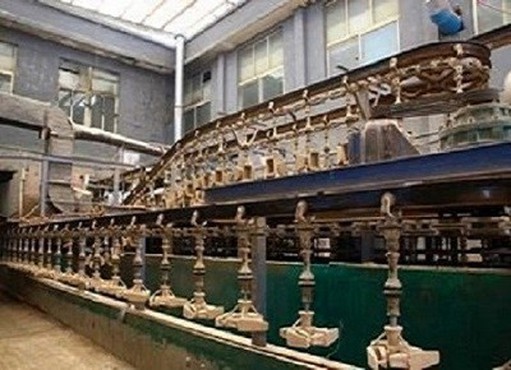
Our Factory
Founded in 2004 and located in Ningbo city, east seaport of China, T & X Machinery has been committed to providing customers with various OEM products and offering services according to diversified processes like forging.casting and CNC machining.

Our Certificate

FAQ
Q: What is meant by lost wax casting?
Q: What things are made by lost wax casting?
Q: What are the benefits of lost wax casting?
Q: What is the lost wax method used for making?
Q: Can you use any wax for lost-wax casting?
Q: What is the most famous lost wax casting?
Q: Is lost wax casting hollow?
Q: How accurate is lost wax casting?
Q: What temperature do you cast lost wax?
Q: What plaster to use for lost wax casting?
Q: How much shrinkage in lost wax casting?
Q: Can you lost-wax cast stainless steel?
Q: What is the difference between lost wax and lost foam casting?
Q: What is the difference between wax casting and lost wax casting?
Q: Why is it called lost wax casting?
Q: How thick is lost wax casting?
Q: Where does the wax go in lost-wax casting?
Q: What are the applications of lost wax casting?
Q: How do you use lost wax casting?
Q: How long is the burnout for lost wax casting?
As one of the most professional lost wax casting parts manufacturers and suppliers in China, we're featured by durable products and good service. Please rest assured to buy high quality lost wax casting parts from our factory. Also, customized service is available.
lost wax casting for warehousing, lost wax casting for retrofit strategy design market, lost wax casting for cost reduction strategy design marketPopular Products


