
Are there any export restrictions for stump grinder parts? Well, that's a question I get asked a lot as a supplier of stump grinder parts. In this blog, I'll share my insights and experiences on this topic.
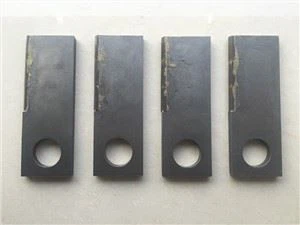
First off, let's talk about what stump grinder parts we're dealing with here. I supply a wide range of parts, like Stump Grinder Pockets, Stump Grinder Bolts, and Stump Grinder Teeth. These parts are crucial for the proper functioning of stump grinders, which are used to remove tree stumps.
Now, when it comes to export restrictions, it's a bit of a mixed bag. Different countries have different rules and regulations regarding the import and export of goods, and stump grinder parts are no exception.
Types of Export Restrictions
Tariffs and Duties
One of the most common forms of export restrictions is tariffs and duties. These are taxes that a country imposes on imported goods. The amount of tariffs and duties can vary widely depending on the country and the type of product. For stump grinder parts, the tariffs might be based on factors like the material of the parts, their value, and the country of origin.
For example, some countries might have a higher tariff on parts made from certain metals to protect their domestic metal industries. As a supplier, this can make my products more expensive for customers in those countries, which can affect my sales.
Quotas
Another type of restriction is quotas. A quota is a limit on the quantity of a particular product that can be imported or exported within a certain period. Some countries might set quotas on stump grinder parts to control the amount of competition their domestic manufacturers face. If I'm exporting to a country with a quota, I need to make sure I don't exceed the limit, or I might face penalties.
Licensing Requirements
Some countries require exporters to obtain special licenses for certain types of products. This could be the case for stump grinder parts if they are considered to have some strategic or environmental implications. For example, if the parts contain certain chemicals or materials that are regulated, I might need to get a license to export them. This can be a time - consuming and bureaucratic process, but it's necessary to comply with the law.
Embargoes and Sanctions
In some cases, there might be embargoes or sanctions on trade with certain countries. These are usually put in place for political or security reasons. If I'm trying to export stump grinder parts to a country under an embargo, I won't be able to do so legally. This can really limit my market reach.
How I Deal with Export Restrictions
As a supplier, I've had to get pretty good at navigating these export restrictions. First of all, I do a lot of research on the countries I'm interested in exporting to. I look into their trade policies, tariff schedules, and licensing requirements well in advance. This helps me to price my products correctly and to plan my exports accordingly.
I also work closely with freight forwarders and customs brokers. These professionals have a lot of experience in dealing with international trade regulations. They can help me with things like filling out the right paperwork, paying the correct tariffs, and ensuring that my shipments comply with all the rules.
Another thing I do is stay up - to - date on any changes in trade policies. The rules can change pretty quickly, especially in today's global political climate. I subscribe to trade newsletters and follow relevant government agencies to make sure I'm aware of any new restrictions or changes to existing ones.
Impact on My Business
Export restrictions definitely have an impact on my business. On one hand, they can make it more difficult and expensive to do business in certain countries. The extra costs associated with tariffs, licensing, and compliance can eat into my profit margins.


On the other hand, these restrictions can also create opportunities. For example, if a country has high tariffs on imported stump grinder parts, it might encourage me to set up a local manufacturing or assembly facility in that country. This could help me avoid some of the tariffs and also create jobs in the local economy.
Looking to the Future
I think the future of exporting stump grinder parts is still bright, despite the challenges posed by export restrictions. As the demand for tree removal and landscaping services continues to grow around the world, the need for high - quality stump grinder parts will also increase.
I'm always looking for new markets to expand into. I'm also working on developing new and innovative stump grinder parts that might be subject to fewer restrictions. For example, I'm exploring the use of more sustainable materials in my parts, which could potentially make them more attractive to countries with strict environmental regulations.
Contact for Procurement
If you're interested in purchasing stump grinder parts from me, whether you're in a country with strict export restrictions or not, I'd love to hear from you. I have a wide range of high - quality parts available, and I'm committed to working with you to find the best solutions for your needs. Whether it's dealing with export restrictions or just getting the right parts at the right price, I'm here to help. So, don't hesitate to reach out and start a conversation about your procurement requirements.
References
- International Trade Administration. (n.d.). Export Regulations and Requirements.
- World Trade Organization. (n.d.). Trade Policies and Tariffs.