
Hey there, if you’ve ever spent hours hunting for metal parts that fit exactly what your project needs—only to find everything’s “one-size-fits-all” or close enough—you get why I’m fired up to talk about this today. I run a lost wax casting parts supplier, and the question I get more than any other is: Can lost wax casting parts actually be customized? Spoiler alert: The short answer is YES, but there’s a lot more to it than just saying the word “custom.” Let me break this down like I would chat with a customer on our showroom floor—no stuffy engineering jargon, promise.
First off, let’s get real about what lost wax casting even is, because a lot of folks outside manufacturing picture it like some old medieval craft, not a modern, super precise process. For the uninitiated, lost wax casting (also called investment casting) works by making a wax replica of your part, coating it in a ceramic shell, melting out the wax, pouring molten metal into that hollow shell, and breaking away the ceramic once it cools. The magic here is that the wax is totally flexible and can be shaped into literally any form you can draw or model. That’s the foundation of why customization isn’t just possible—it’s the whole point for our business.
I’ll give you a quick example from a recent client who came to us frustrated. They’re in the agriculture industry, growing specialty produce that needs a unique harvester attachment. The off-the-shelf parts they were using kept bending or wearing out faster than they needed, because the fit was off by a few millimeters and the material wasn’t right for the soil their crops grow in. They’d looked at standard casting parts, but nothing worked, so they found us and asked if we could tweak a lost wax casting for their exact needs.
Fast forward 6 weeks, and we shipped them a set of parts that fit their machine perfectly, made from a tougher alloy, and even had a custom shape that reduced friction in their harvesting path. That’s not a fluke—custom lost wax casting is what we do.
But here’s the thing: customization with this process isn’t just “change the shape a little.” It’s about tying every detail to what you actually need, from size to material to surface finish. Let’s talk about the key areas where you can customize these parts, and how it works for someone like me who’s been doing this for over a decade.
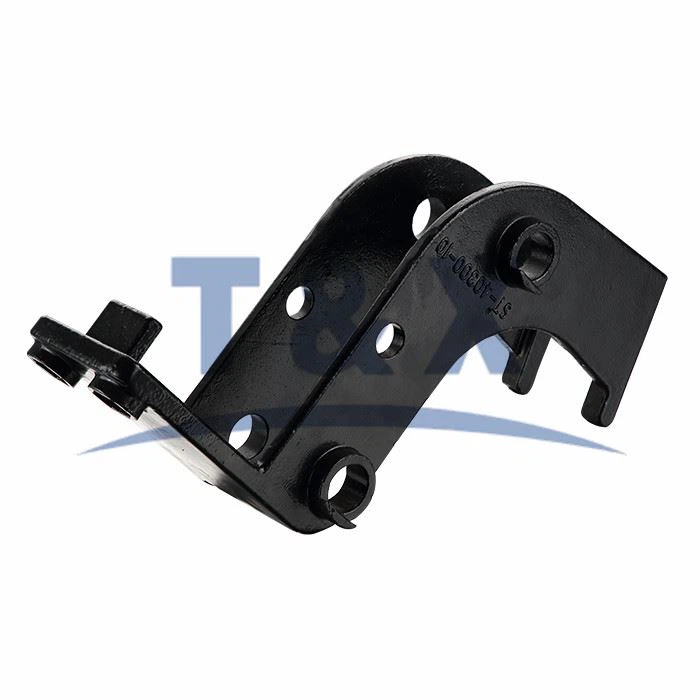
First, size and geometry. Unlike machining, where you start with a big block of metal and cut away material, lost wax casting can make parts that are almost net-shape—meaning they’re super close to the final size you need, so you don’t waste a ton of metal on machining. If you have a part that’s asymmetrical, has internal cavities, or intricate details (like gears with tiny teeth or fittings that snap into place), that’s all doable with custom lost wax casting. I worked on a trailer component last year that needed a weirdly shaped connector to fit a new electric trailer brake system—there’s no way a standard part would have fit, so we used lost wax to cast the exact geometry, and it worked on the first try. If you’re into trailer parts, that’s basically the sweet spot of custom, and honestly, we’ve got it down. We even have a precision cast trailer connector page you can check out if that’s your jam.
Next up: material selection. This is where a lot of folks underestimate customization potential. Lost wax casting works with all kinds of metals—carbon steel, stainless steel, alloy steel, even some exotic metals for extreme conditions. You’re not stuck with whatever the off-the-shelf part uses. Let’s say your part is going to be used for heavy construction and needs to stand up to extreme impact or abrasion—you can pick a high-strength alloy, and we’ll adjust the casting process (like heat treatment) to harden it just right. For a client in the mining industry, we made their wear parts from 42CrMo alloy steel that got hardened to resist rock abrasion. That part was way more durable than the standard cast iron they’d been using, and it cut their replacement costs by 30%. If you need a tough, hard-wearing part for any kind of heavy work, that 42CrMo alloy steel harden fishtail bit is exactly the kind of thing we’re talking about—we customize those all the time for different mining or construction setups.
Then there’s surface finish and secondary operations. Maybe your part needs to be smooth so it slides easily, or coated to resist rust, or have holes drilled in exact spots that the casting process can’t do perfectly. All of that is part of the custom deal. We can do everything from sandblasting the surface to powder coating, or even add CNC machining for precise holes or threads. Last quarter, a customer who makes specialty dental tools needed a custom casting with a mirror-smooth surface so it wouldn’t catch on delicate tissue. We adjusted the ceramic shell material and the cooling process during casting, and paired it with a light polish—they were so happy they came back for 12 more runs.
Now, let’s be real—customization isn’t for every project. I get calls all the time from people asking for a custom tiny part for a one-off prototype, and while we can probably do it, it might not be the most cost-effective option. Lost wax casting does have some minimum run sizes for certain parts, because making the custom tooling (like the wax molds) does cost money upfront. But here’s the good news: if you’re making parts that are going into production—whether that’s 100 pieces or 10,000—custom lost wax casting is way cheaper and faster than machining every part from scratch, especially for complex shapes. The key is to know what you need, and talk to a supplier who’s willing to work with you on that upfront.
I also want to bust a common myth I hear all the time: people think custom lost wax casting is just for big, bulky industrial parts. But no—we’ve made tiny, intricate parts for aerospace components and medical devices, too. Lost wax can handle parts as small as a dime or as big as a small engine component. It’s all about adjusting the process to the size and detail you need.
Let me walk you through how the custom process works with my company, so you can see how straightforward it is. First, you reach out with your project—you can have a sketch, a CAD file, or even just a rough idea of what you need. We’ll sit down (either on a call or in our office) to talk through your requirements: size, material, how the part will be used, any constraints (like weight limits, durability, or cost). Then, our engineers will make a 3D model of the wax replica, and we’ll test a prototype to make sure it fits, works, and meets your specs. Once you sign off on the prototype, we’ll produce the full run—quality checks every step of the way, so you don’t get stuck with parts that don’t work.
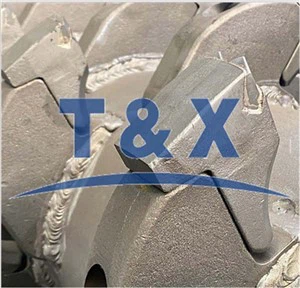
One of our most popular custom lines is the cast flail cutter for lawn and garden equipment. Flail cutters need to be shaped just right to slice through brush without getting stuck, and the material has to be tough enough to take repeated hits. The standard ones online are okay, but when customers come to us with a specific brush type or machine model, we tweak the shape and material, and that’s where the value comes in. If you’re working on outdoor power equipment, that cast flail cutter link will give you a sense of how flexible we are with these parts.
We also do a lot of custom bits for the drilling and exploration industry. Those lost wax casting cross bit and lost bit parts need to be precision-made to drill through rock without breaking, and they’re often customized for specific drilling depths or terrain types. No two drilling sites are exactly the same, so custom parts make all the difference in getting the job done right the first time.
Now, if you’re thinking about moving from standard parts to custom lost wax casting, here’s my advice: don’t wait until you’re fed up with off-the-shelf parts. Reach out early, when you’re still planning your project. A good supplier can help you refine your design to make sure it’s not just custom, but also cost-effective. For example, sometimes a tiny change to the geometry of the part can cut down on material waste, which keeps your costs lower, and a good engineer will point that out without making you compromise on performance.
I’ll be honest—custom parts do have upfront costs for tooling, and the lead time is a little longer than ordering off-the-shelf, but when you’re dealing with parts that fail prematurely, cause downtime, or don’t fit right, that small extra investment pays off big. A client in the construction industry told us that switching to custom lost wax casting parts cut their machine downtime by 40% last year— that’s the kind of win you can’t get with a generic part.
Another thing I love about custom lost wax casting is that it’s versatile enough for small businesses and large corporations alike. We work with startup founders making a prototype part for their new gadget, and we work with big OEMs that need thousands of parts a month for their equipment. Whatever your project size, we can adjust the process to fit your needs.
Wait, let’s touch on quality control, because that’s a big part of why customization works for us. Every custom part we make goes through three checks: first, when we pour the metal, we test the material’s strength and composition. Second, after we break away the ceramic shell, we check the dimensions against your specs with precision calipers and 3D scanners. Third, before shipping, we do a surface check for any defects. If something doesn’t hit the mark, we rework it or scrap it—no cutting corners. That’s how we’ve built our reputation over the years, and it’s non-negotiable, even for custom jobs.
I know a lot of you reading this might be sitting there thinking, “I have a weird part that no one can make, and I’ve wasted so much time and money trying.” If that’s you, drop me a line or reach out on our website. I’m not just a sales guy— I’m the guy who troubleshoots the custom design calls, so I’ll be honest with you: if it’s possible with lost wax casting, we can do it, and if it’s not, I’ll tell you straight up. No hype, no empty promises.
Let’s wrap this up to make sure we’re clear on the main point: Yes, lost wax casting parts absolutely can be customized—they’re designed for it, actually. The process is flexible, works with almost any metal, can make intricate shapes, and is cost-effective for production runs of all sizes. The key is working with a supplier who knows the ins and outs of custom lost wax casting, will listen to your needs, and guide you through the process without overwhelming you.
If you’ve got a project that needs a part that fits just right, stands up to what you’re asking it to do, and isn’t a one-size-fits-afterthought, don’t settle. Hit up our team to talk through your custom lost wax casting needs—we’re here to help make exactly what you need, no compromises.
And for anyone curious about specific custom parts we do, check out our pages for the cast flail cutter, precision cast trailer connector, 42CrMo alloy steel harden fishtail bit, and lost wax casting cross bit & lost bit to get a sense of the range of custom work we handle daily.

References
- Campbell, J. (2015). Investment Casting Handbook: Materials, Process Design, and Applications. ASM International.
- Brooks, J. D., & Choudhury, A. K. (2012). Principles of Modern Casting. CRC Press.
- Lost Wax Casting Association. (2023). Custom Investment Casting: Capabilities and Applications. Retrieved from industry technical guides.
- The Fabricator. (2022). Why Custom Casting Beats Machining for Complex Metal Parts. Published in Metalworking Industry Insights.