

If you’ve ever stood in a yard, staring at a leaning oak that needs trimming or a pine that’s outgrown its space, you know the frustration of grabbing the wrong tool and ending up with splintered wood, blistered hands, or even a damaged tree. For years, as someone who’s spent 15 years working with arborists, tree care teams, and DIY homeowners, I’ve seen this mistake happen over and over: they skip the basics of a tree saw’s teeth and grab whatever’s closest. The thing is, tree saw teeth aren’t just little metal ridges on a blade—they’re the core of how the tool performs, how long it lasts, and how safe it is to use. As a Tree Saw Teeth supplier, I’ve helped thousands of people sort through these details, and today I want to break down exactly how to choose the right tree saw based on its teeth, with real-world context that goes way beyond “bigger is better.”
First, let’s start with the basics: what makes a tree saw tooth different from, say, a saw for cutting plywood or a hacksaw for metal. Tree work is messy. You’re cutting through wet, sap-heavy wood, twisted branches with hidden knots, even wood that’s been rotting for years. A tooth designed for smooth, clean cuts on a flat piece of lumber won’t hold up to that kind of stress, and it won’t cut efficiently either. That’s why understanding key tooth features—like set, pitch, tooth profile, and material—isn’t just a technical detail; it’s the difference between a job that takes 20 minutes and one that takes two hours, or a cut that damages a healthy tree and one that supports its growth.
Let’s start with tooth set, because this is the first thing most people notice when they look at a saw blade. Set refers to how much each tooth is bent sideways—alternating left and right, or sometimes paired in groups—to create a cut (called a kerf) that’s wider than the blade itself. If there’s too little set, the blade will bind in the wood, causing it to kick back, which is a major safety hazard for anyone working at height. Too much set, on the other hand, means the blade is cutting more wood than it needs to, slowing you down and wasting energy. For tree saws, set is tailored to the type of cut you’re making. For example, if you’re cutting through small, thin branches (under 4 inches in diameter), you want a saw with light, narrow set—this is common on pole saws and small hand saws, where precision and maneuverability matter more than rough cutting speed. For larger branches (4 to 10 inches), medium set is ideal; it balances ease of cutting and stability without putting excess stress on the blade. For even bigger timber, some heavy-duty tree saws have wide set, designed to prevent binding in dense, knotty hardwood like maple or oak. I’ve seen customers make the mistake of buying a small hand saw with light set to cut a 6-inch oak branch, and by the end, they were forcing the saw so hard they twisted the blade and risked injury. Paying attention to set prevents that.
Next up is tooth pitch, which is the number of teeth per inch (TPI) on the blade, and this is where a lot of people get confused. Pitch directly correlates to how rough or smooth your cut will be, and how well the saw handles different types of wood. High pitch (more TPI—usually 5 or more) means smaller, closer teeth, which make cleaner cuts on soft, thin branches or green wood. If you’re doing fine pruning, like shaping a fruit tree or removing small twigs, high pitch teeth are the way to go because they leave a smooth cut that heals faster, reducing the risk of disease. Low pitch (fewer than 5 TPI) means larger, more spaced-out teeth, designed for fast, aggressive cutting on thick, dense wood. For cutting up fallen logs, clearing overgrown brush, or trimming large hardwood branches, low pitch teeth will cut through the wood much faster than high pitch ones, without getting clogged with sap or wood fibers. The sweet spot for general tree work is usually 4 to 5 TPI—this works for most branches between 2 and 8 inches, balancing speed and cut quality. I always tell first-time customers to ask themselves: “Am I mostly cutting small, clean branches, or thick, rough wood?” and match the pitch to that answer.
Then there’s tooth profile, which refers to the shape of the individual tooth’s cutting edge. This is a detail that many homeowners overlook, but it makes a huge difference in performance and longevity. The two most common profiles for tree saw teeth are chamfered (or “scraper”) teeth and raker teeth. Chamfered teeth have a flat, angled cutting edge that acts like a tiny chisel, scraping through wood rather than slicing it. This is great for wet, sap-heavy wood because it’s less likely to gum up, and it’s the profile you’ll find on most budget hand saws and small chainsaw blades. Raker teeth, on the other hand, have a pointed, sharp cutting edge that slices through wood cleanly. They’re designed for speed and precision, making them ideal for pruning, cutting green wood, or making detailed cuts. A third profile, called a “hooked” tooth, is common on heavy-duty tree saws and chainsaws—this has a curved, forward-facing edge that grabs the wood and pulls the saw through, cutting large branches or logs in record time. Hooked teeth do require more maintenance, though; their sharp edges dull faster when cutting through knots or rotting wood, so you’ll need to sharpen them more often. That’s where choosing the right profile depends on how much time you want to spend on maintenance versus how fast you need to get the job done.
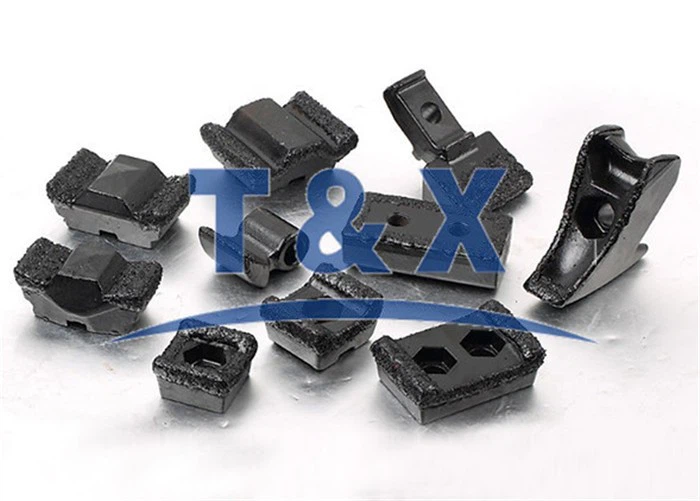
Now, one of the most important factors that people never think about until their saw stops cutting is tooth material. This is where I, as a Tree Saw Teeth supplier, have seen the biggest impact on performance and cost. Most basic tree saws use standard carbon steel teeth—these are cheap, but they dull quickly, especially when cutting through dense hardwood, knots, or soil (which is common when trimming branches near the ground). If you’re a homeowner who only uses a saw once a year for small pruning jobs, carbon steel might be fine, but if you’re a professional arborist or a tree care company that uses a saw every day, you’ll need something that lasts. That’s why our Wearable Alloy Steel Saw Tooth is such a game-changer—it’s made with a special alloy that’s heat-treated to resist wear, so it lasts up to three times longer than standard carbon steel teeth, even when cutting through tough, abrasive wood. We’ve had customers who switched from carbon steel to our Wearable Alloy Steel Saw Tooth go three times longer between sharpenings, which saves them hundreds of dollars a year in replacement parts and maintenance time. We’ve seen it tested in environments from pine forests in the Pacific Northwest to oak groves in the Southeast, and it holds up every time.
But it’s not just the tooth material—how the teeth are mounted or held on the saw matters too. That’s why the Tree Saw Teeth Holder is another key component to consider, because even the best teeth won’t perform well if they’re loose, misaligned, or wobbly. A quality teeth holder keeps each tooth in the exact correct position, maintains the proper set and pitch, and prevents the blade from flexing or breaking mid-cut. I’ve had customers tell me they bought a cheap saw with great teeth, but the holder was so flimsy that after a few cuts, the teeth started shifting, leading to a crooked cut that damaged the tree they were trimming. Investing in a reliable holder isn’t an extra expense—it’s a way to make sure your teeth work as they’re designed to.
Wait, let’s talk about a common mistake I see all the time: mixing up hand saw teeth and chainsaw teeth. A lot of people assume that all tree saw teeth work the same, but hand saw teeth and chainsaw teeth have totally different designs because they operate differently. Hand saw teeth are designed to be pushed and pulled through wood, so their pitch and set are tailored for that back-and-forth motion. Chainsaw teeth, on the other hand, are sharpened at different angles to work with the rotating chain, and their profile is designed to “bite” into the wood as the chain moves. If you use a hand saw for chainsaw work, or vice versa, you’ll get poor performance and a higher risk of accident. For example, chainsaw teeth have a deeper gullet (the space between teeth) to collect wood chips, while hand saw teeth have smaller gullets to keep the blade rigid. That’s another detail to pay attention to—make sure you’re matching the tooth design to the type of saw you’re using.
Another factor that often gets overlooked is the purpose of the cut: whether you’re making a pruning cut on a healthy tree, felling a mature tree, or clearing brush. For pruning, where you want a clean, healable cut, look for teeth with high pitch (5 or more TPI) and sharp, pointed raker profiles. These leave a smooth surface that the tree’s cambium layer can close over quickly, reducing the chance of fungal infection. For felling large trees or cutting thick timber, low pitch, hooked teeth are better because they cut faster, but you’ll need to make sure the set is wide enough to prevent binding. If you’re clearing dead or rotting wood, chamfered teeth are ideal because they’re less likely to gum up with rotting debris, even if they dull faster.
Now, let’s get practical. Let’s walk through a few scenarios to make this concrete. Scenario 1: You’re a homeowner who needs to trim 2-3 small apple tree branches (3-5 inches) for a project this weekend. What do you need? A small hand saw with medium set, 4-5 TPI, raker tooth profile, and carbon steel teeth will work perfectly. It’s lightweight, maneuverable, and will leave clean cuts that your apple trees will heal from quickly. Scenario 2: You’re a part-time tree care worker who takes down 10 large oak branches a week (6-12 inches). Here, you’ll want a medium-sized chainsaw or pole saw with low pitch (2-3 TPI), hooked tooth profile, and our Wearable Alloy Steel Saw Tooth—this will cut fast, last longer than carbon steel, and reduce how many times you have to stop to sharpen. Scenario 3: You’re a professional arborist who works 40 hours a week, cutting through everything from thin maple branches to thick pine logs. You’ll want heavy-duty equipment with the right tooth for each job: high pitch raker teeth for pruning, low pitch hooked teeth for felling, and our Wearable Alloy Steel Saw Tooth across the board for maximum durability, paired with a reliable Tree Saw Teeth Holder to keep everything aligned.
I can’t stress enough how much of a difference this makes. Last year, I worked with a small tree care team that was going through 10 sets of carbon steel teeth a month, because they were cutting through so much knotty hardwood. They switched to our Wearable Alloy Steel Saw Tooth, and within a month, their tooth replacement costs dropped by 60%, and they finished each job 15 minutes faster on average. They told me it wasn’t just about saving money—it was about being able to take on more jobs without wasting time sharpening or replacing parts. That’s the kind of impact understanding tree saw teeth has, beyond just getting a clean cut.
If you’re ready to pick the right tree saw teeth for your needs, we have a full range of options tailored to every use case. Our Tree Saw Teeth line includes everything from budget carbon steel options for occasional DIY use to high-performance Wearable Alloy Steel Saw Tooth for professional crews, all designed to pair with our durable Tree Saw Teeth Holders to ensure maximum performance and longevity.
If you’re looking to buy, reach out to discuss your specific needs, whether you’re a homeowner needing one saw for the yard or a business needing bulk parts for your team.
References

- International Society of Arboriculture. (2021). Tree Care Basics: Pruning Safety and Cut Quality. ISA Press.
- American National Standards Institute. (2019). Safety Standards for Tree Care Equipment. ANSI Z133.1.
- Forest Products Laboratory. (2020). Saw Tooth Design and Performance for Wood Processing. USDA Forest Service.
- Arborist News. (2022). Choosing the Right Saw Teeth for Hardwood vs. Softwood Applications. International Society of Arboriculture.