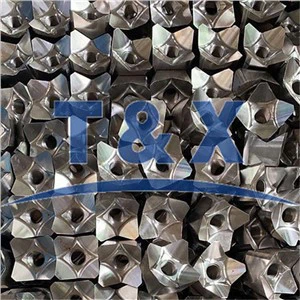

If you’ve ever held a component that needs to fit perfectly into a high-stakes machine—say, a part for heavy construction equipment, agricultural machinery, or even automotive systems—chances are it was made via lost wax casting. For over a decade, as a supplier of lost wax casting parts, I’ve seen firsthand that the quality of these parts isn’t just about how they look when they come out of the mold. It’s a multi-layered process that starts long before the wax is poured and ends well after the part is shipped to a customer. Today, I want to pull back the curtain on the real quality standards that every lost wax casting part must meet, because cutting corners here isn’t just a mistake—it can lead to failures that cost companies time, money, and even safety.
First, let’s start with the foundation: material integrity. The best mold in the world can’t save a part made from low-quality raw material. Lost wax casting allows us to work with a huge range of alloys—carbon steel, stainless steel, alloy steel, even specialty metals like nickel-based alloys—but each has strict chemical composition standards. For example, when we need a part that’s both strong and wear-resistant, like a 42CrMo alloy steel harden fishtail bit for mining or rock drilling, we have to test every batch of raw material to make sure it falls within precise carbon, chromium, molybdenum, and manganese ranges. Too much carbon and the part becomes brittle; too little and it lacks the tensile strength to hold up under pressure. That’s why we never skip spectrometer testing on every melt—this non-destructive check verifies that the chemical makeup matches the required specification before casting even begins. If a material batch is off, we send it back to the supplier, no questions asked. This isn’t just good practice—it’s a non-negotiable quality standard in our facility.
Next, dimensional accuracy is where lost wax casting really shines, but also where it can go wrong if you don’t control the process. Unlike other casting methods, lost wax uses a disposable wax pattern that’s duplicated over and over, so consistency is key. A part that’s supposed to fit flush into a machine might cause misalignment if it’s off by even 0.5 millimeters—something that can throw off an entire assembly. For critical parts, like a precision cast trailer connector that needs to lock into a hitch without play, we use coordinate measuring machines (CMMs) to map every surface, hole, and edge against the 3D CAD model. We also factor in shrinkage: metal cools and contracts as it solidifies, so our mold designs include a calculated shrinkage allowance specific to each alloy. For example, stainless steel shrinks about 2% during cooling, while some alloy steels shrink more, so we adjust the wax pattern dimensions accordingly. Even small variations in mold temperature or cooling rate can throw this off, which is why we monitor every step of the process with precision tools. I once had a customer reject a batch of small trailer connectors because a few had slightly misaligned pin holes; we traced it to a minor fluctuation in our cooling water temperature, adjusted our process, and haven’t had that issue since. That’s the kind of attention to detail that defines dimensional quality.
Surface quality is another big one, and it’s not just about aesthetics. Many lost wax casting parts are used in environments where corrosion, friction, or debris will be present, so a rough or porous surface can speed up wear or lead to contamination. The surface of a lost wax part is largely determined by the mold material and the finishing process. We use high-quality ceramic molds that produce a smooth surface, but we also control the slurry and stucco application layers to avoid defects like inclusions or pinholes. For parts that need a polished finish, like the cast flail cutters used on lawn care or agricultural equipment to chop grass or debris, we do secondary machining and grinding to meet surface roughness requirements—usually around 3.2 Ra for functional parts, though some applications demand even smoother surfaces. We also inspect every part for visual defects: cracks, cold shuts (where two streams of metal don’t fuse properly), or sand inclusions. While some minor surface imperfections might be cosmetic, for structural parts they can be a sign of internal flaws that weaken the part.
Mechanical properties are the make-or-break standard for lost wax casting parts, especially those used in heavy-duty applications. Tensile strength, yield strength, hardness, and impact resistance are all tested to make sure the part can handle the loads it will face in the field. For example, the lost wax casting cross bit and lost bit used in oil and gas drilling must withstand extreme pressure and torque, so we test sample parts from each melt to verify their mechanical performance. We do tensile testing by pulling a part until it breaks, measuring how much force it takes and how it deforms; hardness testing using a Brinell or Rockwell scale to make sure the part isn’t too soft or too hard (hard enough to resist wear, but not so hard that it cracks under impact). We also do impact testing, using a pendulum to strike a notched sample and measure how much energy it can absorb before breaking—critical for parts that might be hit by debris or experience sudden loads. In our facility, we keep detailed records of every test, so if a customer has a question about a batch, we can show them exactly how it performed.


Internal integrity is where a lot of lower-quality lost wax casting parts fail. Just because a part looks good on the outside doesn’t mean there aren’t hidden voids or porosity inside. Porosity—tiny air bubbles trapped in the metal during cooling—can weaken a part or cause it to leak, which is a big problem for parts like hydraulic components or fuel system parts. To detect these issues, we use non-destructive testing (NDT) methods: ultrasonic testing to find internal voids, magnetic particle testing for ferrous parts to spot surface and near-surface cracks, and dye penetrant testing for non-magnetic alloys. For critical aerospace or defense parts, we even use X-ray or CT scanning to map the entire internal structure, making sure there are no hidden flaws. I remember a time when we had a customer receive a batch of alloy steel parts that seemed fine on the surface, but ultrasonic testing found small internal porosity in 5% of the batch. We immediately notified the customer, picked up the parts, and re-cast the batch with adjusted pouring rates to reduce trapped air. That’s the kind of responsibility that comes with being a supplier—we don’t just sell parts, we stand behind their quality.
Compliance with industry standards is another key quality benchmark, and it varies depending on what the part is used for. If you’re making parts for the automotive industry, you might need to meet ISO/TS 16949 standards; for aerospace, it’s AS9100; for medical devices, FDA regulations. Even for general industrial parts, many customers require compliance with ASTM international standards for metal casting. For example, when we supply parts to agricultural equipment manufacturers, we make sure every batch meets ASTM A216 for carbon steel castings, which sets strict limits on chemical composition, mechanical properties, and testing. Compliance isn’t just a box to check—it’s a way to ensure that the parts work reliably in the specific environment they’re designed for.
Now, you might be wondering: how does all this come together in practice, especially for different types of lost wax casting parts? Let’s look at a few examples I’ve worked with recently. The 42CrMo alloy steel harden fishtail bit I mentioned earlier—this part is used in rock drilling, so it needs extreme hardness and wear resistance. We start with 42CrMo alloy steel, test its chemical makeup, create a precise wax pattern, pour the metal with controlled cooling, then heat treat the part to boost hardness. After that, we test its tensile strength and impact resistance to make sure it can handle the constant torque and pressure of drilling through rock. The cast flail cutter, on the other hand, is used in mowers, so it needs good toughness to withstand hits from sticks or small rocks, along with a smooth surface to reduce friction when cutting grass. We use a different alloy, usually medium-carbon steel, adjust the mold surface for a smooth finish, and do impact testing to make sure it doesn’t chip when it hits a hard object. The lost wax casting cross bit and lost bit for oil drilling must meet even higher standards, with rigorous NDT to ensure no internal porosity, because a failure thousands of feet underground can be catastrophic. And the precision cast trailer connector needs tight dimensional accuracy to fit standard hitches, so we use CMM testing on every connector to make sure the pin holes are aligned exactly where they need to be.
At the end of the day, quality standards for lost wax casting parts are about more than just meeting specifications—they’re about building trust. As a supplier, my reputation depends on the parts I send out, because if a customer has a part fail in the field, it’s not just their problem—it’s mine. That’s why we invest in quality control equipment, train our team to follow strict processes, and never cut corners on testing. If you’re in the market for lost wax casting parts, whether they’re for construction, agriculture, automotive, or another industry, make sure your supplier isn’t just talking about quality—they’re showing you proof of their testing, their process controls, and their commitment to every step.
If you’re looking for a reliable supplier of lost wax casting parts, including [42CrMo Alloy Steel Harden Fishtail Bit], [Cast Flail Cutter], [Lost Wax Casting Cross Bit & Lost Bit], or [Precision Cast Trailer Connector], we’re here to help. We work with customers across industries to provide parts that meet strict quality standards, and we’re ready to discuss your specific needs.
References
- ASTM International. (2021). Standard Specification for Steel Castings, Carbon, Suitable for Fusion Welding, for General Application (ASTM A216). West Conshohocken, PA: ASTM International.
- AS9100 Rev D. (2016). Quality Management Systems – Requirements for Aviation, Space, and Defense Organizations. Washington, DC: SAE International.
- Campbell, J. (2015). Complete Casting Handbook: Metal Casting Processes, Metallurgy, Design and Quality. Oxford: Butterworth-Heinemann.
- ISO/TS 16949:2016. (2016). Quality Management Systems – Particular Requirements for the Application of ISO 9001:2015 for Automotive Production and Relevant Service Part Organizations. Geneva: International Organization for Standardization.
- Tiedje, N. S., & Hansen, N. (2020). Lost Wax Casting: Process, Materials, and Design. Berlin: Springer.