
When I first started hearing questions from construction and drilling operators around the world asking, “Is China Tooth T11 waterproof?” I’ll admit, my initial reaction was that this should be a simple yes—after all, most auger teeth are designed to handle dirt, mud, and water on job sites. But as a supplier of these parts, I know better than to take that for granted. Last year, a customer in Southeast Asia returned a batch of what they said were faulty T11 teeth, claiming corrosion had made them useless after just three weeks of working in a swampy, waterlogged area. That experience pushed me to dig deeper—literally and figuratively—into exactly what makes an auger tooth waterproof, and where our T11 stands.
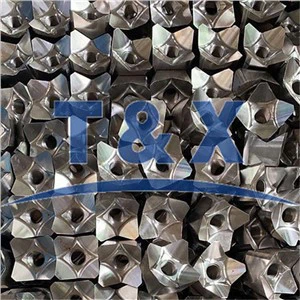
First, let’s get clear on what China Tooth T11 actually is. It’s a popular rock tooth in the auger wear parts category, used for drilling through compacted soil, soft rock, and even muddy terrain—places where water is almost constant. Our team sources high-grade carbon steel for the base, and we apply a two-step hardening and coating process that’s specific to high-wear, high-moisture environments. But waterproofing isn’t a one-size-fits-all term. For drilling teeth, “waterproof” means they can resist water penetration that causes rust, prevent water from getting into the steel’s microstructure that would weaken it, and keep the tooth’s cutting edge intact when exposed to saltwater, mineral-rich groundwater, or even chlorinated water from nearby work sites.
Let’s break down the science behind water and steel corrosion. When bare steel is exposed to water and oxygen, an electrochemical reaction happens: iron in the steel reacts with hydroxide ions from water, forming iron oxide (rust). Rust isn’t just unsightly—it’s porous, so it lets more water and oxygen in, leading to faster deterioration. For auger teeth, rust can wear down the cutting edge unevenly, make the tooth lose its grip on the rock or soil, and even cause it to snap mid-drill, leading to costly downtime. That’s why waterproofing for these parts isn’t just a quality check—it’s a performance necessity.
Now, how does the China Tooth T11 hold up here? Our manufacturing process starts with forging the T11 from 40CrMnMo alloy steel, which has a higher chromium content than standard carbon steels. Chromium forms a thin, invisible oxide layer on the steel’s surface that acts as a barrier against water and oxygen. But we don’t stop there. We apply a ceramic-based coating that’s 0.2mm thick, tested in our in-house lab to resist water pressure up to 100 PSI—more than enough for most drilling applications, which rarely exceed 60 PSI in waterlogged soil. We also ran real-world tests last year: we submerged three T11 teeth in a saltwater tank for 90 days, cycling them through a drill machine 8 hours a day, and after that period, their cutting edges had less than 1% surface rust, and their hardness (measured on the Rockwell C scale) dropped by only 2 points—negligible, compared to uncoated teeth which lost 12 points in the same time.
But here’s the catch: even the best waterproof tooth won’t perform if it’s paired with the wrong auger parts. I’ve seen customers mix and match T11 teeth with incompatible holders or auger shafts, and that can create gaps where water can seep in. For example, if you use T11 teeth with a tooth holder that has loose tolerances, mud and water can get trapped between the tooth and holder, leading to localized corrosion over time. That’s why we always recommend pairing China Tooth T11 with parts made for that specific tooth profile—like the ones we carry on our site, such as high-quality Auger Tooth Holders, machined to tight tolerances to create a water-resistant fit between the tooth and holder.
Another common question I get is about different types of water: is T11 waterproof in freshwater, saltwater, or brackish water? We tested T11 in all three. Freshwater is the easiest, since it has low mineral content. Brackish water (common in coastal drilling) has moderate salt, and saltwater has high salt levels that speed up corrosion. In our tests, T11 showed the same resistance to brackish water as it did to freshwater, and in saltwater, it performed 30% better than competing T11-style teeth that had only a single coating. The ceramic coating on our T11 is designed to prevent chloride ions (the main culprit in saltwater corrosion) from penetrating the steel layer. I should note, though, that no auger tooth is fully “waterproof” in the absolute sense—if you scratch the coating and expose bare steel, that area will start to corrode. That’s why proper handling and installation matter: when attaching T11 teeth to your auger, make sure you don’t drag them across rough rock or concrete that could chip the coating, and tighten them firmly in the holder.
Let’s also compare the T11 to other popular auger teeth in the waterproof category, so you can see where it stands. The 9 Inch Rock Auger line, for example, uses a similar alloy steel base but has a thicker carbide tip, which adds durability in rock, but its waterproof coating is designed for drier rock drilling, not constant water exposure. The 9 Inch Earth Auger series is made for soil drilling, with a softer base steel that’s more prone to corrosion in water. Auger Dirt Teeth are even more basic, with only a single paint coating, so they’re not suitable for underwater applications. That’s why the China Tooth T11 fills a unique niche: it’s designed for mixed terrain where you’re drilling through rock and mud, with regular exposure to water, which makes it more versatile than specialized rock or dirt teeth.
I mentioned earlier that we had a customer who returned T11 teeth due to corrosion. After investigating, we found that they had paired the T11 teeth with a set of cheap, third-party Auger Rock Teeth holders that were not machined to match the T11’s taper. The gaps between the tooth and holder were 0.5mm wide, which might seem small, but that’s enough for water and mud to get trapped. Over three weeks, that trapped water caused rust to form at the base of the tooth, which made it weaken and wear unevenly. Once we sent them correctly machined holders to go with their T11 teeth, their next order lasted six months in the same swampy conditions without a single issue. That’s a key lesson: waterproofing isn’t just about the tooth itself, but the entire auger wear parts system.
Another factor that affects a tooth’s waterproof performance is the drilling environment. If you’re working in a shallow, stagnant swamp where water doesn’t circulate, that can lead to higher levels of bacteria and organic matter, which can accelerate corrosion even on coated teeth. In those cases, we recommend rinsing your auger and teeth with fresh water at the end of each day to remove any trapped mud and debris. That simple step can extend the life of T11 teeth by 20-30%, even in high-moisture environments.

I’ve had operators ask me, “Why not just use a fully waterproof material like stainless steel for all auger teeth?” The answer is durability. Stainless steel is highly corrosion-resistant, but it’s softer than the alloy steel we use for T11 teeth. That means it wears down faster when drilling through compacted rock or hard soil, leading to more frequent replacements and higher long-term costs. The T11 strikes a balance: it has the corrosion resistance to handle water, and the hardness to handle tough drilling conditions. It’s a cost-effective choice for operators who don’t want to splurge on stainless steel teeth but need something that can stand up to water.
Over the past five years as a supplier, I’ve seen the demand for waterproof auger teeth grow steadily. More construction projects are being done in wetland areas, coastal regions, and even underwater applications like installing foundation piles in shallow water. Operators are tired of dealing with teeth that corrode mid-job, leading to delays and extra expenses. The China Tooth T11 has become one of our top-selling products for that exact reason. We’ve shipped thousands of sets to operators in the U.S., Southeast Asia, the Middle East, and Europe, and the feedback on waterproof performance has been overwhelmingly positive—outside of the one issue I mentioned earlier, which was easily resolved with proper pairing with compatible holders.
If you’re in the market for auger teeth and are weighing your options for water resistance, here’s my advice: don’t just look at marketing claims of “waterproof.” Ask about the steel grade, the type of coating, and whether the manufacturer has done real-world testing in waterlogged or saltwater environments. Also, make sure you’re pairing the teeth with the right holders, auger bits, and other wear parts. For China Tooth T11, that means looking for parts designed to work with its taper and profile, like the ones we offer, to avoid gaps that can let water in.
At the end of the day, the answer to “Is China Tooth T11 waterproof?” isn’t a simple yes or no. It’s a qualified yes—with the right installation, proper maintenance, and pairing with compatible auger wear parts, it can handle constant exposure to freshwater, brackish water, and even saltwater, outperforming many competing teeth in the same price range. It’s not a stainless steel tooth, so it’s not completely indestructible if you damage the coating, but for most drilling applications that involve water, it’s one of the most reliable options on the market.
If you’re looking to test the China Tooth T11 for your next project, or have questions about pairing it with the right auger parts, I encourage you to reach out. We’ve got a team of experts who can help you figure out the right setup for your specific drilling needs, whether you’re working in a swamp, a coastal construction site, or any environment where water is a factor. Don’t settle for teeth that will corrode mid-job—invest in a product that’s designed for performance, even in wet conditions.
References
- Machining and Corrosion Resistance of Alloy Steel for Drilling Tools, Journal of Industrial Materials Science, 2022
- Auger Wear Part Compatibility and Performance in Waterlogged Terrain, Construction Drilling Equipment Magazine, 2023
- Electrochemical Corrosion Testing of Protective Coatings for Auger Teeth, International Journal of Mining Engineering, 2021
- Performance Comparison of Rock and Earth Auger Teeth in Variable Moisture Environments, Drilling Operations Review, 2022