
Controlling the shrinkage of lost wax casting parts is a crucial aspect of the manufacturing process, especially for a supplier like me. Lost wax casting, also known as investment casting, is a versatile and precise method used to produce high - quality metal parts. However, shrinkage can significantly affect the dimensional accuracy and quality of the final products. In this blog, I'll share some effective strategies to control the shrinkage of lost wax casting parts.
Understanding Shrinkage in Lost Wax Casting
Before delving into control methods, it's essential to understand the types of shrinkage that occur during lost wax casting. There are mainly two types: solidification shrinkage and thermal shrinkage. Solidification shrinkage happens when the molten metal changes from a liquid to a solid state. As the metal cools and solidifies, its volume decreases due to the closer packing of atoms in the solid phase. Thermal shrinkage occurs as the solidified part continues to cool from the solidification temperature to room temperature. Different metals have different shrinkage rates, which are influenced by their physical properties such as density, specific heat, and coefficient of thermal expansion.
1. Material Selection
The choice of material is the first step in controlling shrinkage. Different metals and alloys have distinct shrinkage characteristics. For example, steels generally have a relatively high shrinkage rate compared to some non - ferrous metals. When selecting a material, we need to consider not only the mechanical properties required for the final part but also its shrinkage behavior.
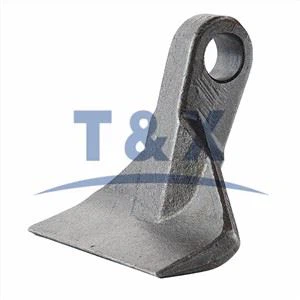
If we are looking for parts with high wear resistance, we might consider High Chrome Wear Parts. High - chrome alloys can offer good wear performance while having shrinkage rates that can be managed with proper techniques. Similarly, for applications requiring high strength, Steel Casting Parts are a common choice. By understanding the shrinkage properties of different materials, we can make more informed decisions during the material selection process.
2. Pattern Design and Wax Properties
The pattern used in lost wax casting is typically made of wax. The design of the wax pattern plays a vital role in compensating for shrinkage. We can create the wax pattern slightly larger than the desired final part dimensions based on the known shrinkage rate of the selected metal. This is called shrinkage allowance.
The properties of the wax itself also affect shrinkage. The wax should have low thermal expansion and contraction characteristics to minimize dimensional changes during the wax - injection and pattern - assembly processes. High - quality waxes with consistent properties are preferred to ensure accurate pattern replication.
3. Mold Design and Pouring System
The mold design is another critical factor in controlling shrinkage. A well - designed mold can help in achieving uniform cooling of the molten metal, which reduces the likelihood of uneven shrinkage. The gating and riser system in the mold is particularly important.
The gating system controls the flow of molten metal into the mold cavity. It should be designed to ensure smooth and uniform filling, avoiding turbulence that could lead to defects and uneven shrinkage. Risers, on the other hand, are reservoirs of molten metal that supply additional metal to the casting as it solidifies and shrinks. By properly sizing and positioning the risers, we can ensure that the casting has enough metal to compensate for shrinkage during solidification.
4. Pouring Temperature and Rate
The pouring temperature of the molten metal has a significant impact on shrinkage. If the pouring temperature is too high, the metal will take longer to solidify, increasing the amount of shrinkage. On the other hand, if the pouring temperature is too low, the metal may not flow properly into the mold cavity, leading to incomplete filling and other defects.
The pouring rate also needs to be carefully controlled. A slow pouring rate may cause the metal to cool too quickly before filling the entire mold, while a fast pouring rate can create turbulence. By optimizing the pouring temperature and rate, we can achieve better control over the solidification process and reduce shrinkage.
5. Cooling Rate Control
Controlling the cooling rate of the casting is crucial for minimizing shrinkage. A uniform and controlled cooling rate helps to ensure that the metal solidifies evenly, reducing the formation of internal stresses and shrinkage cavities.
We can use various methods to control the cooling rate, such as adjusting the mold material and its thickness. Different mold materials have different thermal conductivities, which can affect the cooling rate of the casting. For example, using a mold with a higher thermal conductivity can increase the cooling rate. Additionally, we can use insulating materials around the mold in certain areas to slow down the cooling rate, if necessary.
6. Post - Casting Heat Treatment
Post - casting heat treatment can also be used to reduce the effects of shrinkage. Heat treatment can relieve internal stresses in the casting and improve its dimensional stability. By heating the casting to a specific temperature and then cooling it at a controlled rate, we can modify the microstructure of the metal, which can help to reduce the residual stresses caused by shrinkage.


7. Quality Control and Inspection
Regular quality control and inspection are essential to ensure that the shrinkage of the lost wax casting parts is within the acceptable range. We can use various inspection techniques such as dimensional measurement, non - destructive testing, and metallographic analysis.
Dimensional measurement using precision instruments like coordinate measuring machines (CMM) can accurately determine the actual dimensions of the casting and compare them with the design specifications. Non - destructive testing methods such as ultrasonic testing and X - ray inspection can detect internal defects such as shrinkage cavities. Metallographic analysis can provide information about the microstructure of the metal, which can be related to the shrinkage behavior.
Case Studies
Let's take a look at a couple of case studies to illustrate the importance of shrinkage control.
Case 1: OEM Casting Cross Bit & Lost Bit
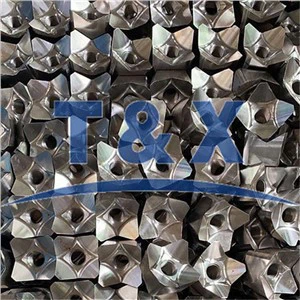
In the production of OEM casting cross bits, shrinkage control was a major challenge. These bits require high dimensional accuracy to ensure proper functioning in drilling operations. By carefully selecting the appropriate steel alloy with a known shrinkage rate, designing a wax pattern with the correct shrinkage allowance, and optimizing the pouring and cooling processes, we were able to achieve the desired dimensional accuracy. The use of a well - designed gating and riser system also helped in compensating for shrinkage during solidification.
Case 2: High Chrome Wear Parts
For high chrome wear parts, controlling shrinkage was crucial to maintain the wear - resistant properties of the parts. The high - chrome alloy used in these parts has its own unique shrinkage characteristics. By using a combination of post - casting heat treatment and precise cooling rate control, we were able to reduce the internal stresses caused by shrinkage and improve the overall quality of the parts.
Conclusion
Controlling the shrinkage of lost wax casting parts is a complex but achievable task. By carefully considering material selection, pattern design, mold design, pouring parameters, cooling rate, and post - casting heat treatment, we can minimize shrinkage and produce high - quality casting parts.
If you are in the market for high - quality lost wax casting parts and are interested in discussing how we can control shrinkage to meet your specific requirements, I invite you to reach out for a procurement discussion. We have the expertise and experience to provide you with the best solutions for your casting needs.
References
- Campbell, J. (2003). Castings. Butterworth - Heinemann.
- Davis, J. R. (Ed.). (1998). ASM Specialty Handbook: Casting. ASM International.
- Samuel, F. H., & Samuel, A. M. (2013). Light Metals Casting: From Theory to Practice. Woodhead Publishing.