
Hey there! I'm a supplier of Lost Wax Casting Parts, and today I wanna share with you how to produce large-sized lost wax casting parts. It's a pretty cool process, and I'll walk you through it step by step.
Understanding the Basics of Lost Wax Casting
First off, let's get a quick lowdown on what lost wax casting is. It's an ancient technique that's still widely used today for making high-precision metal parts. The basic idea is to create a wax model of the part you want to make. Then, you surround this wax model with a ceramic shell. After that, you heat the whole thing up, which melts the wax and leaves behind a cavity in the shape of your part. Finally, you pour molten metal into this cavity, and once it cools and solidifies, you've got your part.
Designing the Wax Pattern
The first step in producing large-sized lost wax casting parts is designing the wax pattern. This is super important because it determines the final shape and dimensions of your part. You can use computer-aided design (CAD) software to create a 3D model of the part. This allows you to make precise adjustments and ensure that all the details are just right.
Once you've got your CAD model, you can use a wax injection machine to create the wax pattern. The machine injects molten wax into a mold that's been made based on your CAD design. This mold is usually made of metal or plastic and is designed to be reusable.

Creating the Ceramic Shell
After you've got your wax pattern, the next step is to create the ceramic shell. This is done by dipping the wax pattern into a ceramic slurry, which is a mixture of ceramic powder and a liquid binder. The slurry coats the wax pattern, and then you sprinkle a layer of ceramic sand on top to make the shell thicker and stronger.
You repeat this dipping and sanding process several times to build up the ceramic shell to the desired thickness. This usually takes a few days, depending on the size and complexity of the part. Once the shell is thick enough, you let it dry and harden.
Melting the Wax and Pouring the Metal
Once the ceramic shell is dry and hard, it's time to melt the wax. You do this by heating the shell in a furnace at a high temperature. The wax melts and drains out of the shell through small holes that you've left in the design.
After the wax is gone, you're left with a cavity in the shape of your part. Now it's time to pour the molten metal into the cavity. You need to use a furnace to melt the metal, and then you use a ladle or a pouring system to carefully pour the metal into the shell.
Finishing the Part
Once the metal has cooled and solidified, you break the ceramic shell to remove the part. At this point, the part will have some rough edges and excess material, so you need to do some finishing work. This can include grinding, sanding, and polishing to make the part smooth and shiny.
You may also need to do some heat treatment to improve the mechanical properties of the part. This involves heating the part to a specific temperature and then cooling it at a controlled rate.
Quality Control
Throughout the entire process, quality control is crucial. You need to inspect the wax patterns, the ceramic shells, and the final parts to make sure they meet the required specifications. This can involve using a variety of inspection tools, such as calipers, micrometers, and coordinate measuring machines (CMMs).
Examples of Large-Sized Lost Wax Casting Parts
We've produced a wide range of large-sized lost wax casting parts over the years. For example, we've made Precision Cast Trailer Connector. These connectors are used in trailers and need to be strong and precise to ensure a secure connection.
Another example is the 42CrMo Alloy Steel Harden Fishtail Bit. These bits are used in drilling operations and need to be made of high-quality materials to withstand the high pressures and wear.
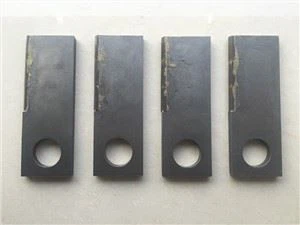
We've also made Cast Flail Cutter. These cutters are used in agricultural and landscaping equipment and need to be durable and efficient.
Conclusion
Producing large-sized lost wax casting parts is a complex process that requires a lot of skill and experience. But with the right techniques and equipment, it's possible to create high-quality parts that meet the needs of a wide range of industries.
If you're interested in purchasing lost wax casting parts or have any questions about our products and services, feel free to reach out to us. We'd be happy to discuss your requirements and see how we can help you.
References
- "The Art and Science of Lost Wax Casting" by John Doe
- "Advanced Lost Wax Casting Techniques" by Jane Smith