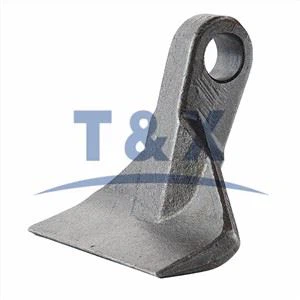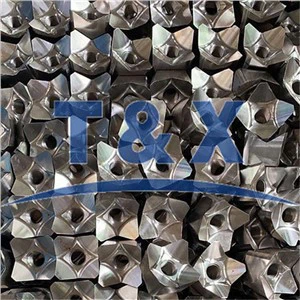

Hey there! If you're in the market for high - quality Aluminum Forging Parts, you've come to the right place. As a trusted supplier of these parts, I'm here to walk you through the hammer forging processes for aluminum forging parts.
1. Getting the Aluminum Ready
Before we even start hammering, we need to make sure the aluminum is in the right state. Aluminum comes in different alloys, and each one has its own unique characteristics in terms of strength, ductility, and corrosion resistance. The first step is to select the appropriate alloy for the specific application of the forging part.
Once the alloy is chosen, we heat the aluminum billet. Heating is crucial because it makes the aluminum more malleable. Without proper heating, the aluminum would be too hard and brittle, making it difficult to shape using the hammer forging process. We heat the billet to a specific temperature range, usually between 350°C and 500°C, depending on the alloy. This temperature range allows the aluminum to flow under the pressure of the hammer without cracking.
2. Pre - Forging Preparation
After heating, we move on to some pre - forging steps. First, we clean the heated billet to remove any surface contaminants like oxides or scale. This is important because these contaminants can cause defects in the final forging. We use various methods for cleaning, such as wire brushing or shot blasting.
Next, we apply a lubricant to the billet and the forging dies. The lubricant serves multiple purposes. It reduces friction between the billet and the dies, which helps in the smooth flow of the aluminum during forging. It also helps in preventing the aluminum from sticking to the dies, which can lead to surface imperfections on the forging. There are different types of lubricants available, and we choose the one that is best suited for the specific alloy and forging conditions.
3. The Hammer Forging Process
Now, it's time for the main event - the hammer forging. There are two main types of hammers used in the forging of aluminum parts: the drop hammer and the power hammer.
Drop Hammer Forging
The drop hammer is a traditional type of forging hammer. It works by raising a heavy ram and then dropping it onto the heated billet placed between the forging dies. The force of the impact deforms the aluminum, shaping it according to the cavity of the dies. Drop hammers can be either gravity - operated or steam - or air - assisted. Gravity - operated drop hammers rely on the weight of the ram falling under the force of gravity, while steam - or air - assisted drop hammers use steam or compressed air to increase the force of the impact.
One of the advantages of drop hammer forging is its ability to produce complex shapes. The high - energy impact can quickly shape the aluminum into intricate forms. However, it also has some limitations. The process can be a bit rough on the dies, and there is a risk of over - forging if the operator is not careful. Over - forging can lead to internal cracks and reduced mechanical properties in the final part.

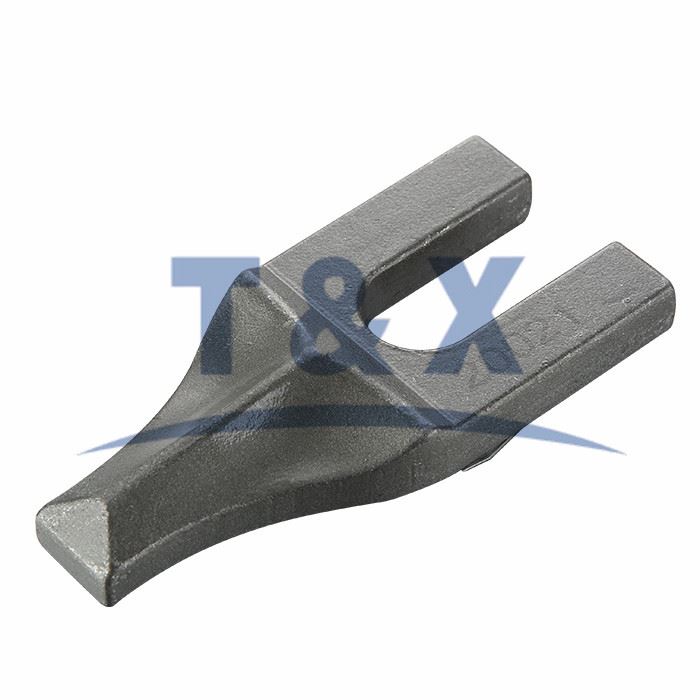
Power Hammer Forging
Power hammers, on the other hand, are more modern and precise. They use a mechanical or hydraulic system to deliver a series of rapid blows to the billet. The frequency and force of the blows can be adjusted according to the requirements of the forging. Power hammers are great for producing parts with consistent quality. They can apply a more controlled force compared to drop hammers, which reduces the risk of over - forging.
During the hammer forging process, multiple blows are usually required to achieve the desired shape. The operator carefully monitors the deformation of the aluminum and adjusts the position of the billet between blows to ensure uniform shaping. It's a skill - based process that requires experience and expertise.
4. Intermediate and Final Shaping
After the initial hammering, the forging may not be in its final shape. We often perform intermediate shaping operations. This can involve trimming the excess material, called flash, that is squeezed out during the forging process. Trimming is usually done using a trimming press, which cuts off the flash along the parting line of the dies.
We may also perform some additional forging steps to refine the shape and improve the internal structure of the part. This can include upsetting, where the cross - section of the forging is increased by applying a compressive force, or drawing out, where the length of the forging is increased while reducing its cross - section.
Once the intermediate shaping is complete, we move on to the final shaping. This is where we make any last - minute adjustments to the dimensions and surface finish of the part. We use precision machining operations like milling, turning, or grinding to achieve the required tolerances and surface quality.
5. Heat Treatment
Heat treatment is an important step in the production of aluminum forging parts. After forging, the aluminum may have internal stresses and a non - uniform microstructure. Heat treatment helps to relieve these stresses and improve the mechanical properties of the part.
There are different types of heat treatment processes for aluminum, such as solution heat treatment and aging. Solution heat treatment involves heating the forging to a specific temperature and holding it there for a certain period of time to dissolve any soluble alloying elements. After that, the part is rapidly quenched in water or another quenching medium. This creates a supersaturated solid solution.
Aging is then carried out at a lower temperature. During aging, the supersaturated solid solution decomposes, and fine precipitates are formed. These precipitates strengthen the aluminum, improving its hardness, strength, and fatigue resistance.
6. Quality Control
Throughout the entire process, quality control is of utmost importance. We use a variety of inspection methods to ensure that the aluminum forging parts meet the required standards. Visual inspection is the first step. We look for any surface defects like cracks, porosity, or inclusions.
We also use non - destructive testing methods, such as ultrasonic testing or X - ray inspection, to detect internal defects that may not be visible to the naked eye. These methods can help us identify any hidden cracks or voids in the forging.
In addition, we perform mechanical testing on samples taken from the forgings. This includes testing for hardness, tensile strength, and yield strength. By comparing the test results with the specified requirements, we can ensure that the parts have the right mechanical properties.
Why Choose Our Aluminum Forging Parts?
As a supplier of Aluminum Forging Parts, we take pride in our high - quality products. Our team of experts has years of experience in the forging industry, and we use the latest technology and equipment to ensure the best results.
We also offer a wide range of other forging parts, such as Alloy Steel Forging Parts and Carbon Steel Forging Parts. Whether you need a small batch of custom - made parts or a large - scale production run, we can meet your needs.
If you're interested in our products, don't hesitate to reach out for a procurement discussion. We're always ready to work with you to provide the best solutions for your forging requirements.
References
- "Aluminum Forging Technology Handbook", published by a leading metallurgy research institute.
- "Forging Processes and Materials", a well - known textbook in the field of metalworking.