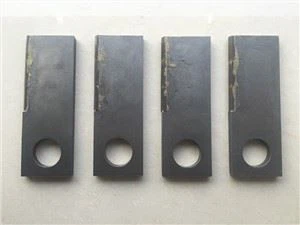

As a seasoned stamping parts supplier, I've witnessed firsthand the pivotal role parallelism plays in the functionality and quality of stamped components. Parallelism isn't just a technical term; it's a fundamental requirement that can make or break the performance of the end - product. In this blog, I'll delve into the requirements for the parallelism of stamping parts, sharing insights from my years of experience in the industry.
Understanding Parallelism in Stamping Parts
Parallelism, in the context of stamping parts, refers to the state where two or more surfaces or features of a part are equidistant from each other at all points. This geometric characteristic is crucial because it ensures proper fit, alignment, and functionality when the stamping part is integrated into a larger assembly. For instance, in automotive applications, parallel surfaces on engine stamping parts are essential for smooth operation and to prevent premature wear and tear.

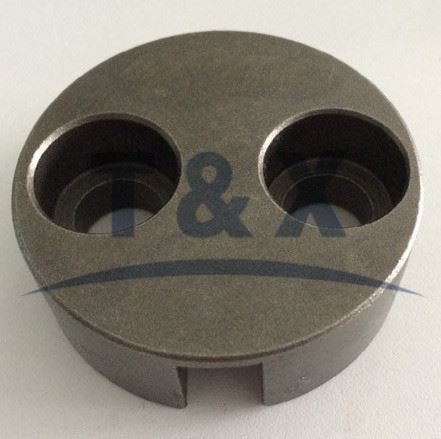
Design Requirements for Parallelism
When designing stamping parts, achieving parallelism starts with the blueprint. Designers must specify the required level of parallelism with precision. This involves defining the allowable tolerance for parallelism, which is the maximum deviation from perfect parallelism that the part can have while still meeting its intended function.
Tolerances are determined based on the application of the stamping part. For high - precision applications such as aerospace components, the tolerance for parallelism may be as tight as a few micrometers. On the other hand, for less critical applications like some consumer products, a slightly larger tolerance can be acceptable. It's important to strike a balance between precision and cost, as tighter tolerances often require more advanced manufacturing processes and quality control measures, which can increase production costs.
Material Selection and Its Impact on Parallelism
The choice of material for stamping parts has a significant impact on achieving parallelism. Different materials have different mechanical properties, such as elasticity, hardness, and ductility, which can affect how the material behaves during the stamping process.
For example, softer materials like aluminum are more malleable and may be easier to stamp into complex shapes. However, they can also be more prone to deformation during stamping, which can lead to deviations in parallelism. Harder materials like stainless steel, on the other hand, offer better dimensional stability but may require more force during stamping, which can also introduce challenges in maintaining parallelism.
As a stamping parts supplier, I carefully select materials based on the specific requirements of the part. For parts where parallelism is of utmost importance, I often choose materials with high stiffness and low elasticity to minimize deformation during stamping.
Manufacturing Process and Parallelism
The stamping process itself is a critical factor in ensuring parallelism. There are several types of stamping processes, including blanking, punching, bending, and deep drawing, each with its own set of challenges and considerations for parallelism.
Blanking and Punching
Blanking and punching are used to cut out the basic shape of the stamping part. In these processes, the alignment of the punch and die is crucial for achieving parallelism. Any misalignment can result in uneven cuts and deviations from the desired parallel surfaces. To ensure proper alignment, I use high - precision tooling and advanced alignment systems in my manufacturing facilities.
Bending
Bending is a common process for creating angles and curves in stamping parts. During bending, the material undergoes plastic deformation, which can affect parallelism if not carefully controlled. The bending radius, the angle of bend, and the speed of the bending process all need to be optimized to maintain parallelism. For example, a sharp bending radius can cause the material to stretch unevenly, leading to non - parallel surfaces.
Deep Drawing
Deep drawing is used to create parts with complex three - dimensional shapes. This process involves stretching the material into a die cavity, which can introduce significant stress and strain on the material. To achieve parallelism in deep - drawn parts, it's essential to control the flow of the material during the drawing process. This may involve using lubricants to reduce friction, controlling the drawing speed, and using proper die design.
Quality Control for Parallelism
Quality control is an integral part of ensuring the parallelism of stamping parts. At my company, I have a comprehensive quality control system in place to monitor and verify parallelism at every stage of the manufacturing process.
In - Process Inspection
During the stamping process, I conduct in - process inspections to detect any potential issues with parallelism early on. This may involve using precision measuring tools such as calipers, micrometers, and coordinate measuring machines (CMMs) to measure the parallelism of the part at various stages of production. If any deviations are detected, adjustments can be made to the manufacturing process immediately to correct the problem.
Final Inspection
Before the stamping parts are shipped to the customer, a final inspection is carried out to ensure that they meet the specified parallelism requirements. This inspection includes a detailed measurement of all relevant surfaces and features using advanced metrology equipment. Only parts that pass the final inspection are approved for delivery.
Examples of Stamping Parts Requiring High Parallelism
There are many types of stamping parts that require high parallelism. Here are a few examples:
- Trailer Wheel Hubs Stamping Hub: These hubs need to have parallel surfaces to ensure proper alignment with the wheels and smooth rotation. Any deviation in parallelism can lead to uneven wear on the wheels and bearings, reducing the lifespan of the trailer's wheel assembly.
- Stump Grinder Pockets: In stump grinders, the pockets that hold the cutting teeth need to be parallel to ensure consistent cutting performance. Non - parallel pockets can cause the teeth to wear unevenly and reduce the efficiency of the grinder.
- Tillage Arms: Tillage arms are used in agricultural machinery to break up and prepare the soil. Parallelism is essential for these arms to ensure that they operate smoothly and evenly across the field. Deviations in parallelism can result in uneven tillage and reduced productivity.
Conclusion
In conclusion, achieving parallelism in stamping parts is a complex but essential task that requires careful consideration of design, material selection, manufacturing processes, and quality control. As a stamping parts supplier, I'm committed to meeting the highest standards of parallelism to ensure the quality and performance of my products.
If you're in need of high - quality stamping parts with precise parallelism, I invite you to reach out to me for a detailed discussion. I have the expertise, experience, and state - of - the - art manufacturing facilities to meet your specific requirements. Whether you're in the automotive, aerospace, agricultural, or any other industry, I can provide you with customized stamping solutions that meet your exacting standards.
References
- ASME Y14.5 - 2018, Dimensioning and Tolerancing.
- ISO 1101:2017, Geometrical product specifications (GPS) — Geometrical tolerancing — Tolerances of form, orientation, location and run - out.
- Metals Handbook, Volume 14: Forming and Forging, ASM International.