
In the production of steel casting parts, risers play a crucial role in ensuring the quality and integrity of the final products. As a supplier of steel casting parts, I have witnessed firsthand the importance of understanding and meeting the requirements for risers. In this blog post, I will delve into the key requirements for risers in steel casting parts production, providing insights based on my years of experience in the industry.
1. Function of Risers in Steel Casting
Before discussing the requirements, it's essential to understand the primary functions of risers in steel casting. Risers, also known as feeders, are additional volumes of molten metal attached to the casting. Their main purposes are as follows:
- Compensate for Shrinkage: As the molten steel cools and solidifies, it undergoes volumetric shrinkage. Risers provide a reservoir of molten metal to feed the casting during this shrinkage process, preventing the formation of shrinkage cavities and porosity in the final part.
- Promote Directional Solidification: Risers are designed to solidify after the casting itself. This creates a temperature gradient that encourages the molten metal in the casting to solidify from the farthest point from the riser towards the riser. Directional solidification helps to ensure that any shrinkage voids are concentrated in the riser, which can be later removed during post - casting processing.
2. Size and Shape Requirements
Size
The size of the riser is a critical factor. It must be large enough to provide an adequate supply of molten metal to compensate for the shrinkage of the casting. The volume of the riser is determined by several factors, including the volume of the casting, the type of steel being used, and the casting process.
- Volume Calculation: There are various methods to calculate the required volume of the riser. One common approach is to use the Chvorinov's rule, which states that the solidification time of a casting is proportional to the square of its volume - to - surface - area ratio. By ensuring that the riser has a larger volume - to - surface - area ratio than the casting, we can ensure that the riser solidifies after the casting.
- Material - Specific Considerations: Different types of steel have different shrinkage rates. For example, carbon steels typically have a higher shrinkage rate compared to some alloy steels. Therefore, when casting carbon steel parts, larger risers may be required to compensate for the greater shrinkage.
Shape
The shape of the riser also affects its performance. Common shapes include cylindrical, spherical, and rectangular.
- Cylindrical Risers: These are widely used due to their simplicity in design and ease of manufacturing. Cylindrical risers have a relatively large volume - to - surface - area ratio, which helps to prolong their solidification time.
- Spherical Risers: Spherical risers offer the highest volume - to - surface - area ratio among common shapes. They are particularly effective in minimizing heat loss and providing a long - lasting supply of molten metal. However, they can be more difficult to manufacture compared to cylindrical risers.
- Rectangular Risers: Rectangular risers are often used when space constraints or the shape of the casting require a non - circular feeder. They can be designed to fit specific casting geometries but may have a lower volume - to - surface - area ratio compared to cylindrical or spherical risers.
3. Location Requirements
The location of the riser on the casting is crucial for achieving proper directional solidification.
- Proximity to the Thickest Sections: Risers should be placed near the thickest sections of the casting because these areas are the last to solidify and are most prone to shrinkage. By placing the riser close to the thick sections, the molten metal can flow easily to these areas to compensate for shrinkage.
- Avoidance of Obstructions: The placement of the riser should not be obstructed by other features of the casting or the mold. Obstructions can impede the flow of molten metal from the riser to the casting, leading to incomplete feeding and the formation of defects.
4. Insulation and Heating Requirements
To ensure that the riser remains molten for an extended period, insulation and heating may be required.
Insulation
- Insulating Materials: Insulating sleeves made of materials such as ceramic fibers or insulating sands can be used to reduce the heat loss from the riser. These materials have low thermal conductivity, which helps to keep the molten metal in the riser at a higher temperature for a longer time.
- Insulation Thickness: The thickness of the insulation is also important. A thicker insulation layer will provide better heat retention, but it may also increase the cost and complexity of the casting process.
Heating
In some cases, additional heating of the riser may be necessary. This can be achieved through various methods, such as using electric heaters or exothermic materials.
- Exothermic Risers: Exothermic risers are made of special materials that release heat during the solidification process. These materials react with oxygen in the air or with other components in the riser to generate heat, which helps to keep the molten metal in the riser in a liquid state for a longer time.
5. Connection Requirements
The connection between the riser and the casting, known as the choke or the gate, is another important aspect.
- Proper Flow Path: The gate should provide a smooth and unobstructed flow path for the molten metal from the riser to the casting. It should be designed to minimize turbulence and prevent the formation of cold shuts or other flow - related defects.
- Size and Shape of the Gate: The size and shape of the gate affect the flow rate of the molten metal. A gate that is too small may restrict the flow of molten metal, while a gate that is too large may cause excessive turbulence. The shape of the gate can also influence the direction of the molten metal flow.
6. Examples in Our Product Range
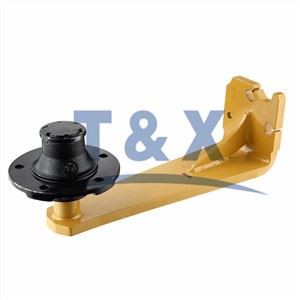
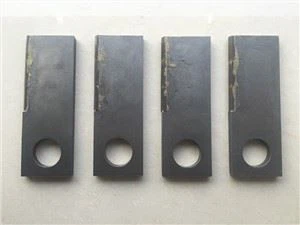
In our product range, we have a variety of steel casting parts that require well - designed risers. For instance, our Cast Flail Cutter is a complex part with different thicknesses in its structure. To ensure its quality, we carefully calculate the size and location of the risers. The risers are placed near the thicker sections of the flail cutter to compensate for shrinkage during solidification.
Our Trailer Connector Parts also demand precise riser design. These parts have specific shape requirements, and the risers need to be designed to fit the overall geometry of the connectors while still providing adequate molten metal supply.
Similarly, for our Steel Wear Parts, which are often made of high - strength steels with relatively high shrinkage rates, we use large and well - insulated risers. This helps to ensure that the final parts are free from shrinkage defects and have the required mechanical properties.


7. Conclusion and Call to Action
In conclusion, meeting the requirements for risers in steel casting parts production is essential for producing high - quality parts. From size and shape to location, insulation, and connection, every aspect of the riser design needs to be carefully considered.
As a supplier of steel casting parts, we have the expertise and experience to design and produce risers that meet the highest standards. If you are in need of high - quality steel casting parts, whether it's for Cast Flail Cutter, Trailer Connector Parts, or Steel Wear Parts, we are here to assist you. Contact us to discuss your specific requirements and start a procurement negotiation.
References
- Campbell, J. (2003). Casting. Butterworth - Heinemann.
- Flemings, M. C. (1974). Solidification Processing. McGraw - Hill.
- Piwonka, T. S., & Flemings, M. C. (1966). Feeding of steel castings. Transactions of the American Foundrymen's Society, 74, 114 - 127.