
Let me start with a story that’ll make sense of this whole second-hand trencher parts question. A few months back, I got a call from a regular guy named Jake—he owns a small excavation business out in Ohio, just got a used directional drill with a beat-up trencher attachment. His old rig conked out mid-job, and he was panicking because he thought new parts would eat into his profit on a big municipal trench project. “Can I just grab used parts instead?” he asked. That question is way more common than you’d think, and it’s the exact reason I’m breaking this down for you today as someone who’s been selling trencher parts (for real, not just online fluff) for over 12 years.
First off, let’s get one thing straight: not all used trencher parts are created equal. I’ve seen guys on Facebook Marketplace grab a beat-up trencher chain that’s half-gummed up with mud and reconditioned it, and I’ve seen folks buy a used set of trencher carbide teeth that were so worn down they couldn’t even cut through soft dirt, let alone the rocky clay Jake was dealing with. The line between “okay to save a few bucks” and “recipe for a job going sideways” is thinner than a trench wall in wet soil, so let’s break this down by part type, because not every part has the same risk level.


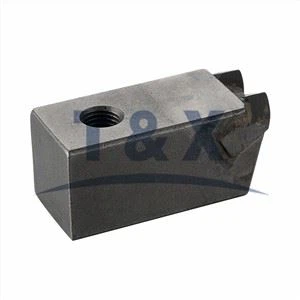
Let’s start with the parts that actually make the trencher do the work—the teeth and the chain. Those are the workhorses, and they take the most abuse, so used ones are a tricky call. First, trencher carbide teeth (link: /drilling-parts/trencher-parts/trencher-carbide-teeth.html) are designed to chew through everything from loam to solid rock, but over time, the carbide tip wears down, or the base that bolts to your tooth holder rusts or gets bent. I had a customer last year who tried a set of used carbide teeth for a 1-mile trench through a field with limestone—half the tips snapped mid-job, and he had to buy new ones on a rush order, which cost him double what he would’ve spent on quality new ones and made him miss his deadline. Now, that’s not to say all used carbide teeth are garbage—if you can check the wear dimension (most reputable parts suppliers mark that on the tooth), and if the carbide tip isn’t worn past the manufacturer’s limit (usually 10% of the original tip length), a used set can work for soft dirt or minimal digging. But for anything with rock or dense soil? Save yourself the headache and grab new ones, like the ones you can see at our link for Trencher Carbide Teeth.
Next up is the trencher chain (link: /drilling-parts/trencher-parts/trencher-chain.html). This is the long loop of metal lugs and teeth that runs around the trencher’s sprockets, and it’s a whole other animal. Used chains can be a win or a disaster, depending on how well they were maintained. If the previous owner kept it lubed, didn’t run it over roots or rocks, and stored it indoors, a used chain is actually pretty good value—new chains are pricy, like, a few hundred to a grand depending on size, and a well-maintained used one can get you through 2-3 small jobs easy. But if it’s rusted, has bent links, or has teeth missing (yep, those little chunks can snap off mid-operation and jam the whole trencher, which is a $2,000 repair right there), walk away. I once had a customer bring in a used chain he bought from a guy at a farm sale—turns out the previous owner had run it through a swamp, so the links were corroded so bad it stretched 2 inches out of spec, which threw the sprockets out of alignment. He had to replace the entire chain and sprockets, so he spent more than if he’d just gone with a mid-grade used one from a reputable supplier. Pro tip: if you’re buying a used chain, ask for the serial number, cross-reference it to make sure it’s the right size for your trencher (way too many guys grab a random 10-foot chain and it doesn’t fit their 9-foot rig), and check for any worn or bent links.
Now, what about parts that aren’t the “working” stuff—like hydraulic hoses, sprockets, idlers, or frame brackets? Those are way safer to buy used, in my experience. I’ve got a customer who runs a fleet of 5 trenchers and he buys all his hydraulic hoses used, as long as the seals aren’t cracked or the hose isn’t bulging. Why? Because those parts don’t take the same impact as the cutting teeth or chain, so their wear is usually slower. Sprockets, though—wait, hold up. Sprockets are the ones the chain runs on, so if you’re buying a used chain, you need to check the sprockets too. If the sprocket teeth are worn down (called “sprocket wear”), they’ll chew up your new chain in a matter of hours, so even a used chain is only worth it if the sprockets are in good shape. For frame brackets and small metal parts, those are pretty hard to mess up—most of the time, rust is just surface rust, which you can sand off, and if there’s no cracks, they’re fine. I’ve had customers grab a used idler pulley for half the cost of new, and it worked perfectly for a year.
Wait, let’s also talk about the elephant in the room: seller reputation. That’s 70% of the battle with used parts. If you’re buying from a random person on Craigslist or Facebook, you’re taking a huge risk—they might not tell you the part was damaged in a flood, or that the previous rig had a fire that warped the frame. But if you’re buying from a reputable parts supplier (hint, like yours truly here), you can get used parts that are inspected, tested, and come with a 30-day guarantee. A lot of suppliers like us actually rebuild used parts too—like trencher hard faced teeth (link: /drilling-parts/trencher-parts/trencher-hard-faced-teeth.html) are often rebuilt by adding a new hard facing layer, which makes them almost as good as new, for way less. That’s a sweet spot a lot of small business owners don’t know about—rebuilt parts aren’t “cheap” parts, they’re tested and repaired to meet original specs.
Let’s circle back to Jake, the guy I mentioned earlier with the used trencher. He called me after panicking, and we talked through his job: it was 80% soft loam, 20% clay, no rock. I told him he could use a set of inspected used trencher carbide teeth, but he needed to make sure the tips weren’t worn more than 8% (so they’d hold up to the clay) and to grab a used chain that had been lubed. He did, and he saved $1,200 on parts, and finished the job on time. But if he’d had to dig through rock? I would’ve told him to spring for new.
Another thing I get asked all the time: what about warranties? New parts almost always come with a warranty, which is a huge safety net if something breaks a month later. Used parts? Most don’t, unless you buy from a trusted supplier, like the kind that stands behind their parts. At our shop, we test every used part before it goes out—we run chains on our test rig, check teeth for wear, pressurize hydraulic hoses—to make sure they work, so you don’t get stuck with a part that dies mid-job and costs you more in downtime than you saved.
Let’s also talk about the fine print: check your trencher’s manual. I can’t tell you how many guys grab a random part because it looks like it fits, but it’s the wrong size. A trencher’s chain pitch, for example, has to be exact—there’s a standard for every make and model, and a slightly off pitch will cause slippage, which wears out the chain and sprockets way faster. Same with teeth: if you get a tooth that’s the wrong width, it’ll rub against the chain or frame, leading to unnecessary wear. That’s why it’s always better to have the part number on hand, and cross-reference it when buying used.
Now, who should never buy used trencher parts? Let’s be real: if you’re digging in hard rock, frozen soil, or concrete, skip the used cutting teeth and chain— those jobs put so much stress on those parts that a used one will break way before the job is done, and you’ll be stuck with downtime. Also, if you’re a new business that can’t afford downtime, go for new or high-quality rebuilt parts— the cost of missing a deadline can be way more than the savings on used parts.
But who should buy used? Small businesses with consistent, light-to-medium digging (no rock), guys on a tight budget for a one-off job, or anyone who buys from a reputable supplier that inspects parts. Jake, the Ohio guy, is perfect example—he’s got a small team, his jobs are mostly residential and light commercial, so a well-inspected used part works great.
Wait, let’s throw in a quick pro tip I learned over the years: when buying used trencher parts, take photos of the actual part, not just the listing. I’ve seen listings for “like-new trencher chain” that are actually so rusted you can’t read the part number. Also, ask for a video of the part working if possible—for a chain, see if it moves smoothly, no kinks or stuck links. For teeth, see if they’re bent or worn unevenly. That extra step saves so much hassle.
Now, I’m not here to bash used parts—they’re a lifeline for small businesses who don’t have a huge parts budget. But I also want you to be smart about it, because a broken trencher mid-job is way worse than spending a little extra on the right part. If you’re on the fence about whether a used part is safe, hit me up— I’ve been in this business long enough to tell you if a part is worth buying or not. Whether you need new trencher carbide teeth, a inspected used trencher chain, or rebuilt hard faced teeth, we’ve got options that fit every budget and job type.
If you’re tired of wasting money on bad parts or overspending on new ones, reach out to us to chat about your trencher parts needs—we’ll help you figure out exactly what works for your rig and your jobs, no sales pitch, just honest advice.
References:
- Excavation Safety Association. (2022). Best Practices for Trenching and Excavation Part Maintenance. Retrieved from industry safety manual for heavy equipment operators.
- Trencher Parts Manufacturers Association. (2023). Wear Standards for Trenching Cutting Components. Annual industry guidelines for trencher part inspection and replacement.
- Small Business Administration. (2021). Budget-Friendly Equipment Maintenance: Used vs. New Parts for Construction Equipment. SBA Construction Industry Resource Guide.
- Heavy Equipment Parts & Service Journal. (2022). Common Fail Points of Used Trenching Components and How to Mitigate Risk. Industry trade publication for construction equipment parts professionals.
- National Association of Heavy Equipment Suppliers. (2023). Inspections Standards for Rebuilt and Used Trenching Parts. Supplier best practices and quality control guidelines.