
Hey there! As a supplier of steel casting parts, I've seen firsthand how crucial it is to choose the right coating for these parts to enhance their corrosion resistance. In this blog, I'll share some tips on how to make that choice, so your steel casting parts can last longer and perform better.
First off, let's talk about why corrosion is such a big deal. Corrosion can eat away at steel casting parts, weakening their structure and reducing their lifespan. This is especially problematic in industries where parts are exposed to harsh environments, like marine, automotive, and construction. A good coating acts as a protective barrier, preventing moisture, chemicals, and other corrosive elements from reaching the steel surface.
Now, there are several types of coatings available, each with its own pros and cons. Let's break them down.
Epoxy Coatings
Epoxy coatings are super popular for steel casting parts. They're known for their excellent adhesion, durability, and chemical resistance. Epoxy coatings can form a tough, hard film on the steel surface, which provides a strong barrier against corrosion. They're also pretty versatile and can be used in a variety of environments, from indoor industrial settings to outdoor applications.


One of the great things about epoxy coatings is that they come in different formulations. You can choose a high-build epoxy coating for maximum protection, or a thin-film epoxy for a more aesthetic finish. However, epoxy coatings do have some limitations. They can be a bit brittle, especially in cold temperatures, and they may require a primer for optimal adhesion.
Polyurethane Coatings
Polyurethane coatings are another top choice for enhancing corrosion resistance. They offer great flexibility, abrasion resistance, and UV stability. This makes them ideal for outdoor applications where the parts are exposed to sunlight and physical wear. Polyurethane coatings can also provide a high-gloss finish, which not only looks good but also helps to protect the steel from environmental factors.
However, polyurethane coatings can be more expensive than epoxy coatings. They also require careful application, as they can be sensitive to humidity and temperature during the curing process.
Zinc-rich Coatings
Zinc-rich coatings work by providing sacrificial protection to the steel. The zinc in the coating corrodes preferentially to the steel, which means it takes the brunt of the corrosion and protects the underlying metal. Zinc-rich coatings are highly effective in preventing rust and are commonly used in marine and offshore applications.
These coatings can be applied as a primer or a standalone coating. They offer good adhesion and can be top-coated with other types of coatings for additional protection. But zinc-rich coatings can be a bit tricky to apply, and they may require special surface preparation to ensure proper adhesion.
Ceramic Coatings
Ceramic coatings are a relatively new option in the market, but they're gaining popularity fast. They offer excellent heat resistance, hardness, and chemical resistance. Ceramic coatings can withstand high temperatures and harsh chemicals, making them suitable for applications in the aerospace, automotive, and energy industries.
The downside of ceramic coatings is that they can be quite expensive and difficult to apply. They often require specialized equipment and expertise.
So, how do you choose the right coating for your steel casting parts? Here are some factors to consider.
Environment
The environment in which the parts will be used is one of the most important factors. If the parts will be exposed to saltwater, like in a marine application, a zinc-rich coating or a high-performance epoxy coating might be the best choice. For parts that will be used in a high-temperature environment, a ceramic coating could be more suitable.
Budget
Your budget will also play a role in your decision. Some coatings, like ceramic coatings, can be quite expensive, while others, like basic epoxy coatings, are more affordable. You need to balance the cost of the coating with the level of protection it provides.
Application Method
The application method is another important consideration. Some coatings can be applied by spray, brush, or roller, while others may require specialized equipment. Make sure you choose a coating that can be applied easily and efficiently in your production process.
Aesthetic Requirements
If the appearance of the parts is important, you'll need to consider the finish of the coating. Polyurethane coatings can provide a high-gloss finish, while epoxy coatings can be formulated to have a matte or semi-gloss finish.
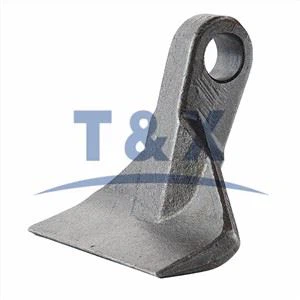
Let's take a look at some of our steel casting parts and the coatings that would be suitable for them. For example, our Cast Flail Cutter is often used in agricultural and landscaping applications. A polyurethane coating would be a great choice for this part, as it provides good abrasion resistance and UV stability.
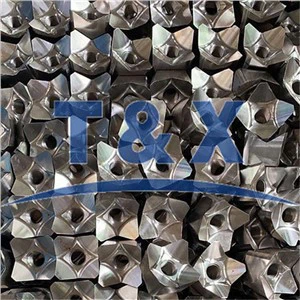
Our Lost Wax Casting Cross Bit & Lost Bit is used in the mining and drilling industry. These parts are exposed to harsh conditions, so a zinc-rich coating or a high-build epoxy coating would be appropriate to protect them from corrosion.
And our 42CrMo Alloy Steel Harden Fishtail Bit is used in high-stress applications. A ceramic coating could be a good option for this part, as it offers excellent heat resistance and hardness.
In conclusion, choosing the right coating for your steel casting parts is a crucial decision that can have a big impact on their performance and lifespan. By considering the environment, budget, application method, and aesthetic requirements, you can select the coating that best meets your needs.
If you're interested in our steel casting parts and need advice on the right coating, feel free to reach out to us for a consultation. We're here to help you make the best choice for your project.
References
- Kittel, P. (2009). Paint and Coating Testing Manual: Fourteenth Edition of the Gardner - Sward Handbook. ASTM International.
- Schmitt, R. J. (2012). Protective Coatings for Metals: Fundamentals, Selection, and Application. CRC Press.
- Talbot, J. M., & Talbot, R. H. (2013). Corrosion Science and Technology. CRC Press.