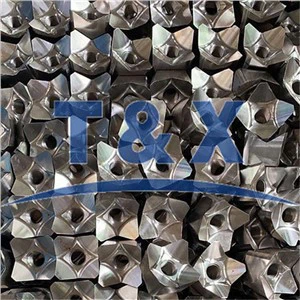

Grey iron parts are widely used in various industries due to their excellent castability, good machinability, and relatively low cost. As a supplier of grey iron parts, I understand the importance of ensuring high-quality products to meet the diverse needs of our customers. In this blog post, I will share some effective strategies on how to improve the quality of grey iron parts based on my experience in the industry.
1. Raw Material Selection
The quality of grey iron parts starts with the selection of raw materials. High-quality pig iron, scrap metal, and alloying elements are essential for producing grey iron with the desired properties. When choosing pig iron, it is crucial to consider its chemical composition, especially the carbon, silicon, and manganese content. These elements play a significant role in determining the graphite structure and mechanical properties of the grey iron.
For example, a proper carbon content is necessary to form graphite flakes, which contribute to the good machinability and damping capacity of grey iron. Silicon, on the other hand, promotes graphite formation and improves the fluidity of the molten iron during casting. Manganese helps to control the sulfur content and enhances the strength and hardness of the grey iron.
In addition to pig iron, the selection of scrap metal is also important. Clean and high-quality scrap metal can reduce impurities and improve the overall quality of the grey iron. It is advisable to source scrap metal from reliable suppliers and conduct regular inspections to ensure its quality.
2. Melting and Pouring Process
The melting and pouring process is a critical step in the production of grey iron parts. Proper control of the melting temperature, time, and atmosphere can significantly affect the quality of the final product.
During the melting process, it is important to maintain a stable melting temperature to ensure complete melting of the raw materials and uniform distribution of the alloying elements. Overheating can lead to excessive oxidation and loss of alloying elements, while insufficient heating can result in incomplete melting and the presence of unmelted particles in the molten iron.
The melting time should also be carefully controlled to allow for proper mixing and homogenization of the molten iron. A longer melting time can help to reduce the presence of impurities and improve the quality of the grey iron. However, excessive melting time can increase energy consumption and production costs.
The atmosphere in the melting furnace also plays a crucial role in the quality of the grey iron. A reducing atmosphere can help to prevent oxidation and reduce the formation of oxides and other impurities in the molten iron. This can be achieved by using a proper fuel and controlling the air-fuel ratio in the furnace.
After melting, the molten iron should be poured into the mold as quickly as possible to minimize the cooling time and prevent the formation of defects such as shrinkage cavities and porosity. The pouring temperature should be carefully controlled to ensure proper filling of the mold and good surface finish of the grey iron parts.
3. Mold Design and Preparation
The design and preparation of the mold are important factors in determining the quality of grey iron parts. A well-designed mold can ensure proper filling of the molten iron, uniform cooling, and dimensional accuracy of the final product.
When designing the mold, it is important to consider the shape, size, and complexity of the grey iron part. The mold should have sufficient draft angles to facilitate the removal of the part from the mold after casting. The gating and riser system should also be carefully designed to ensure proper filling of the mold and minimize the formation of defects.
The mold material should be selected based on the requirements of the casting process. Common mold materials include sand, metal, and ceramic. Sand molds are widely used due to their low cost and good flexibility. However, they may have some limitations in terms of dimensional accuracy and surface finish. Metal molds, on the other hand, can provide higher dimensional accuracy and better surface finish but are more expensive.
Before casting, the mold should be properly prepared to ensure its cleanliness and dryness. Any impurities or moisture in the mold can cause defects in the grey iron parts. The mold should also be preheated to a proper temperature to prevent thermal shock and ensure uniform cooling of the molten iron.

4. Heat Treatment
Heat treatment is an important process for improving the mechanical properties of grey iron parts. It can help to relieve internal stresses, improve the hardness and strength, and enhance the wear resistance of the grey iron.
Common heat treatment processes for grey iron parts include annealing, normalizing, quenching, and tempering. Annealing is a process of heating the grey iron parts to a specific temperature and holding them at that temperature for a certain period of time, followed by slow cooling. This process can help to relieve internal stresses, improve the machinability, and refine the graphite structure of the grey iron.
Normalizing is similar to annealing but involves faster cooling. It can help to improve the strength and hardness of the grey iron parts. Quenching is a process of rapidly cooling the grey iron parts from a high temperature to a low temperature. This process can significantly increase the hardness and strength of the grey iron but may also cause internal stresses and cracking. Tempering is a process of heating the quenched grey iron parts to a lower temperature and holding them at that temperature for a certain period of time, followed by slow cooling. This process can help to relieve the internal stresses and improve the toughness of the grey iron parts.
The selection of the heat treatment process depends on the specific requirements of the grey iron parts. It is important to carefully control the heat treatment parameters such as temperature, time, and cooling rate to ensure the desired mechanical properties of the grey iron parts.
5. Quality Control and Inspection
Quality control and inspection are essential steps in ensuring the quality of grey iron parts. A comprehensive quality control system should be established to monitor the production process from raw material selection to the final product.
During the production process, regular inspections should be conducted to check the quality of the raw materials, the melting and pouring process, the mold design and preparation, and the heat treatment process. Non-destructive testing methods such as ultrasonic testing, magnetic particle testing, and radiographic testing can be used to detect internal defects in the grey iron parts. Destructive testing methods such as tensile testing, hardness testing, and metallographic analysis can be used to evaluate the mechanical properties and microstructure of the grey iron parts.
In addition to in-process inspections, final inspections should also be conducted before the grey iron parts are shipped to the customers. The final inspections should include dimensional inspection, surface finish inspection, and functional testing to ensure that the grey iron parts meet the customer's requirements.
6. Continuous Improvement
Continuous improvement is an important concept in the production of high-quality grey iron parts. By constantly analyzing the production process, identifying areas for improvement, and implementing corrective actions, we can continuously improve the quality of our products and meet the changing needs of our customers.
One way to achieve continuous improvement is to collect and analyze data on the production process and the quality of the grey iron parts. This data can be used to identify trends, patterns, and potential problems in the production process. Based on the analysis results, we can develop and implement improvement plans to address the identified issues.
Another way to achieve continuous improvement is to invest in research and development. By exploring new materials, processes, and technologies, we can develop innovative solutions to improve the quality and performance of our grey iron parts. We can also collaborate with our customers and suppliers to share knowledge and experience and jointly develop new products and solutions.
Conclusion
Improving the quality of grey iron parts requires a comprehensive approach that covers all aspects of the production process, from raw material selection to the final product. By implementing the strategies discussed in this blog post, we can ensure the production of high-quality grey iron parts that meet the diverse needs of our customers.
As a supplier of grey iron parts, we are committed to providing our customers with the highest quality products and services. If you are interested in our Grey Iron Or Ductile Iron Disc Harrow Spool or other grey iron parts, please feel free to contact us for more information and to discuss your specific requirements. We look forward to the opportunity to work with you and to provide you with the best solutions for your needs.
References
- ASM Handbook, Volume 15: Casting, ASM International, 2008.
- Metals Handbook, Volume 1: Properties and Selection: Irons, Steels, and High-Performance Alloys, ASM International, 1990.
- Campbell, J., Castings, Butterworth-Heinemann, 2003.