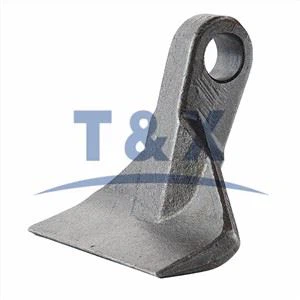

Hey there! As a supplier of Drag Bits, I've seen firsthand the importance of understanding the wear mechanisms of the cutters on these bits. In this blog post, I'm gonna break down the different types of wear that can occur and how they impact the performance of our HDF Drag Bit.
Abrasive Wear
Abrasive wear is one of the most common types of wear on drag bit cutters. It happens when hard particles in the rock come into contact with the cutter surface and scratch or remove material. This can occur in two main ways: two - body abrasion and three - body abrasion.
In two - body abrasion, the cutter directly rubs against the rock. The sharp edges of the rock act like tiny cutting tools, gradually wearing away the cutter material. For example, when drilling through sandstone, the quartz grains in the sandstone can cause significant two - body abrasion. The harder the rock and the more angular the particles, the faster the abrasion rate.


Three - body abrasion, on the other hand, involves loose particles that get trapped between the cutter and the rock. These particles can be fragments of the rock that have been broken off during the drilling process. They act as abrasives, causing wear on both the cutter and the rock surface. This type of abrasion is often more severe than two - body abrasion because the particles can move freely and cause damage in multiple directions.
To combat abrasive wear, we design our cutters with high - hardness materials. Carbide is a popular choice because it has excellent wear resistance. We also use advanced coating technologies to further enhance the cutter's ability to withstand abrasion. These coatings can reduce the friction between the cutter and the rock, minimizing the amount of material removed.
Adhesive Wear
Adhesive wear occurs when the cutter and the rock come into such close contact that they start to stick together. Under high pressure and temperature conditions, the atoms on the cutter surface and the rock surface can bond. When the cutter moves, these bonds are broken, and small pieces of the cutter material are pulled off.
This type of wear is more likely to happen when drilling through soft and ductile rocks. The soft rock can deform and adhere to the cutter, creating a situation where the adhesive forces are strong enough to cause material transfer. For instance, when drilling through shale, the clay particles in the shale can adhere to the cutter, leading to adhesive wear.
To prevent adhesive wear, we use lubricants and anti - sticking agents in our cutter design. These substances can reduce the adhesion between the cutter and the rock, allowing the cutter to move smoothly without getting stuck. Additionally, we optimize the surface finish of the cutter to make it less likely for the rock to adhere to it.
Fatigue Wear
Fatigue wear is caused by repeated stress cycles on the cutter. During the drilling process, the cutter is subjected to a variety of forces, including impact, vibration, and pressure. Over time, these forces can cause microscopic cracks to form on the cutter surface. As the drilling continues, these cracks grow and eventually lead to the failure of the cutter.
The frequency and magnitude of the stress cycles play a crucial role in fatigue wear. For example, if the drill bit is operating at a high rotational speed or encountering hard rock layers frequently, the cutter will experience more severe fatigue. The material properties of the cutter also affect its fatigue resistance. Cutters made from materials with high toughness are generally more resistant to fatigue wear.
To improve the fatigue resistance of our cutters, we carefully select the materials and heat - treat them to optimize their mechanical properties. We also design the cutter geometry in a way that distributes the stress evenly across the surface, reducing the likelihood of crack initiation.
Erosive Wear
Erosive wear is similar to abrasive wear, but it is caused by the impact of high - velocity fluid or solid particles. In the drilling process, the drilling fluid (usually mud) is pumped through the drill bit to cool the cutters, remove the rock cuttings, and maintain the wellbore stability. If the drilling fluid contains a high concentration of solid particles or is flowing at a high velocity, it can cause erosive wear on the cutter.
The erosive wear rate depends on several factors, such as the particle size, shape, and velocity of the fluid. Larger and more angular particles moving at high speeds will cause more severe erosion. To reduce erosive wear, we use special nozzles in our drill bits to control the flow of the drilling fluid. These nozzles can direct the fluid in a way that minimizes the impact on the cutters. We also use erosion - resistant materials in the areas of the cutter that are most exposed to the fluid flow.
Thermal Wear
Thermal wear occurs due to the high temperatures generated during the drilling process. When the cutter cuts through the rock, a significant amount of heat is produced due to friction. If this heat is not dissipated quickly enough, the temperature of the cutter can rise to a level where the material properties are affected.
High temperatures can cause the cutter material to soften, reducing its hardness and wear resistance. In extreme cases, the cutter can even melt or undergo a phase change, leading to rapid wear and failure. To manage thermal wear, we use cooling systems in our drill bits. The drilling fluid plays a crucial role in this process, as it helps to carry away the heat generated at the cutter - rock interface. We also design the cutter geometry to increase the surface area available for heat transfer, allowing the heat to dissipate more efficiently.
Impact of Wear on Drag Bit Performance
The wear of the cutters on drag bits can have a significant impact on their performance. As the cutters wear, their cutting efficiency decreases. This means that more energy is required to drill through the rock, which can lead to higher fuel consumption and longer drilling times.
Worn cutters also produce larger and more irregular rock cuttings, which can cause problems with the wellbore stability and the removal of the cuttings from the well. In addition, the wear of the cutters can affect the steering and stability of the drill bit. If the cutters on one side of the bit wear more quickly than the others, the bit may tend to deviate from the desired drilling path.
How Our Drag Bits Address Wear
At our company, we've put a lot of effort into developing drag bits that can withstand these wear mechanisms. Our HDF Drag Bit is a great example. We use state - of - the - art materials and manufacturing processes to ensure that the cutters are as durable as possible.
We constantly test our bits in different drilling environments to evaluate the wear performance and make improvements. Our R & D team is always working on new technologies to enhance the wear resistance of the cutters, such as developing new coatings and improving the heat - treatment processes.
Why You Should Choose Our Drag Bits
If you're in the market for drag bits, you'll want to choose a supplier that understands the wear mechanisms and has the expertise to design bits that can handle them. Our drag bits are designed to offer long - term performance and reliability. We've been in the business for a long time, and we've built a reputation for providing high - quality products.
Whether you're drilling in soft or hard rock formations, our drag bits can deliver the results you need. We offer a range of options to suit different drilling requirements, and we can also provide customized solutions if you have specific needs.
Let's Talk
If you're interested in learning more about our drag bits or have any questions about the wear mechanisms of the cutters, don't hesitate to get in touch. We'd love to discuss your drilling projects and how our products can help you achieve your goals. Contact us today to start a conversation about your procurement needs.
References
- Smith, J. (2018). Drilling Bit Technology. Elsevier.
- Brown, A., & Green, B. (2020). Wear Mechanisms in Drilling Tools. Journal of Petroleum Engineering, 45(2), 123 - 135.
- Johnson, C. (2019). Advances in Drag Bit Design. International Journal of Drilling Research, 10(3), 78 - 92.