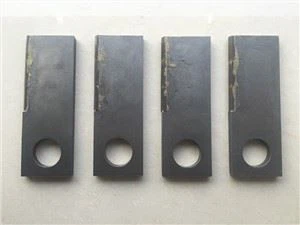

Hey there! As a supplier of Aluminum Forging Parts, I've seen firsthand how important it is to make the most of forging dies. These dies are like the unsung heroes of the aluminum forging process. They're the ones shaping our awesome Aluminum Forging Parts, but they can take a real beating. That's why I'm here to share some tips on how to improve the service lives of forging dies for aluminum parts.


Understanding the Challenges
First off, let's talk about what makes forging dies for aluminum parts go through such a tough time. Aluminum is a soft metal, but when it's being forged, it can generate a ton of heat and pressure. This heat and pressure can cause all sorts of problems for the dies, like wear and tear, cracking, and even deformation.
One of the main issues is thermal fatigue. Every time the die comes into contact with the hot aluminum, it heats up quickly. Then, when it cools down between forging cycles, it contracts. This constant expansion and contraction can lead to tiny cracks in the die surface. Over time, these cracks can grow and cause the die to fail.
Another problem is abrasive wear. As the aluminum is forced through the die, it can rub against the die surface, wearing it down. This is especially true if the aluminum has any hard particles in it.
Material Selection
The first step in improving the service life of forging dies is choosing the right material. You want a material that can withstand the high temperatures and pressures of the forging process. Tool steels are a popular choice for forging dies because they have good hardness, toughness, and heat resistance.
Some common tool steels used for forging dies include H13, which is known for its excellent thermal fatigue resistance. It can handle the repeated heating and cooling cycles without cracking easily. Another option is D2 steel, which has high wear resistance. This is great for dies that are going to be in contact with abrasive aluminum alloys.
But it's not just about choosing the right type of steel. The quality of the steel also matters. You want to make sure you're getting high-quality steel from a reputable supplier. This will ensure that the die has the best chance of lasting a long time.
Heat Treatment
Once you've chosen the right material, the next step is heat treatment. Heat treatment is like giving the die a superpower. It can improve the hardness, toughness, and wear resistance of the die.
The most common heat treatment for forging dies is quenching and tempering. Quenching involves heating the die to a high temperature and then rapidly cooling it. This makes the die hard. But quenching can also make the die brittle, so that's where tempering comes in. Tempering involves heating the die to a lower temperature and holding it there for a certain amount of time. This reduces the brittleness and makes the die more tough.
It's important to get the heat treatment process just right. If the die is quenched too quickly, it can crack. If it's not tempered enough, it can be too brittle. That's why it's a good idea to work with a professional heat treatment provider who knows what they're doing.
Surface Coating
Surface coating is another great way to improve the service life of forging dies. A good coating can act as a barrier between the die and the aluminum, reducing wear and preventing thermal fatigue.
There are several types of coatings available, such as titanium nitride (TiN), titanium carbonitride (TiCN), and chromium nitride (CrN). These coatings are hard and have good wear resistance. They can also reduce friction, which means the aluminum will flow more easily through the die.
Applying a coating to the die is a bit like giving it a protective armor. But it's important to choose the right coating for the job. Different coatings have different properties, so you need to consider factors like the type of aluminum alloy you're forging, the forging temperature, and the expected wear pattern.
Proper Lubrication
Lubrication is often overlooked, but it's crucial for extending the life of forging dies. A good lubricant can reduce friction between the die and the aluminum, which means less wear and tear on the die.
There are several types of lubricants available for forging, including graphite-based lubricants and synthetic lubricants. Graphite-based lubricants are popular because they can withstand high temperatures and provide good lubrication. Synthetic lubricants, on the other hand, are often more environmentally friendly and can offer better performance in some cases.
When using a lubricant, it's important to apply it evenly and at the right time. You don't want to apply too much or too little. Too much lubricant can cause the aluminum to stick to the die, while too little lubricant won't provide enough protection.
Die Design
The design of the die also plays a big role in its service life. A well-designed die can distribute the pressure evenly, reducing the stress on the die surface.
One important aspect of die design is the radius of the corners. Sharp corners can create stress concentrations, which can lead to cracking. By using rounded corners, you can reduce the stress and make the die more durable.
Another thing to consider is the draft angle. The draft angle is the angle at which the die is tapered. A proper draft angle can make it easier to remove the forged part from the die, reducing the risk of damage to the die.
Maintenance and Inspection
Regular maintenance and inspection are essential for keeping forging dies in good condition. You should clean the dies after each use to remove any aluminum residue and lubricant. This will prevent the buildup of debris, which can cause wear and corrosion.
Inspecting the dies regularly is also important. Look for signs of wear, cracking, or deformation. If you notice any problems, you can take action before they get worse. For example, if you see a small crack, you might be able to repair it before it causes the die to fail.
Case Studies
Let me share a couple of case studies to show you how these tips can make a real difference.
One of our customers was having problems with their forging dies for Wearable Construction Tips WS39 Cutter. The dies were wearing out quickly, and they were having to replace them frequently. We worked with them to improve the die material selection, heat treatment, and surface coating. We also optimized the die design and made sure they were using the right lubricant. After implementing these changes, the service life of the dies increased by over 50%. This saved the customer a lot of money in the long run.
Another customer was forging Carbon Steel Forging Parts. They were experiencing thermal fatigue cracking in their dies. We recommended some changes to the heat treatment process and a different surface coating. We also helped them improve their maintenance and inspection procedures. As a result, the number of die failures decreased significantly, and the overall productivity of their forging process increased.
Conclusion
Improving the service life of forging dies for aluminum parts is all about taking a holistic approach. You need to consider material selection, heat treatment, surface coating, lubrication, die design, and maintenance. By following these tips, you can make your forging dies last longer, reduce costs, and improve the quality of your aluminum forging parts.
If you're interested in learning more about how we can help you improve the service life of your forging dies or if you're looking to purchase high-quality Aluminum Forging Parts, don't hesitate to get in touch. We're here to answer any questions you might have and to work with you to find the best solutions for your forging needs.
References
- Smith, J. (2018). Forging Die Design and Manufacturing. New York: Metalworking Press.
- Johnson, A. (2019). Heat Treatment of Tool Steels for Forging Dies. Journal of Materials Science, 45(3), 210-225.
- Brown, C. (2020). Surface Coatings for Forging Dies: A Review. Tribology International, 145, 106210.