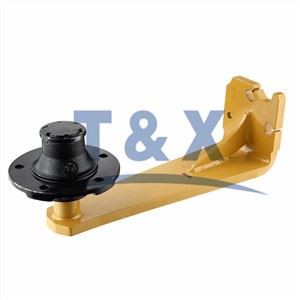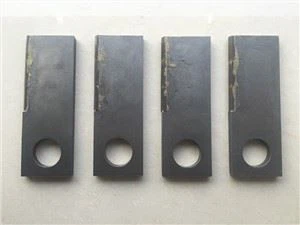

As a supplier of Auger Wear Parts, I understand the critical importance of wear resistance in these components. Auger wear parts are subjected to extreme conditions during drilling operations, including high pressure, abrasion, and impact. Improving their wear resistance can significantly extend their service life, reduce downtime, and ultimately save costs for our customers. In this blog, I will share some effective strategies to enhance the wear resistance of Auger Wear Parts.
Material Selection
The choice of material is fundamental in determining the wear resistance of Auger Wear Parts. High - strength steels are commonly used due to their good combination of hardness and toughness. For instance, alloy steels with elements such as chromium, nickel, and molybdenum can offer enhanced wear resistance. These alloying elements form hard carbides within the steel matrix, which can resist abrasion from the drilling materials.
Another option is the use of tungsten carbide. Tungsten carbide is an extremely hard material with excellent wear - resistant properties. It is often used in the tips of auger teeth. When combined with a tough steel substrate, tungsten carbide can provide a high - performance solution for high - wear applications. For example, in the case of 9 Inch Rock Auger, which is used for drilling in hard rock formations, tungsten carbide - tipped teeth can greatly improve the wear resistance and drilling efficiency.
Heat Treatment
Heat treatment is a crucial process for improving the wear resistance of Auger Wear Parts. Processes such as quenching and tempering can significantly increase the hardness of the material. Quenching involves rapidly cooling the heated part to transform the microstructure into a harder phase. Tempering is then carried out to relieve the internal stresses generated during quenching and to improve the toughness of the material.
For example, by carefully controlling the quenching and tempering parameters, we can achieve an optimal balance between hardness and toughness in the auger components. This not only enhances the wear resistance but also reduces the risk of cracking and chipping during operation. In the production of Auger Tooth Holders, heat treatment can improve their ability to hold the teeth firmly and resist wear from the constant movement and impact.
Surface Coating
Applying surface coatings is an effective way to enhance the wear resistance of Auger Wear Parts. There are several types of coatings available, each with its own advantages.
One common type is the ceramic coating. Ceramic coatings are extremely hard and have excellent chemical stability. They can provide a protective layer on the surface of the auger parts, reducing friction and wear. For example, a ceramic - coated auger blade can resist the abrasion from soil, sand, and rocks more effectively.
Another option is the diamond - like carbon (DLC) coating. DLC coatings have a low coefficient of friction and high hardness. They can reduce the adhesion of drilling materials to the auger parts, which helps to prevent clogging and improve the overall wear performance. In the case of 6 Inch MINI Earth Auger, a DLC - coated auger can operate more smoothly in soft to medium - hard soil conditions.
Design Optimization
The design of Auger Wear Parts also plays a significant role in their wear resistance. A well - designed auger should have a proper helix angle, blade thickness, and tooth geometry.


The helix angle affects the flow of the drilling material along the auger. An optimal helix angle can ensure efficient removal of the drilled material, reducing the contact time between the auger and the material and thus minimizing wear. For example, in a soil - drilling auger, a helix angle of around 20 - 30 degrees is often considered ideal for smooth material flow.
The blade thickness should be carefully selected based on the application. Thicker blades can provide more durability in high - wear applications, but they may also increase the weight and power consumption of the auger. Therefore, a balance needs to be struck between blade thickness and performance.
Tooth geometry is another important factor. The shape and size of the teeth can affect the cutting efficiency and wear resistance. For example, a pointed tooth can penetrate the material more easily, while a chisel - shaped tooth may be more suitable for breaking up hard rocks.
Maintenance and Inspection
Regular maintenance and inspection are essential for ensuring the long - term wear resistance of Auger Wear Parts. This includes cleaning the auger after each use to remove any debris and contaminants that can cause abrasion. Lubrication of moving parts, such as the tooth holders, can also reduce friction and wear.
Inspection should be carried out periodically to check for signs of wear, damage, or deformation. Worn - out parts should be replaced promptly to prevent further damage to the auger and to maintain its performance. For example, if the teeth of an auger are worn beyond a certain limit, they should be replaced with new ones to ensure efficient drilling and to prevent excessive wear on other components.
Conclusion
Improving the wear resistance of Auger Wear Parts is a multi - faceted approach that involves material selection, heat treatment, surface coating, design optimization, and proper maintenance. By implementing these strategies, we can provide our customers with high - quality Auger Wear Parts that have a longer service life and better performance.
If you are interested in our Auger Wear Parts or have any questions about improving wear resistance, please feel free to contact us for further discussion and procurement negotiations. We are committed to providing the best solutions for your drilling needs.
References
- Callister, W. D., & Rethwisch, D. G. (2010). Materials Science and Engineering: An Introduction. Wiley.
- Kalpakjian, S., & Schmid, S. R. (2009). Manufacturing Engineering and Technology. Pearson.
- Schey, J. A. (1987). Tribology in Metalworking: Friction, Lubrication, and Wear. ASM International.