
Optimizing the machining sequence for CNC machining parts is a critical aspect of the manufacturing process that directly impacts efficiency, quality, and cost. As a CNC Machining Parts supplier, I have witnessed firsthand the transformative effects of a well - planned machining sequence on production outcomes. In this blog, I will share some key strategies and considerations for optimizing the machining sequence.
Understanding the Basics of CNC Machining Sequence
The machining sequence refers to the order in which various machining operations are performed on a workpiece. This includes operations such as turning, milling, drilling, and grinding. A proper sequence can minimize tool changes, reduce setup times, and improve the overall accuracy of the finished part.
One of the fundamental principles in determining the machining sequence is to start with roughing operations. Roughing is the process of removing large amounts of material quickly to get the workpiece close to its final shape. This is typically done using large - diameter tools and high - feed rates. By starting with roughing, we can reduce the amount of material that subsequent finishing operations need to remove, which in turn reduces tool wear and improves surface finish.
After roughing, the next step is usually semi - finishing. This operation refines the shape of the workpiece further and prepares it for the final finishing operation. Semi - finishing uses smaller tools and more precise cutting parameters to achieve a better surface finish and dimensional accuracy.
Finally, the finishing operation is carried out to achieve the desired surface finish and tight tolerances. Finishing operations often involve using very sharp tools and slow cutting speeds to minimize surface roughness and ensure the part meets the required specifications.
Factors Affecting the Machining Sequence
Several factors need to be considered when optimizing the machining sequence. These include the part geometry, material properties, tooling availability, and machine capabilities.
Part Geometry
The shape and complexity of the part play a significant role in determining the machining sequence. For example, if a part has deep pockets or internal features, it may be necessary to perform some operations before others to ensure proper access to the areas that need to be machined. In some cases, it may be more efficient to use multiple setups or special fixtures to machine complex parts.
Material Properties
Different materials have different machining characteristics. For instance, hard materials like stainless steel require slower cutting speeds and more robust tooling compared to softer materials like aluminum. The material's ductility, hardness, and thermal conductivity can all affect the choice of cutting tools and the machining sequence. When machining a part made of a brittle material, it may be necessary to avoid sudden changes in cutting forces to prevent cracking.
Tooling Availability
The availability of cutting tools also influences the machining sequence. If a particular tool is not available immediately, it may be necessary to rearrange the operations to use the tools that are on hand. Additionally, the tool life and wear rate need to be considered. Tools with a shorter tool life may need to be used earlier in the sequence to minimize the impact of wear on the final part quality.
Machine Capabilities
Each CNC machine has its own set of capabilities, such as the maximum spindle speed, feed rate, and travel range. The machining sequence should be designed to take full advantage of the machine's capabilities while staying within its limitations. For example, if a machine has a high - speed spindle, it may be beneficial to perform high - speed machining operations to reduce cycle times.
Strategies for Optimizing the Machining Sequence
Minimize Tool Changes
Tool changes can be time - consuming and can introduce errors due to the need to re - align the tool. To minimize tool changes, group operations that use the same tool together. For example, if a part requires multiple holes of the same diameter to be drilled, drill all these holes before changing the drill bit. This reduces the setup time and improves the overall efficiency of the machining process.
Use Progressive Machining
Progressive machining involves performing operations in a logical sequence that builds on the previous operations. For example, start with the outer features of a part and then move towards the inner features. This approach helps to maintain the stability of the workpiece and reduces the risk of distortion. When machining a shaft, start with turning the outer diameter and then move on to machining the keyways and other internal features.


Consider the Workpiece Stability
Workpiece stability is crucial during machining. If the workpiece is not properly supported, it can vibrate or move during cutting, which can lead to poor surface finish and dimensional inaccuracies. When planning the machining sequence, ensure that the workpiece is held securely throughout the process. This may involve using fixtures, clamps, or other support devices.
Optimize the Cutting Parameters
The cutting parameters, such as the cutting speed, feed rate, and depth of cut, should be optimized for each operation in the sequence. These parameters can have a significant impact on the tool life, surface finish, and cycle time. By using the appropriate cutting parameters, we can improve the efficiency of the machining process and reduce costs. For example, increasing the cutting speed can reduce the cycle time, but it may also increase tool wear. Therefore, a balance needs to be struck between these factors.
Case Studies
Let's take a look at some real - world examples of how optimizing the machining sequence can improve the manufacturing process.
Graphite Self - lubricating Copper Sleeve
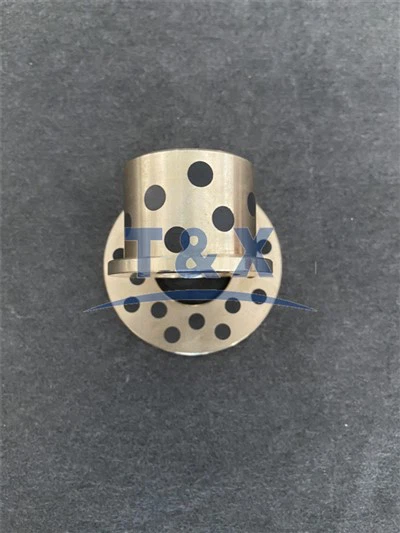
The Graphite Self - lubricating Copper Sleeve is a complex part that requires precise machining. By analyzing the part geometry and material properties, we were able to develop an optimized machining sequence. We started with rough turning to remove the excess material from the outer and inner diameters. Then, we performed semi - finishing operations to achieve a better surface finish and dimensional accuracy. Finally, we used a finishing operation to ensure the tight tolerances required for the sleeve's functionality. By minimizing tool changes and using the appropriate cutting parameters, we were able to reduce the cycle time by 20% and improve the surface finish.
Trailer Wheel Hubs Kit
The Trailer Wheel Hubs Kit consists of multiple components that need to be machined with high precision. We optimized the machining sequence by grouping operations based on the tool requirements. For example, all the drilling operations were performed using the same drill bit, and all the milling operations were done with the appropriate end mills. This approach reduced the tool change time and improved the overall efficiency of the production process. Additionally, we used progressive machining to ensure the stability of the workpiece during machining. As a result, we were able to increase the production output by 15% while maintaining high - quality standards.
Precision Machining Drive Shaft
The Precision Machining Drive Shaft is a critical component in automotive applications that requires extremely tight tolerances. To optimize the machining sequence, we considered the material properties of the drive shaft, which is typically made of high - strength steel. We started with rough machining using carbide - tipped tools to remove the bulk of the material. Then, we performed semi - finishing and finishing operations with high - precision grinding and polishing to achieve the required surface finish and dimensional accuracy. By carefully selecting the cutting parameters and using advanced tooling, we were able to reduce the scrap rate by 10% and improve the part quality significantly.
Conclusion
Optimizing the machining sequence for CNC machining parts is a complex but rewarding process. By considering factors such as part geometry, material properties, tooling availability, and machine capabilities, and by implementing strategies like minimizing tool changes, using progressive machining, and optimizing cutting parameters, we can improve the efficiency, quality, and cost - effectiveness of the manufacturing process.
As a CNC Machining Parts supplier, we are committed to providing our customers with high - quality parts at competitive prices. If you are in need of CNC machining services or have any questions about optimizing the machining sequence for your parts, please feel free to contact us for a detailed discussion. We look forward to working with you to meet your machining needs.
References
- Boothroyd, G., & Knight, W. A. (2006). Fundamentals of machining and machine tools. CRC Press.
- Kalpakjian, S., & Schmid, S. R. (2013). Manufacturing engineering and technology. Pearson.
- Trent, E. M., & Wright, P. K. (2000). Metal cutting. Butterworth - Heinemann.