
Hey there! As a supplier of Wood Grinder Parts, I've seen it all when it comes to the ins and outs of these machines. In this blog, I'm gonna break down the common wood grinder parts, so you'll have a better understanding of what makes these things tick.
1. Grinder Tips
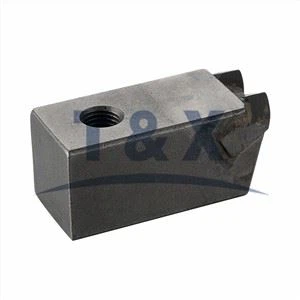
Let's start with grinder tips. These are like the teeth of the wood grinder. They're responsible for making the initial contact with the wood, breaking it down into smaller pieces. There are different types of grinder tips out there.


One popular type is the Hard Faced Grinder Tips. These tips are coated with a hard-facing material, which makes them super durable. They can withstand a lot of wear and tear, especially when dealing with tough woods. The hard-facing helps to extend the life of the tips, so you don't have to replace them as often.
Another type is the Forged Grinder Tips. Forged tips are made by heating and shaping metal under high pressure. This process gives them a strong and dense structure. They're great for heavy-duty grinding jobs because they can handle a lot of force without breaking or chipping.
2. Grinder Hammers
Grinder hammers are another crucial part of the wood grinder. They work in conjunction with the grinder tips to further break down the wood. When the wood is fed into the grinder, the hammers spin at high speeds and strike the wood, shattering it into smaller fragments.
One type of grinder hammer that stands out is the Tungsten Carbide Grit Grinder Hammer. Tungsten carbide is an extremely hard material, and when it's used in the form of grit on the hammer, it significantly increases the hammer's cutting and grinding ability. These hammers can handle all kinds of woods, from soft pine to hard oak, with ease. They also have a longer lifespan compared to regular hammers because the tungsten carbide grit resists wear better.
3. Screen
The screen in a wood grinder plays an important role in determining the size of the wood particles that come out of the grinder. After the wood is ground by the tips and hammers, it passes through the screen. The screen has holes of a specific size, and only wood particles that are small enough to fit through these holes can exit the grinder.
Screens come in different hole sizes, depending on your needs. If you want a finer grind, you'd choose a screen with smaller holes. For a coarser grind, a screen with larger holes would be the way to go. The screen also helps to separate the ground wood from any larger pieces that might still be in the grinder, ensuring a more consistent output.
4. Bearings
Bearings are often overlooked, but they're essential for the smooth operation of a wood grinder. They support the rotating parts of the grinder, such as the shaft on which the hammers and tips are mounted. Good bearings reduce friction, which means the grinder can run more efficiently and with less noise.
There are different types of bearings used in wood grinders, such as ball bearings and roller bearings. Ball bearings are suitable for high-speed applications and can handle both radial and axial loads. Roller bearings, on the other hand, are better at handling heavy radial loads. Choosing the right type of bearing for your wood grinder is important to ensure its long-term performance.
5. Housing
The housing of a wood grinder is like the protective shell that encloses all the internal parts. It keeps the moving parts safe from external damage and also helps to contain the wood dust and debris generated during the grinding process.
A well-designed housing should be sturdy and durable. It should be able to withstand the vibrations and impacts that occur during the grinding operation. Some housings are made of thick steel, which provides excellent strength and protection. Additionally, the housing may have features like access doors for easy maintenance and cleaning.
6. Motor
The motor is the power source of the wood grinder. It provides the energy needed to spin the hammers, tips, and other rotating parts. The size and power of the motor depend on the size and capacity of the wood grinder.
A more powerful motor can handle larger pieces of wood and grind them more quickly. However, it also consumes more electricity. When choosing a wood grinder, you need to consider your specific needs and the amount of wood you'll be grinding on a regular basis. A motor that's too small may not be able to handle the workload, while a motor that's too large may be overkill and waste energy.
7. Feed System
The feed system is responsible for getting the wood into the grinder. There are different types of feed systems, such as manual feed and automatic feed.
Manual feed systems require you to physically place the wood into the grinder. This is suitable for small-scale operations or when you're dealing with irregularly shaped pieces of wood. Automatic feed systems, on the other hand, use conveyors or other mechanisms to feed the wood into the grinder continuously. They're great for large-scale operations where you need to grind a lot of wood quickly and efficiently.
Why Choose Our Wood Grinder Parts?
As a supplier of Wood Grinder Parts, we take pride in offering high-quality products. Our grinder tips, hammers, screens, bearings, and other parts are made from top-notch materials and are designed to meet the highest standards of performance and durability.
We understand that downtime can be costly for your business, so we strive to provide parts that have a long lifespan and require minimal maintenance. Whether you're a small woodworking shop or a large industrial operation, we have the right parts for you.
If you're in the market for wood grinder parts, don't hesitate to get in touch with us. We're here to help you find the perfect parts for your grinder and ensure that your equipment runs smoothly. Contact us today to start a conversation about your wood grinder part needs.
References
- Wood Grinder Handbook: A Comprehensive Guide to Wood Grinding Technology
- Industrial Machinery Maintenance Manual: Focus on Wood Grinders
So, that's a wrap on the common wood grinder parts. I hope this blog has given you a better understanding of what goes into these machines and why each part is important. If you have any questions or need more information, feel free to reach out.