
As a seasoned supplier of Flange Parts, I'm often asked about the friction properties of these crucial components. Friction is a fundamental aspect that significantly influences the performance, durability, and reliability of flange parts in various applications. In this blog, we will delve into the intricacies of the friction properties of flange parts, exploring their importance, factors affecting them, and how we, as a supplier, ensure the quality of our Flange Parts.
Understanding Friction in Flange Parts
Friction is the force that opposes the relative motion or tendency of such motion between two surfaces in contact. In the context of flange parts, friction plays a dual role. On one hand, it can be beneficial, providing the necessary grip for proper connection and preventing slippage. On the other hand, excessive friction can lead to wear and tear, energy loss, and even failure of the flange system.


The friction between flange surfaces is primarily determined by two types of friction: static friction and kinetic friction. Static friction acts when the flanges are at rest relative to each other, preventing them from sliding. This is crucial for maintaining a tight seal and preventing leaks in applications such as pipelines and machinery. Kinetic friction, on the other hand, comes into play when the flanges are in relative motion, such as during assembly or disassembly, or in applications where the connected components experience vibrations or dynamic loads.
Importance of Friction Properties
The friction properties of flange parts are of utmost importance for several reasons. Firstly, proper friction ensures a secure and stable connection between flanges. In applications where high pressures or forces are involved, such as in hydraulic systems or steam pipelines, sufficient friction prevents the flanges from separating, which could lead to catastrophic failures.
Secondly, friction affects the sealing performance of flange joints. A good seal is essential for preventing leakage of fluids or gases, which can not only result in loss of product but also pose safety hazards in some cases. The right amount of friction helps to maintain the integrity of the gasket between the flanges, ensuring a tight seal.
Additionally, the friction properties can impact the ease of installation and maintenance of flange parts. If the friction is too high, it can make assembly and disassembly difficult, increasing the time and effort required for these tasks. Conversely, if the friction is too low, the flanges may not stay in place properly, leading to alignment issues and potential failures.
Factors Affecting Friction Properties
Several factors can influence the friction properties of flange parts. One of the most significant factors is the surface finish of the flanges. A smooth surface finish generally results in lower friction, while a rougher surface can increase friction. However, the optimal surface finish depends on the specific application and the requirements for sealing and connection stability.
The material of the flanges also plays a crucial role in determining friction. Different materials have different coefficients of friction, which is a measure of the friction between two surfaces. For example, metallic flanges made of steel or aluminum may have different friction properties compared to non-metallic flanges made of plastic or composite materials. The choice of material also affects the wear resistance and corrosion resistance of the flanges, which can in turn impact the friction properties over time.
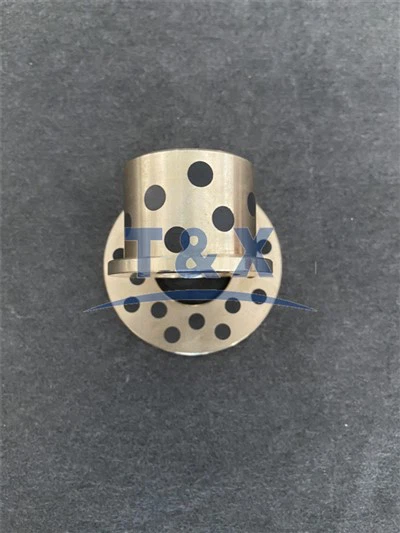
The presence of lubricants or coatings can also significantly affect the friction between flange surfaces. Lubricants can reduce friction by providing a thin film between the surfaces, preventing direct contact and reducing wear. Coatings, on the other hand, can be designed to enhance friction or provide additional properties such as corrosion resistance. For instance, a Graphite Self-lubricating Copper Sleeve can be used in flange applications to reduce friction and improve the overall performance of the system.
Another factor to consider is the load and pressure applied to the flanges. Higher loads and pressures generally result in increased friction, as the surfaces are pressed more tightly together. However, excessive loads can also lead to deformation of the flanges, which can affect the friction properties and the overall performance of the joint.
Measuring Friction Properties
To ensure the quality and performance of our flange parts, we use various methods to measure the friction properties. One common method is the use of a tribometer, which is an instrument that measures the friction between two surfaces under controlled conditions. By measuring the friction force and the normal force between the flanges, we can calculate the coefficient of friction, which provides a quantitative measure of the friction properties.
We also conduct real-world testing of our flange parts in various applications to evaluate their performance under actual operating conditions. This includes testing the flanges in different environments, such as high temperatures, high pressures, and corrosive atmospheres, to ensure that they can withstand the rigors of the intended application.
Ensuring Optimal Friction Properties in Our Flange Parts
As a supplier of high-quality flange parts, we take several steps to ensure that our products have the optimal friction properties for their intended applications. Firstly, we carefully select the materials for our flanges based on the specific requirements of the application. We use high-quality metals and alloys that have the appropriate mechanical properties, including wear resistance and corrosion resistance, as well as the desired coefficient of friction.
We also pay close attention to the surface finish of our flanges. Our manufacturing processes are designed to produce flanges with a consistent and precise surface finish, which helps to ensure uniform friction properties. Additionally, we can apply special coatings or treatments to the flanges to enhance their friction properties or provide additional protection.
In addition to our manufacturing processes, we have a rigorous quality control system in place to ensure that our flange parts meet the highest standards of quality and performance. We conduct thorough testing of each batch of flanges to verify their friction properties and other mechanical and physical properties. Any flanges that do not meet our strict quality criteria are rejected, ensuring that only the best products are delivered to our customers.
Applications of Flange Parts and Friction Considerations
Flange parts are used in a wide range of applications, each with its own specific requirements for friction properties. In the automotive industry, for example, flanges are used in various components such as engines, transmissions, and axles. In these applications, proper friction is essential for ensuring a reliable connection and preventing leaks. The use of high-quality Trailer Wheel Stamping Hub Housing is also crucial to ensure the smooth operation of the wheels and to reduce friction and wear.
In the oil and gas industry, flanges are used in pipelines and refineries to connect pipes and other components. In these applications, the flanges must be able to withstand high pressures and temperatures, and proper friction is essential for preventing leaks and ensuring the safety and reliability of the system.
In the aerospace industry, flanges are used in aircraft engines, landing gear, and other critical components. The friction properties of these flanges must be carefully controlled to ensure the proper functioning and safety of the aircraft.
Contact Us for Your Flange Parts Needs
If you are in the market for high-quality flange parts with optimal friction properties, look no further. As a leading supplier of flange parts, we have the expertise and experience to provide you with the best solutions for your specific applications. We offer a wide range of flange parts in different sizes, materials, and designs to meet your diverse needs.
Whether you are looking for standard flange parts or custom-designed solutions, we can work with you to develop the perfect product. Our team of engineers and technicians is dedicated to providing you with the highest level of service and support, from the initial design phase to the final delivery of your order.
Contact us today to discuss your flange parts requirements and to learn more about how our products can help you improve the performance and reliability of your systems. We look forward to working with you.
References
- Bowden, F. P., & Tabor, D. (1950). The Friction and Lubrication of Solids. Oxford University Press.
- Bhushan, B. (2013). Introduction to Tribology. Wiley.
- Holmberg, K., & Erdemir, A. (2017). Concepts in Tribology. Elsevier.