
Hey there! As a supplier of steel wear parts, I often get asked by customers, "How do I know if a steel wear part is of good quality?" Well, I'm here to share some tips and insights based on my experience in the industry.
1. Material Quality
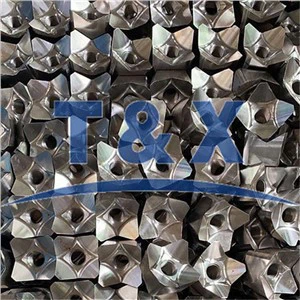
The first thing you need to look at is the material used in the steel wear part. High - quality steel wear parts are usually made from alloys that are specifically designed to withstand wear and tear. For example, 42CrMo Alloy Steel Harden Fishtail Bit is made from 42CrMo alloy steel, which has excellent hardenability and toughness.
When checking the material, you can ask for the material certificate. This document provides detailed information about the chemical composition and mechanical properties of the steel. A reliable supplier should be able to provide this certificate without any hesitation. You can also do some simple tests on the part. For instance, a magnet test can give you a rough idea of the steel type. However, this is just a basic test, and for more accurate results, you may need to use professional testing equipment.
2. Manufacturing Process
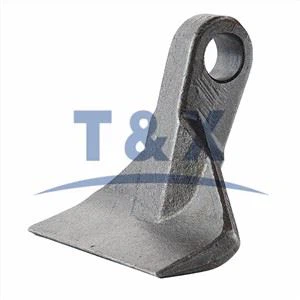
The manufacturing process has a huge impact on the quality of steel wear parts. Precision casting is a common method used to make high - quality parts. Take the Cast Flail Cutter for example. Lost - wax casting allows for the production of complex shapes with high precision.
During the manufacturing process, there are several key steps that need to be carefully controlled. Heat treatment is one of them. Proper heat treatment can improve the hardness, strength, and wear resistance of the steel. If the heat treatment is not done correctly, the part may have inconsistent properties, which can lead to premature failure.
Another important aspect is surface finishing. A smooth surface finish not only improves the appearance of the part but also reduces friction and wear. Look for parts with a uniform and smooth surface. Any signs of rough edges, porosity, or cracks on the surface are red flags that the part may be of poor quality.
3. Dimensional Accuracy
Accurate dimensions are crucial for steel wear parts. If the part doesn't fit properly in the equipment it's supposed to be used in, it won't function as intended. This can lead to increased wear, reduced efficiency, and even damage to other components.
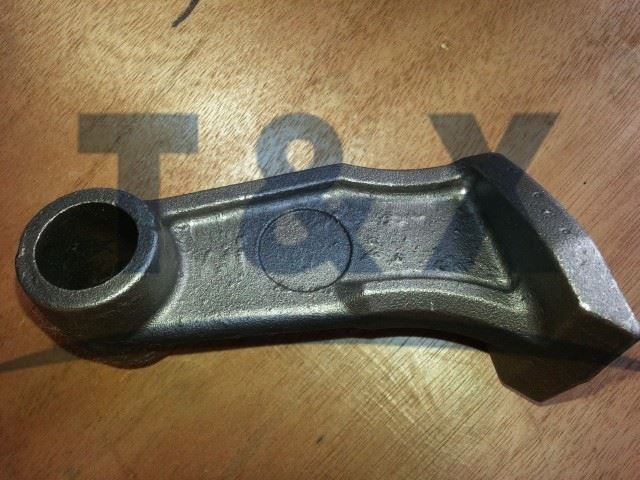

A good supplier will use advanced measuring tools to ensure the dimensional accuracy of their parts. They should be able to provide you with detailed dimensional drawings and tolerances. You can also measure the part yourself using basic measuring tools like calipers and micrometers. Compare the measurements with the specifications provided by the supplier. If there are significant deviations, it's a sign that the part may not meet the required quality standards.
4. Wear Resistance Testing
One of the most direct ways to determine the quality of a steel wear part is to test its wear resistance. There are several methods to do this. In a laboratory setting, you can use wear testing machines to simulate different wear conditions. However, this may not be practical for most customers.
A more practical approach is to look at the supplier's track record. If they have been in the industry for a long time and have positive customer feedback, it's likely that their parts have good wear resistance. You can also ask the supplier if they have any case studies or test results available. For example, if they have tested the Precision Cast Trailer Connector under real - world conditions and can show you the data, it gives you more confidence in the part's quality.
5. Supplier Reputation
The reputation of the supplier is a very important factor. A reliable supplier will stand behind their products and provide good customer service. You can check online reviews, industry forums, and ask for references from other customers.
A good supplier will also be transparent about their manufacturing processes, quality control measures, and pricing. They will be willing to answer all your questions and address any concerns you may have. If a supplier is evasive or doesn't provide clear information, it's better to look elsewhere.
6. Cost - Benefit Analysis
While quality is important, cost is also a consideration. You don't want to overpay for a part, but at the same time, you don't want to sacrifice quality for a lower price. A high - quality steel wear part may cost more upfront, but it can save you money in the long run by reducing downtime, maintenance costs, and the need for frequent replacements.
When comparing prices from different suppliers, make sure you are comparing apples to apples. Consider the quality factors we've discussed above. A part that is significantly cheaper may be using lower - quality materials or have a less rigorous manufacturing process.
Conclusion
So, there you have it! These are some of the key factors to consider when determining if a steel wear part is of good quality. By looking at the material, manufacturing process, dimensional accuracy, wear resistance, supplier reputation, and doing a cost - benefit analysis, you can make an informed decision.
If you're in the market for high - quality steel wear parts, I'd love to talk to you. Whether you need a Cast Flail Cutter, a Precision Cast Trailer Connector, or a 42CrMo Alloy Steel Harden Fishtail Bit, I can provide you with top - notch products and excellent service. Don't hesitate to reach out for a quote or to discuss your specific needs. Let's work together to find the best steel wear parts for your applications.
References
- ASM Handbook: Volume 4 - Heat Treating. ASM International.
- Manufacturing Engineering and Technology by Serope Kalpakjian and Steven R. Schmid.
- ASTM International Standards for Steel Testing and Evaluation.