
Hey there! I'm a supplier of steel casting parts, and today I wanna talk about something super important in the steel casting process: the influence of pouring speed on steel casting parts.
Understanding Pouring Speed in Steel Casting
First off, let's get clear on what pouring speed is. It's basically how fast the molten steel is poured into the mold during the casting process. Sounds simple, right? But trust me, it has a huge impact on the final quality of the steel casting parts.
When we're dealing with steel casting, there are so many factors that can affect the outcome, and pouring speed is one of the biggies. It's not just about getting the molten steel into the mold as quickly as possible. There's a sweet spot that we need to find to ensure the best results.
The Impact on Casting Quality
Surface Finish
One of the most noticeable effects of pouring speed is on the surface finish of the steel casting parts. If the pouring speed is too fast, the molten steel can splash and create turbulence inside the mold. This turbulence can cause air bubbles to get trapped in the steel, leading to a rough and uneven surface finish. On the other hand, if the pouring speed is too slow, the steel might solidify before it fully fills the mold, resulting in incomplete parts or parts with a poor surface finish.
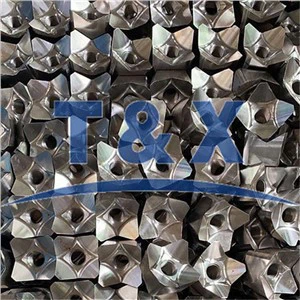
For example, when we're making Lost Wax Casting Cross Bit & Lost Bit, a smooth surface finish is crucial. A fast pouring speed could mess up the intricate details of the cross bit, making it less effective in its intended use.
Internal Defects
Pouring speed also has a big impact on the internal structure of the steel casting parts. A high pouring speed can cause the molten steel to cool too quickly in some areas, leading to the formation of internal cracks and porosity. These internal defects can weaken the part and reduce its overall strength and durability.
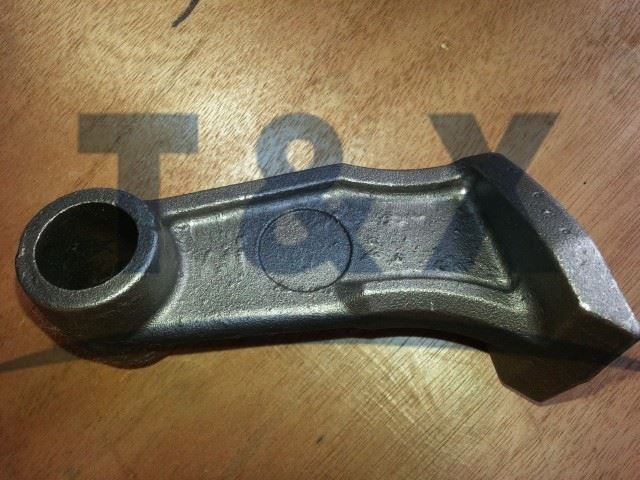
Take the Precision Cast Trailer Connector as an example. This part needs to be strong and reliable to ensure a secure connection between the trailer and the towing vehicle. If there are internal defects due to improper pouring speed, it could lead to failures and safety issues on the road.
Dimensional Accuracy
Another important aspect is the dimensional accuracy of the steel casting parts. Pouring speed can affect how the molten steel fills the mold and how it shrinks during solidification. If the pouring speed is inconsistent or not properly controlled, it can cause the part to shrink unevenly, resulting in dimensional variations.
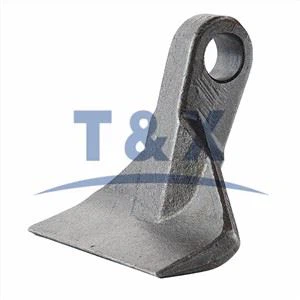
When we're producing Cast Flail Cutter, precise dimensions are essential for the cutter to work effectively. Any dimensional inaccuracies can affect the performance of the flail cutter and reduce its efficiency.
Finding the Optimal Pouring Speed
So, how do we find the optimal pouring speed for different steel casting parts? Well, it depends on a few factors, such as the type of steel, the size and shape of the part, and the design of the mold.
Type of Steel
Different types of steel have different melting points, viscosities, and solidification rates. For example, high-carbon steel has a higher melting point and is more viscous than low-carbon steel. This means that we might need to adjust the pouring speed accordingly to ensure proper filling of the mold.
Size and Shape of the Part
Larger and more complex parts usually require a slower pouring speed to allow the molten steel to flow evenly into all the corners of the mold. Smaller and simpler parts, on the other hand, might be able to tolerate a slightly faster pouring speed.
Mold Design
The design of the mold also plays a crucial role in determining the optimal pouring speed. A well-designed mold with proper gating and riser systems can help control the flow of the molten steel and reduce the chances of defects.

Our Experience as a Supplier
As a steel casting parts supplier, we've had our fair share of experiences with different pouring speeds. We've learned that it takes a lot of trial and error to find the perfect pouring speed for each part.
We use advanced simulation software to analyze the flow of the molten steel inside the mold and predict the effects of different pouring speeds. This helps us make informed decisions and optimize the casting process.
We also have a team of experienced technicians who closely monitor the pouring process and make adjustments as needed. They know how to spot the signs of a problem and take corrective action before it's too late.
Conclusion
In conclusion, pouring speed has a significant influence on the quality, strength, and dimensional accuracy of steel casting parts. Finding the optimal pouring speed is crucial for producing high-quality parts that meet the requirements of our customers.
If you're in the market for steel casting parts, whether it's Lost Wax Casting Cross Bit & Lost Bit, Precision Cast Trailer Connector, or Cast Flail Cutter, we're here to help. We have the expertise and experience to ensure that you get the best possible parts.
If you're interested in our products or have any questions, feel free to reach out to us. We'd love to have a chat with you and discuss your specific needs. Let's work together to find the perfect steel casting solutions for your business.
References
- Campbell, J. (2003). Castings. Butterworth-Heinemann.
- Flemings, M. C. (1974). Solidification Processing. McGraw-Hill.