
In the intricate world of die casting parts production, one crucial yet often overlooked element is the release agent. As a seasoned die casting parts supplier, I've witnessed firsthand the significant impact that a high - quality release agent can have on the entire production process. This blog post aims to delve into the requirements for the release agent in die casting parts production.
Thermal Stability
One of the primary requirements for a release agent in die casting is thermal stability. Die casting involves high temperatures, with molten metals such as zinc and aluminum reaching extreme heat levels. For instance, aluminum has a melting point around 660°C, while zinc melts at approximately 420°C. A release agent must be able to withstand these high temperatures without breaking down or losing its effectiveness.
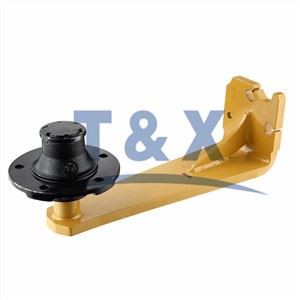
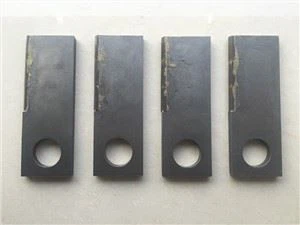
When the release agent lacks thermal stability, it can burn or char on the die surface. This not only compromises the release properties but can also lead to surface defects on the Zinc Die Casting Parts and Aluminum Die Casting Parts. These defects may include roughness, porosity, or even inclusions, which can render the parts unfit for their intended applications. A thermally stable release agent ensures that the die surface remains clean and smooth, facilitating the easy removal of the cast parts and maintaining the quality of the final product.
Lubricity
Lubricity is another essential requirement. During the die casting process, the molten metal is injected into the die cavity under high pressure. The release agent acts as a lubricant between the metal and the die surface, reducing friction. High friction can cause several problems, such as excessive wear and tear on the die, increased cycle times, and difficulty in ejecting the cast parts.
A good release agent provides a uniform lubricating film that allows the molten metal to flow smoothly into all corners of the die cavity. This results in better filling of the cavity and more accurate replication of the die's details on the cast part. Additionally, proper lubricity helps in preventing the metal from sticking to the die, which can lead to damage to both the part and the die. Without sufficient lubricity, the die may require frequent cleaning and maintenance, which can increase production costs and downtime.
Chemical Compatibility
Chemical compatibility is a critical factor when selecting a release agent. The release agent must be compatible with the molten metal being used in the die casting process. Different metals have different chemical properties, and an incompatible release agent can react with the metal, leading to various issues. For example, some release agents may contain chemicals that can react with aluminum to form oxides or other compounds, which can affect the quality of the cast parts.
The release agent should also be compatible with the die material. Die materials are often made of tool steels or other alloys, and an incompatible release agent can cause corrosion or degradation of the die surface. This can reduce the lifespan of the die and increase the cost of die replacement. Chemical compatibility ensures that the release agent performs its function effectively without causing any adverse chemical reactions that could compromise the quality of the parts or the die.
Environmental and Safety Requirements
In today's manufacturing landscape, environmental and safety requirements cannot be ignored. Release agents should be environmentally friendly and comply with relevant regulations. Many traditional release agents contain volatile organic compounds (VOCs) or other harmful chemicals that can pose risks to the environment and the health of workers.
VOCs can contribute to air pollution and have been linked to various health problems, such as respiratory issues and skin irritation. As a responsible die casting parts supplier, we are committed to using release agents that are low in VOCs or are VOC - free. Additionally, the release agent should be non - toxic and easy to handle. This not only protects the environment but also ensures the safety and well - being of our workers.
Application and Coverage
The ease of application and coverage are also important requirements. A release agent should be easy to apply evenly on the die surface. Uneven application can lead to inconsistent release properties, with some areas of the die having better release than others. This can result in parts with varying quality across their surfaces.
The release agent should be able to cover the entire die surface effectively, including complex geometries and hard - to - reach areas. Some die casting parts have intricate designs with deep cavities or thin walls, and the release agent must be able to reach all these areas to ensure proper release. Spray - on release agents are commonly used because they can provide good coverage and are relatively easy to apply. However, the application method should be chosen based on the specific requirements of the die casting process and the shape of the parts.
Residue Management
Residue management is an often - overlooked requirement. After the cast part is removed from the die, there may be some residue left on the die surface from the release agent. This residue should be easy to clean. Excessive or difficult - to - remove residue can build up over time, affecting the performance of the release agent and the quality of subsequent castings.
A release agent that leaves a minimal and easily removable residue simplifies the die cleaning process. This reduces the time and effort required for die maintenance, allowing for more efficient production. Moreover, proper residue management ensures that the die surface remains in good condition, which is essential for producing high - quality cast parts consistently.
Cost - effectiveness
Cost - effectiveness is a practical requirement in die casting parts production. While it is important to use a high - quality release agent, it also needs to be cost - effective. The cost of the release agent can have a significant impact on the overall production cost. A release agent that is too expensive can increase the cost of the cast parts, making them less competitive in the market.
However, cost - effectiveness does not mean sacrificing quality. A balance needs to be struck between the cost of the release agent and its performance. A moderately priced release agent that meets all the other requirements, such as thermal stability, lubricity, and chemical compatibility, can provide a good return on investment. It is important to evaluate the long - term costs associated with the release agent, including its impact on production efficiency, die lifespan, and part quality.
Adhesion and Film Formation
The release agent should have good adhesion to the die surface and form a strong, uniform film. A well - adhered film is crucial for maintaining the release properties throughout the die casting process. If the release agent does not adhere properly to the die surface, it may be washed away by the molten metal or become dislodged during the injection process.
A uniform film ensures that the release agent provides consistent lubrication and release performance across the entire die surface. The film should be thin enough not to interfere with the dimensional accuracy of the cast parts but thick enough to provide effective protection and lubrication. Proper adhesion and film formation also contribute to the durability of the release agent, reducing the need for frequent re - application and ensuring the stability of the production process.
In conclusion
As a die casting parts supplier, understanding and meeting the requirements for release agents is essential for producing high - quality cast parts efficiently. The requirements of thermal stability, lubricity, chemical compatibility, environmental and safety compliance, application and coverage, residue management, cost - effectiveness, and adhesion and film formation all play a crucial role in the success of the die casting process.
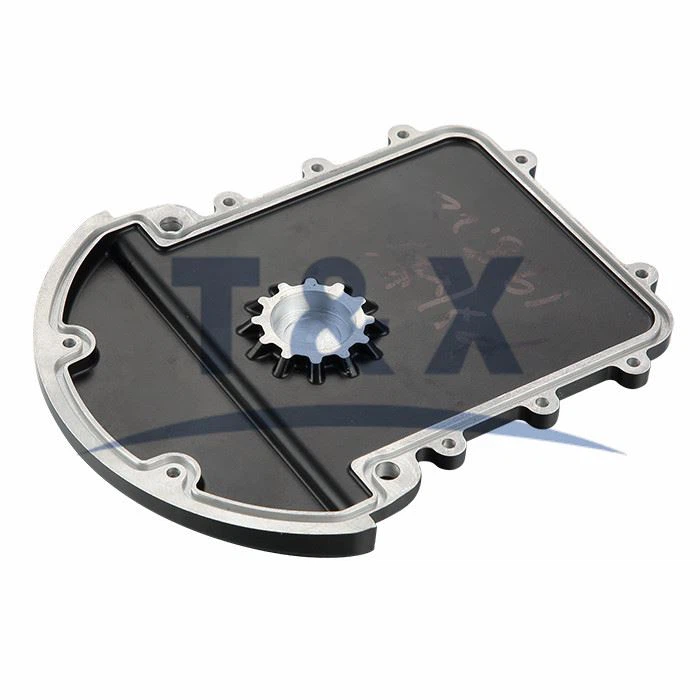
If you are in the market for high - quality Zinc Die Casting Parts or Aluminum Die Casting Parts, we invite you to contact us for a detailed discussion on our products and how we can meet your specific needs. Our team of experts is ready to assist you in finding the best solutions for your die casting requirements.

References
- Campbell, J. (2003). Castings. Butterworth - Heinemann.
- Metals Handbook: Die Casting, Volume 15 (1988). ASM International.
- Schubert, T. (2010). Die Casting Handbook: Technology, Processes, and Quality Assurance. Hanser Gardner Publications.