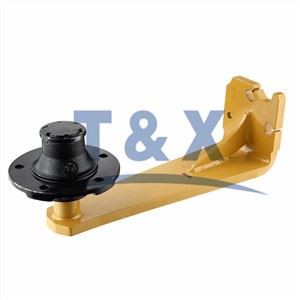

Hey there! As a hub axles supplier, I often get asked about what materials hub axles are made of. Well, let's dive right into it and explore the different materials used in the manufacturing of these crucial components.
Steel: The Go - To Material
Steel is hands - down the most common material for hub axles. It's got some amazing properties that make it perfect for the job. First off, steel is incredibly strong. Hub axles need to bear a lot of weight, whether it's from the vehicle itself, the passengers, or the cargo. Steel can handle all that stress without breaking a sweat.
There are different types of steel used in hub axles. Alloy steel, for example, is a popular choice. It's made by combining iron with other elements like chromium, nickel, and manganese. These added elements enhance the steel's strength, hardness, and resistance to wear and corrosion. This means that hub axles made from alloy steel can last a long time, even in tough conditions.
Another type is carbon steel. It's relatively inexpensive and still offers good strength. Carbon steel hub axles are often used in less demanding applications, where cost is a major factor. But don't think they're not reliable. With proper heat treatment, carbon steel can be made strong enough for many standard vehicles.
If you're looking for high - quality steel hub axles, you might be interested in our Precision Machining Drive Shaft. It's made with top - notch steel and precision machining to ensure optimal performance.
Aluminum: Lightweight and Efficient
Aluminum is becoming more and more popular in the automotive industry, and hub axles are no exception. One of the biggest advantages of aluminum is its low weight. Vehicles with aluminum hub axles are lighter, which means better fuel efficiency. And in today's world, where everyone's trying to save on gas and reduce emissions, that's a huge plus.
Aluminum is also resistant to corrosion. It forms a thin oxide layer on its surface when exposed to air, which protects it from rust and other forms of corrosion. This makes aluminum hub axles a great choice for vehicles that are often driven in wet or salty environments, like coastal areas.
However, aluminum isn't as strong as steel. So, hub axles made from aluminum need to be designed differently to compensate for its lower strength. Engineers often use thicker cross - sections or more advanced designs to make sure the aluminum hub axles can handle the same loads as steel ones.
Our Trailer Wheel Hubs Cast Hub is available in aluminum, offering a lightweight and durable option for trailers.
Titanium: The High - Performance Option
Titanium is like the super - star of materials. It's incredibly strong, yet lightweight. In fact, titanium has a higher strength - to - weight ratio than both steel and aluminum. This makes it ideal for high - performance vehicles, like race cars.
Titanium is also highly resistant to corrosion and can withstand extreme temperatures. These properties make it suitable for use in harsh environments, where other materials might fail.
But there's a catch. Titanium is very expensive. The cost of extracting and processing titanium is much higher compared to steel and aluminum. So, titanium hub axles are mainly used in high - end, specialized applications where cost is not the primary concern and performance is everything.


Composite Materials: The Future?
Composite materials are starting to make their way into the hub axle market. These materials are made by combining two or more different materials to get the best properties of each. For example, a composite hub axle might combine a strong fiber, like carbon fiber, with a resin matrix.
Carbon fiber composites are known for their high strength and low weight. They can be molded into complex shapes, which allows for more efficient designs. This means that composite hub axles can potentially offer better performance than traditional materials.
However, composite materials also have some challenges. They can be difficult to manufacture, and their long - term durability is still being studied. But as technology improves, we might see more composite hub axles on the road in the future.
Other Materials and Components
In addition to the main materials for the hub axle itself, there are other components that are important for the proper functioning of the hub axle system. One such component is the Graphite Self - lubricating Copper Sleeve.
These copper sleeves are used to reduce friction between the hub axle and other moving parts. The graphite in the sleeve provides self - lubrication, which means less wear and tear on the components. This helps to extend the lifespan of the hub axle system and improve its overall performance.
Conclusion
So, there you have it. Hub axles can be made from a variety of materials, each with its own pros and cons. Steel is the most common and reliable, aluminum offers lightweight and corrosion resistance, titanium provides high - performance, and composite materials are the up - and - coming option.
If you're in the market for hub axles or any related components, we're here to help. We offer a wide range of high - quality hub axles made from different materials to suit your needs. Whether you're looking for a standard steel hub axle for your daily driver or a high - performance titanium one for your race car, we've got you covered.
Don't hesitate to reach out to us for more information or to start a procurement discussion. We're always happy to talk about how our products can meet your requirements and help your vehicles perform at their best.
References
- "Materials Science and Engineering: An Introduction" by William D. Callister Jr. and David G. Rethwisch
- Automotive Engineering textbooks and journals for industry - specific information on hub axle materials.