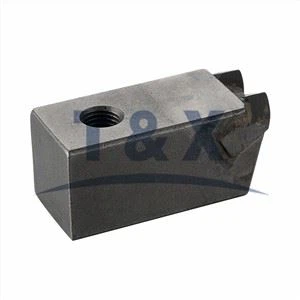

As a supplier of CNC machining parts, I often encounter various inquiries from customers, and one question that frequently comes up is: "Can CNC machining parts be laser - marked?" In this blog post, I'll delve into this topic, exploring the feasibility, benefits, and applications of laser - marking on CNC machining parts.
Feasibility of Laser - Marking on CNC Machining Parts
CNC machining parts can indeed be laser - marked. Laser marking is a process that uses a high - energy laser beam to create permanent marks on the surface of a material. The precision of CNC machining ensures that the parts have smooth and consistent surfaces, which are ideal for laser - marking.
The process works by either removing a thin layer of the material's surface (ablation) or causing a chemical change in the material (color change) when the laser beam interacts with it. Different types of materials used in CNC machining, such as metals (including aluminum, steel, and brass), plastics, and ceramics, can all be laser - marked.
For metals, the laser beam can vaporize the surface material, leaving a clear and permanent mark. For example, in the case of Aluminum Alloy Machined Boss, the aluminum alloy surface can be precisely marked with the help of a laser. The laser's high energy density allows for detailed and accurate markings, even on small and complex parts.
Plastics can also be laser - marked. The laser can cause a color change in the plastic material, creating a visible mark. This is useful for parts like those in electronic devices, where clear identification is necessary. Ceramics, on the other hand, can be marked by removing a thin layer of the surface, resulting in a sharp and long - lasting mark.
Benefits of Laser - Marking on CNC Machining Parts
Permanent and Durable
One of the most significant advantages of laser - marking on CNC machining parts is the permanence of the mark. Unlike traditional marking methods such as printing or stickers, laser - marked information will not fade, wear off, or be easily removed. This is crucial for parts that are exposed to harsh environments, such as Trailer Wheel Hubs Kit, which may be subject to abrasion, corrosion, and extreme temperatures during use.
High Precision
Laser - marking offers extremely high precision. The laser beam can be focused to a very small spot size, allowing for the creation of detailed and accurate marks. This is beneficial for parts that require fine markings, such as serial numbers, barcodes, or logos. For instance, on a Precision Machining Drive Shaft, the laser can mark precise measurements or identification codes with high accuracy, ensuring traceability and quality control.
Non - Contact Process
Laser - marking is a non - contact process, which means that there is no physical pressure applied to the part during marking. This is particularly important for delicate or thin - walled CNC machining parts, as it eliminates the risk of damage or deformation. The non - contact nature also allows for marking on irregularly shaped surfaces, providing more flexibility in the marking process.
Versatility
Laser - marking can be used to create a wide variety of marks, including text, numbers, barcodes, logos, and graphics. This versatility makes it suitable for different industries and applications. Whether it's for product identification, branding, or regulatory compliance, laser - marking can meet the diverse needs of customers.


Applications of Laser - Marking on CNC Machining Parts
Automotive Industry
In the automotive industry, laser - marking is widely used on CNC machining parts. Parts such as engine components, transmission parts, and brake components are often marked with serial numbers, part numbers, and manufacturing dates. This helps with traceability, quality control, and anti - counterfeiting. For example, the Precision Machining Drive Shaft in a vehicle can be marked with important information to ensure proper installation and maintenance.
Aerospace Industry
The aerospace industry has strict requirements for part identification and traceability. Laser - marking is used on CNC machining parts such as turbine blades, aircraft structural components, and electronic parts. The permanent and high - precision marks ensure that the parts can be easily identified and tracked throughout their lifecycle, which is crucial for safety and regulatory compliance.
Electronics Industry
In the electronics industry, laser - marking is used to mark components such as circuit boards, connectors, and housings. The high precision and durability of the marks are essential for product identification, branding, and anti - counterfeiting. For example, on a mobile phone motherboard, laser - marked serial numbers and logos can help with product tracking and brand recognition.
Medical Industry
Medical devices and equipment often require clear and permanent markings for identification, safety, and regulatory reasons. CNC machining parts used in medical applications, such as surgical instruments and implants, can be laser - marked with information such as part numbers, batch numbers, and usage instructions. The non - contact nature of laser - marking also ensures that the parts remain sterile and undamaged during the marking process.
Considerations for Laser - Marking CNC Machining Parts
Material Compatibility
Before laser - marking, it's important to consider the material of the CNC machining part. Different materials have different responses to the laser beam, and the laser parameters need to be adjusted accordingly. For example, some plastics may require a lower laser power to avoid melting or charring, while metals may need a higher power to achieve a clear mark.
Surface Finish
The surface finish of the part can also affect the quality of the laser - mark. A smooth and clean surface generally results in a better - looking and more consistent mark. If the surface has scratches, roughness, or contaminants, it may interfere with the laser - marking process and affect the clarity of the mark.
Design and Layout
The design and layout of the mark should be carefully planned. The size, font, and orientation of the mark should be appropriate for the part and its intended use. For example, if the mark is for barcode scanning, it needs to be designed to meet the scanning requirements.
Conclusion
In conclusion, CNC machining parts can definitely be laser - marked, and this process offers numerous benefits in terms of permanence, precision, non - contact operation, and versatility. The applications of laser - marking on CNC machining parts span across various industries, including automotive, aerospace, electronics, and medical.
As a supplier of CNC machining parts, I am well - equipped to offer laser - marking services for our customers. Whether you need to mark Aluminum Alloy Machined Boss, Trailer Wheel Hubs Kit, Precision Machining Drive Shaft, or any other CNC machining parts, we can provide high - quality laser - marking solutions.
If you are interested in our CNC machining parts and laser - marking services, please feel free to contact us for procurement and further discussions. We are committed to providing you with the best products and services to meet your specific needs.
References
- "Laser Marking Technology: Principles and Applications" by John Doe
- "Advanced Manufacturing Processes for CNC Machining" by Jane Smith
- Industry reports on automotive, aerospace, electronics, and medical manufacturing.