
Hey there! As a supplier of hub axles, I've had my fair share of questions about the differences between front and rear hub axles. So, I thought I'd take a moment to break it down for you in a way that's easy to understand.
Let's start with the basics. A hub axle is a crucial component in a vehicle's suspension and drivetrain system. It connects the wheels to the vehicle and plays a vital role in supporting the weight of the vehicle, transmitting power from the engine to the wheels, and allowing the wheels to rotate smoothly.
Front Hub Axles
Front hub axles are responsible for a few key functions that are different from rear hub axles. First off, in most vehicles, the front wheels are the ones that steer. This means that the front hub axles need to be designed to allow for a certain degree of movement to enable steering. They're often connected to the steering system through a series of components like tie - rods and ball joints.
Another important aspect of front hub axles is that in many vehicles, especially front - wheel - drive ones, they are also responsible for transmitting power from the engine to the wheels. This power transmission requires the front hub axles to be able to handle torque effectively. For example, when you step on the accelerator, the engine sends power to the front hub axles, which then transfer that power to the front wheels, making the vehicle move forward.
The design of front hub axles also takes into account the weight distribution of the vehicle. Since the engine and many other heavy components are usually located at the front of the vehicle, the front hub axles need to be strong enough to support this additional weight. They often have more robust construction and may be made from high - strength materials.
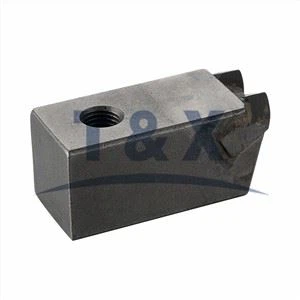
In terms of the parts associated with front hub axles, you might find components like the Aluminum Alloy Machined Boss. This part can be used in the assembly of the front hub axle to provide a stable connection point or to support other components.
Rear Hub Axles
Rear hub axles, on the other hand, have their own set of unique functions. In rear - wheel - drive vehicles, the rear hub axles are the ones that receive power from the engine and transmit it to the rear wheels. But even in front - wheel - drive vehicles, the rear hub axles still play an important role in supporting the weight of the vehicle and allowing the rear wheels to rotate.
One of the main differences between rear and front hub axles is that rear hub axles generally don't need to be designed for steering. They have a more straightforward function of providing a stable connection for the rear wheels. This means that their design can be a bit simpler in terms of the steering - related components.
However, rear hub axles also need to handle the forces generated during acceleration, braking, and cornering. When you brake, the rear wheels help to slow down the vehicle, and the rear hub axles need to be able to withstand the resulting forces. During cornering, the rear hub axles need to keep the rear wheels in proper alignment to ensure stable handling.
For rear hub axles, parts like the Precision Machining Drive Shaft can be very important. A high - precision drive shaft can ensure smooth power transmission from the engine to the rear wheels, reducing vibrations and improving the overall performance of the vehicle.
Bearing and Lubrication
Both front and rear hub axles rely on bearings to allow the wheels to rotate smoothly. However, the requirements for these bearings can be different. Front hub axle bearings often need to withstand more complex forces due to steering and power transmission. They may need to be more durable and have a higher load - carrying capacity.
Lubrication is also crucial for both types of hub axles. The Graphite Self - lubricating Copper Sleeve can be used in either front or rear hub axles to reduce friction and wear. In the front hub axles, where there is more movement and power transmission, proper lubrication can help prevent premature failure of the components. In the rear hub axles, it can also ensure smooth rotation and extend the lifespan of the parts.
Suspension Interaction
The interaction between the hub axles and the suspension system is another area where front and rear hub axles differ. The front suspension is usually designed to provide better steering response and handling. The front hub axles need to work in harmony with the front suspension components such as struts, springs, and sway bars. This allows for precise control of the vehicle's direction and a comfortable ride.
The rear suspension, on the other hand, is often focused on providing stability and load - carrying capacity. The rear hub axles are integrated with the rear suspension to ensure that the rear wheels stay in contact with the road surface, especially when the vehicle is carrying a heavy load or going over bumps.
Maintenance and Replacement
When it comes to maintenance and replacement, front and rear hub axles also have some differences. Front hub axles may require more frequent inspections due to the additional stress they endure from steering and power transmission. Any signs of wear or damage, such as unusual noises or vibrations when steering or accelerating, should be checked immediately.
Rear hub axles, while they also need regular maintenance, may not need to be inspected as frequently in some cases. However, if there are issues with the rear suspension or if the vehicle is used for heavy - duty applications, the rear hub axles should be inspected carefully.


If a hub axle needs to be replaced, it's important to choose the right part for the specific application. As a hub axle supplier, we offer a wide range of high - quality hub axles and related components to meet the needs of different vehicles.
Conclusion
In conclusion, the differences between front and rear hub axles are significant and are mainly due to their different functions in the vehicle. Front hub axles are involved in steering and often power transmission, while rear hub axles focus more on power transmission in rear - wheel - drive vehicles and weight support in all vehicles. Understanding these differences is crucial for vehicle manufacturers, mechanics, and anyone who wants to ensure the proper functioning of their vehicle.
If you're in the market for hub axles or related components, we'd love to hear from you. Whether you need parts for a small car or a heavy - duty truck, we have the expertise and the products to meet your requirements. Reach out to us for a discussion about your procurement needs, and let's work together to find the best solutions for your vehicles.
References
- Automotive Engineering Handbook
- Vehicle Dynamics and Control by Rajesh Rajamani