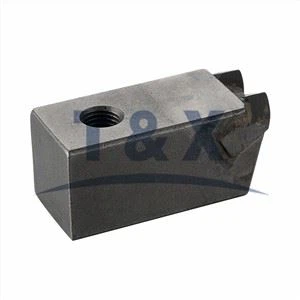

Can Ductile Iron Parts be used in the aerospace industry?
Hey there! I'm a supplier of Ductile Iron Parts, and I've been getting a lot of questions lately about whether these parts can be used in the aerospace industry. So, I thought I'd write this blog to share my thoughts and some insights on the matter.
First off, let's talk a bit about what ductile iron is. Ductile iron, also known as nodular cast iron, is a type of cast iron that has graphite nodules in its microstructure. This gives it some unique properties compared to other types of cast iron, like grey iron. The graphite nodules act as tiny shock absorbers, which makes ductile iron more ductile and tough. It also has better mechanical properties, such as higher tensile strength and elongation, than grey iron. You can check out more about Ductile Iron Parts on our website.
Now, when it comes to the aerospace industry, it's a highly demanding and critical field. The parts used in aerospace need to meet extremely high standards in terms of strength, weight, durability, and reliability. So, the question is, can ductile iron parts cut it?
One of the main advantages of ductile iron is its strength. Aerospace components often need to withstand high stresses and loads, and ductile iron's high tensile strength makes it a viable option for some applications. For example, in certain structural components where a high level of strength is required, ductile iron could potentially be used. It can handle the forces that come with flight, like vibrations, acceleration, and deceleration.
Another benefit is its ductility. Ductility means that the material can deform under stress without breaking. In the aerospace industry, this is crucial because parts may experience some degree of deformation during operation. Ductile iron's ability to bend and stretch a bit without fracturing can help prevent catastrophic failures.
However, there are also some challenges when it comes to using ductile iron in aerospace. One of the biggest issues is weight. The aerospace industry is constantly looking for ways to reduce weight to improve fuel efficiency and performance. Ductile iron is relatively heavy compared to some other materials commonly used in aerospace, like aluminum alloys and titanium. So, for parts where weight is a major concern, ductile iron may not be the best choice.

Corrosion resistance is another factor. In the harsh aerospace environment, parts are exposed to various corrosive elements, such as moisture, oxygen, and chemicals. While ductile iron can be treated to improve its corrosion resistance, it may not be as corrosion - resistant as some of the specialized alloys used in aerospace.
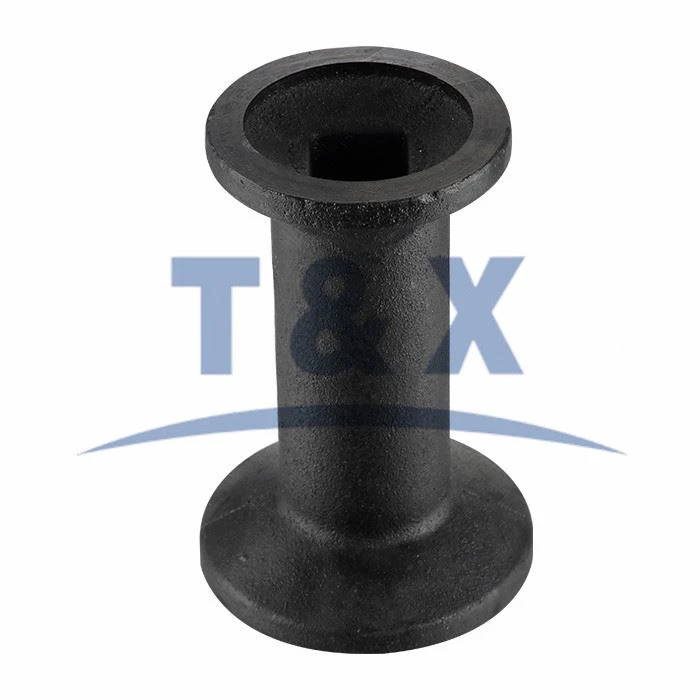
Let's also compare ductile iron with grey iron in the context of aerospace. Grey iron is another type of cast iron that we also supply. You can find more about Grey Iron Parts and Grey Iron Washer - Grey Iron Spool - Disc Harrow Spool - Spacing on our site. Grey iron is more brittle than ductile iron. It has lower tensile strength and elongation, which makes it less suitable for applications where high stress and deformation are expected. In the aerospace industry, where safety and reliability are paramount, the brittleness of grey iron can be a major drawback.
Despite these challenges, there are still some niche applications where ductile iron parts could be used in the aerospace industry. For example, in some non - critical components or in parts where weight is not the most important factor, ductile iron can offer a cost - effective solution. It can also be used in ground support equipment for aerospace operations, where the requirements are not as stringent as those for in - flight components.
So, to sum it up, while ductile iron parts have some advantages in terms of strength and ductility, they also face challenges when it comes to weight and corrosion resistance in the aerospace industry. But that doesn't mean they can't be used at all. There are definitely some areas where they can play a role.
If you're in the aerospace industry and are considering using ductile iron parts for your projects, I'd love to have a chat with you. We can discuss your specific requirements and see if our ductile iron parts are a good fit for you. Whether it's for a non - critical component or a ground support application, we're here to help you find the right solution.
References
- "Materials Science and Engineering: An Introduction" by William D. Callister Jr. and David G. Rethwisch
- Various industry reports on aerospace materials and their applications